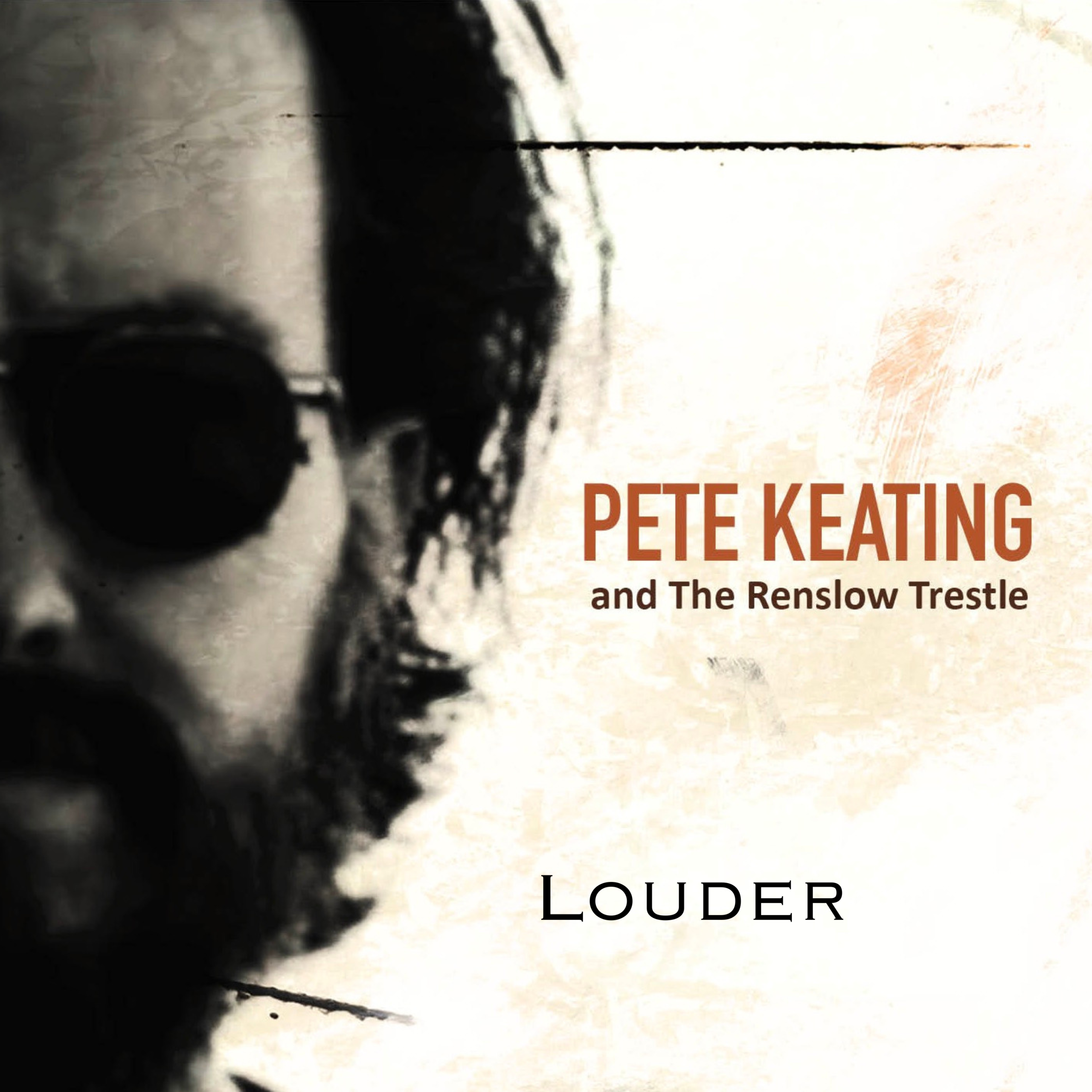
The title is a trap for the unwary. In this neighbourhood, "louder" has nothing to do with amplifiers cranked to eleven and a fringe flopping in the gale. It means resolve. Keating wrote the song two days after meeting an older guitarist with Multiple Sclerosis, a man who had been told he would never play again and simply declined to accept the verdict. He worked out a way to keep going by adaptation and sheer bloody-mindedness. A lesser songwriter would have produced a weepie or a sermon. Keating writes a piece that squares its shoulders. It is about a world that grows heavier, hungrier and less accessible the longer we let it go unchallenged, and it answers with an unfussy instruction to meet that weight at full strength and full attention. Its address is refreshingly democratic, aimed at the young and the old alike.
The method suits the message. The acoustic guitar and lead vocal were tracked together, live, in the same breath, which is the sort of decision that separates a songwriter from a person merely operating a microphone. Modern pop nudges vocals into place like furniture, but here a phrase can lean where the singer means it to lean, hesitate where he means it to hesitate, and land with the small, human imperfection that no software has yet learned to forge. Producer and engineer Eric Lilavois has the good sense to let that immediacy stand, and the whole record benefits from having been made by people who were in the room together.
Those people are a well-chosen bunch. Jacob Brown's piano and organ supply the warm, wood-panelled glow that anyone raised on 1970s Laurel Canyon will recognise at once. Harrison Keating's upright bass and Trevor Olohan's drums form a rhythm section of the unshowy kind, more concerned with keeping the floor level than with rearranging the furniture. Gavin Olohan's electric guitar is the spice on the side of the plate. Then comes the vocal trio of Debbie Cantwell, Marita Schott and Baylor Burbidge, whose harmonies are the song's secret weapon. A chorus with three voices behind the lead turns a personal resolution into a communal one, and it lends "Louder" the feeling of a congregation rather than a soloist.
The band's stated ancestry is worn lightly and honestly. The plain-spoken dignity of The Carter Family and the road-dusted authority of Ramblin' Jack Elliott are in the bloodline, along with Etta James's conviction and Jeff Lynne's fondness for a chorus built to be sung by a crowd. The Laurel Canyon country-rock crossover, that golden moment when storytellers plugged in without losing their manners, is the spiritual address on the envelope. Plenty of bands claim such forebears and then play as though they had merely read the sleeve notes. This one sounds like it has actually done the listening.
Above all, "Louder" is sincere without being sticky, and sincerity is a difficult trick to pull off without a whiff of the greetings card. Keating avoids it by trusting the song to do the work and refusing to shout. The result is an anthem that has no need to raise its voice to be heard, which is a neat trick for a record with that title. It deserves to be played in a room full of people, ideally with the doors open and the volume at a level where the harmonies can breathe.