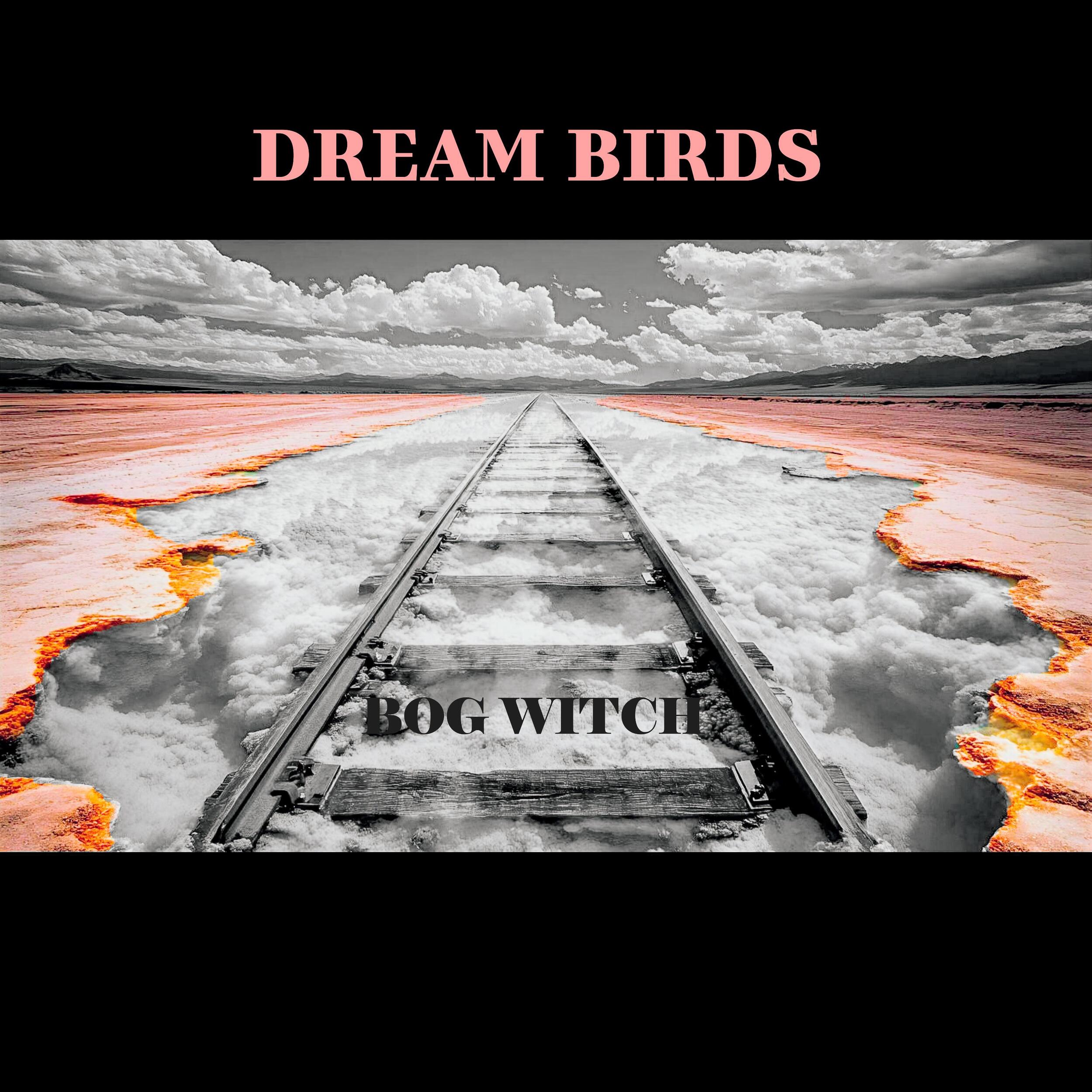
The instrumental palette is deliberately sparse: ukulele, voice, and a synth pad that glows rather than pulses. This restraint proves essential. Where lesser artists might have gilded such surreal imagery with orchestral bombast or atmospheric excess, Bog Witch understands that dreams work through suggestion rather than declaration. The ukulele—often an instrument of forced whimsy in contemporary hands—here becomes something more liminal, its gentle plucking evoking both the fragility of sleep and the strange gravity of lying motionless on railroad tracks as the night world transforms around you.
The lyrics unfold as a series of visitations: birds, locusts, spiritual presences moving through a scene that feels simultaneously folkloric and intensely personal. There's a keen understanding here of how folk tradition actually functions—not as quaint preservation but as living mythology, where omens and blessings refuse to separate cleanly, where the beautiful and the threatening share the same feathers. The railroad track itself becomes a kind of altar or sacrificial stone, a place of surrender where one waits to see what the darkness will deliver.
Vocally, Bog Witch opts for intimacy over projection, the kind of close-mic delivery that makes each breath part of the narrative. This isn't confessional singer-songwriter fare, though—the voice remains at a slight remove, reportorial even in its vulnerability. The effect is of someone recounting a vision they're still trying to understand, speaking softly so as not to disturb whatever delicate truth the dream revealed.
The music video, one presumes, would amplify these tensions: the stillness of a body on the tracks, the movement of wings against darkening sky, perhaps the flicker of something just beyond the frame's edge. The challenge would be resisting the obvious—the symbolic birds rendered literal, the spiritual made concrete. If the video trusts its material as thoroughly as the song trusts its arrangement, it will leave space for the viewer's own night visions to enter.
What Bog Witch has crafted feels deliberately small in scale but quietly ambitious in scope. "Dream Birds" doesn't announce itself as Important Art; it simply extends an invitation to step into its particular midnight landscape and see what moves there. The song's power lies in its refusal to explain itself, to clarify whether this railroad vigil represents danger or transcendence, whether the birds arrive as messengers or mourners.
The production—minimal though it is—reveals careful attention to texture and space. The synth pad never overwhelms, instead providing a kind of luminous undertow, a glow at the horizon line of the arrangement. Every element serves the song's central mystery: what does it mean to lie still while the nocturnal world transforms around you? What arrives on wings in the small hours?
In a musical landscape often dominated by overstatement and aggressive clarity, "Dream Birds" offers something more elusive and potentially more enduring. This is music for the margins of consciousness, for that moment between waking and sleep when the day's logic loosens and older, stranger forms of knowing assert themselves. Bog Witch has made a small, strange, perfectly realized thing—a lullaby with teeth, a folk song that remembers folk's original strangeness. It lingers, as the best dreams do, well past daybreak.