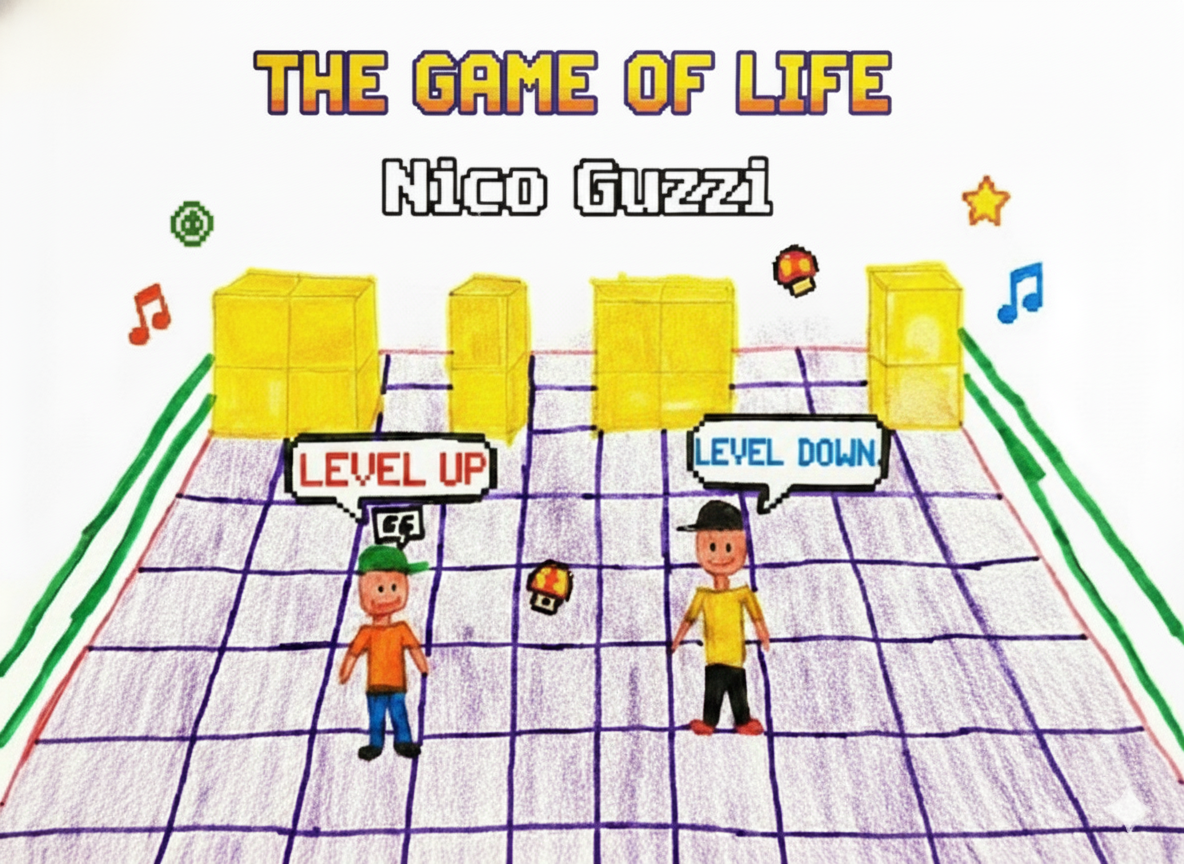
The Italian composer has constructed something genuinely peculiar here: a nine-track meditation on digital-age malaise that pairs existential hand-wringing with beats you could actually dance to. It's the sort of high-wire act that could easily collapse into pretension or, worse, into that dreaded middle ground where ambition meets muddle. That Guzzi largely avoids this fate speaks to a musical intelligence that understands the power of contrast not as gimmick but as genuine artistic statement.
Take the album's most recent single, "Follow Me Now," which tackles terminal illness with the kind of sonic maximalism that would make a more timid producer reach for the minimalist handbook. Instead, Guzzi leans into the drama, crafting what he describes as dubstep-meets-orchestra textures that shouldn't work on paper but somehow cohere in practice. The tension between life and death isn't merely described in the lyrics; it's embedded in the very architecture of the sound, where double basses grapple with synthesizers in a way that feels less like fusion and more like genuine combat.
This willingness to embrace discord extends throughout the record. Guzzi's background in classical composition provides the scaffolding, but he's unafraid to drape it in decidedly contemporary garments. The result is an album that moves fluidly between melodic pop hooks, rap delivery, and electronic experimentation without ever feeling like a mere grab-bag of influences. There's method in the eclecticism.
Lyrically, *The Game of Life* positions itself as social commentary for our algorithmic age, and while the themes—digital alienation, status anxiety, the search for authenticity—aren't exactly novel, Guzzi approaches them with enough specific detail to avoid vapidity. "Loser" apparently takes aim at our collective obsession with crypto and Tesla, trafficking in the kind of cultural signifiers that will date the record but also anchor it firmly to this particular moment. Meanwhile, tracks like "I'm Not Yours" pivot toward personal liberation, seeking to escape time's relentless forward march.
The album's greatest strength may be its refusal to offer easy answers or tidy resolutions. Guzzi presents himself not as sage but as fellow traveller, someone equally bewildered by the absurdities of 2026. This shared uncertainty gives the record an appealing humility, even as the production reaches for the grandiose.
In an era where many artists retreat into the safety of established templates, Guzzi has instead assembled something that feels genuinely of this moment—simultaneously commenting on our digital vertigo while embodying it in musical form.
*The Game of Life* likely won't convert those allergic to genre experimentation, nor will it satisfy purists of any particular stripe. But for listeners willing to meet Guzzi on his own restless terms, there's a peculiar alchemy at work here: an album that manages to be both cerebrally challenging and physically compelling, a meditation on modern alienation that never forgets the body wants to move. In that tension lies its considerable achievement.
*The Game of Life is available now via streaming platforms.*