The composer's background proves illuminating. Trained at New England Conservatory and Yale School of Music, Ruchman came relatively late to composition, spurred by a family inheritance both tangible and spiritual: the viola of her great uncle Rudolph "Rudy" Fuchs, a virtuoso whose life was cut short at twenty-five. This biographical detail matters because it informs the music's particular quality of emotional directness. These pieces wear their hearts conspicuously on their sleeves, unafraid of sentiment whilst remaining structurally coherent.
Artemis Simerson, longtime New Haven Symphony Orchestra member, proves an astute choice of collaborator. Her playing possesses that rare combination of technical polish and interpretive warmth necessary for music that pivots between styles with such alacrity. The programme's scope is genuinely ambitious: we encounter a sultry tango, a fiery Hungarian dance, and various character pieces that draw upon classical, jazz, and contemporary idioms with equal facility.
Ruchman's compositional voice resists easy categorization—a blessing and occasionally a challenge. Her melodic writing favours long, singing lines that exploit the violin's lyrical capabilities, whilst the piano parts tend toward the supportive rather than the confrontational. This is collaborative music in the truest sense; one rarely encounters the competitive virtuosity that marks much of the nineteenth-century repertoire. Instead, the instruments engage in genuine dialogue, passing melodic fragments between them with conversational ease.
The three-movement sonata anchors the collection and demonstrates Ruchman's command of larger forms. Here, one observes her ability to sustain musical argument across extended spans, developing thematic material with logic whilst maintaining the emotional immediacy that characterizes her shorter works. The slow movement proves particularly affecting, with its nocturnal harmonies and introspective character.
The dance-inspired pieces reveal another facet of Ruchman's sensibility. The Hungarian dance crackles with rhythmic vitality, its asymmetrical phrases and driving ostinatos evoking the music's folk origins without descending into mere pastiche. The tango, conversely, luxuriates in its own sensuousness, the violin's portamenti and the piano's habanera rhythms creating an atmosphere of refined decadence.
The recording quality deserves commendation: clean, well-balanced, and respectful of both instruments' timbral characteristics. The acoustic allows sufficient warmth without obscuring detail, crucial for music that depends so heavily upon textural interplay.
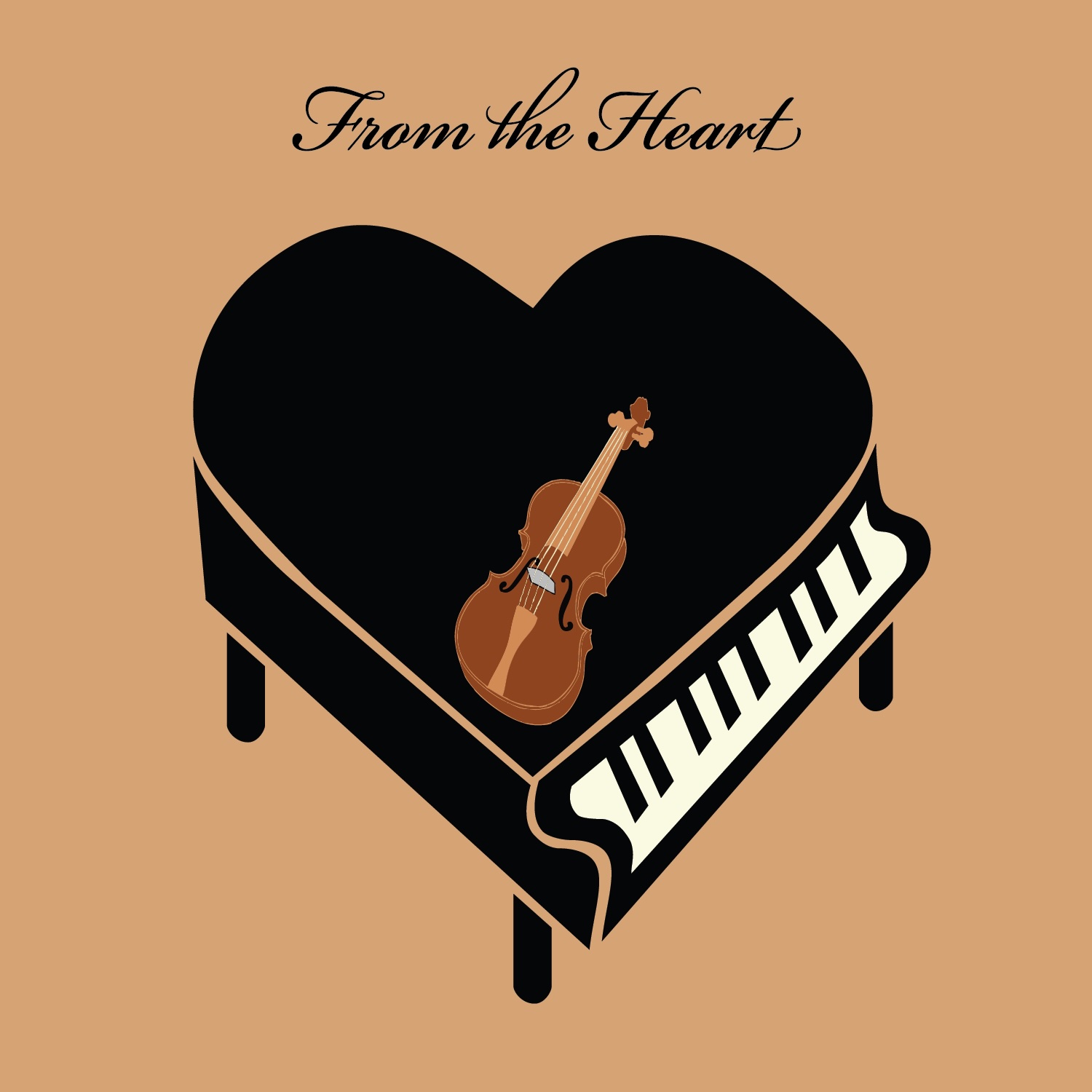
*From the Heart* succeeds primarily as an expression of musical personality. Ruchman has crafted a collection that reflects her aesthetic values with unflinching honesty: accessible yet sophisticated, emotionally generous yet structurally sound, rooted in tradition yet refusing to be bound by it. Whether one finds this appealing will depend largely upon one's tolerance for music that privileges expression over abstraction, heart over head.
For those seeking unabashed romanticism delivered with professional competence and genuine feeling, this album offers considerable rewards. Ruchman and Simerson have produced a recording that invites repeated listening, revealing new details with each encounter whilst maintaining its essential character: music that speaks directly, warmly, and without pretension.