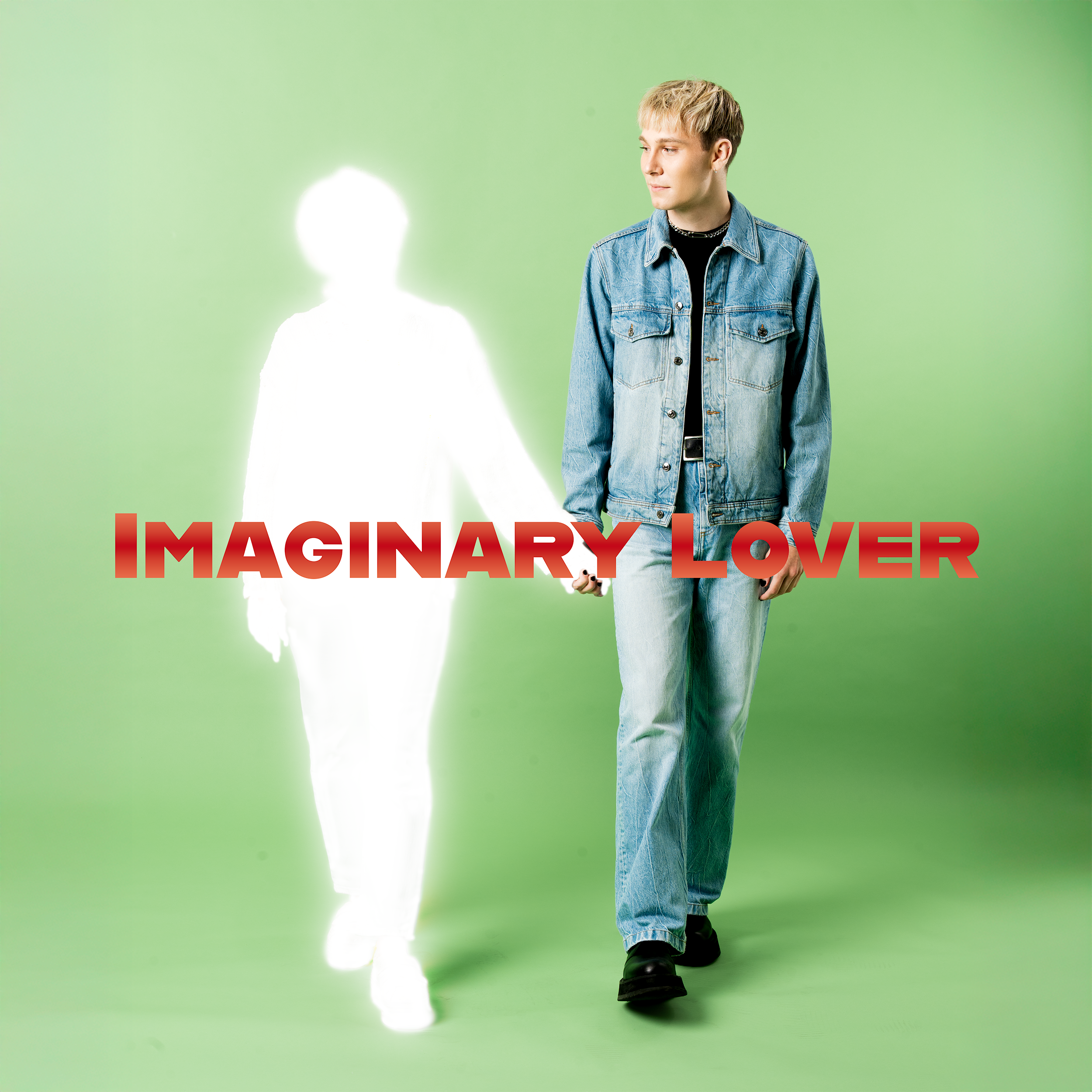
At nineteen, Rydgren was already commanding stages with the kind of vocal assurance that typically requires another decade's seasoning. Now, having spent time away from the television glare working on material that reflects his own artistic compass rather than the demands of weekly themed performances, he returns with a track that announces a clear departure from the show-tune theatrics of the Idol format. "Imaginary Lover" positions itself squarely in contemporary pop territory—synth-driven, introspective, and blessed with a production sheen that speaks to those Bagge connections without becoming a slave to them.
The track opens with a cascade of electronic textures that immediately establish mood over bombast. This isn't the kind of attention-grabbing opener designed to survive a thirty-second scroll on streaming platforms; rather, it invites the listener into a sonic world that unfolds gradually. The synth work throughout displays remarkable restraint, eschewing the kitchen-sink maximalism that afflicts so much modern pop production. Instead, each element occupies its own space, creating an atmosphere that feels both expansive and intimate—no small achievement.
Rydgren's vocal performance demonstrates precisely why he became a fan favourite during his Idol run. The voice itself possesses a pleasing timbral quality, neither too rough nor overly polished, with enough character to distinguish itself from the parade of interchangeable pop vocalists currently cluttering the airwaves. More impressive still is his interpretive maturity. The delivery never strains for emotional effect, never oversells the sentiment. This speaks to genuine artistic development; the confidence to underplay, to trust that the material will land without resorting to melismatic gymnastics or overwrought dramatics.
Lyrically, "Imaginary Lover" mines the fertile ground of romantic fantasy—the constructed beloved who exists primarily between one's ears. It's hardly virgin territory, but Rydgren and his collaborators handle the theme with enough specificity to avoid descending into greeting-card platitudes. The words feel lived-in rather than workshopped, suggesting genuine emotional investment rather than cynical demographic targeting.
The production, presumably shepherded at least in part by Bagge's considerable expertise, demonstrates what happens when major-label polish meets genuine artistic vision. The drum sounds nod to '80s synthpop without becoming cosplay; the bass line drives forward with purpose but never overwhelms; the occasional guitar flourish adds texture without demanding centre stage. These are the hallmarks of professional craft deployed in service of the song rather than as an end unto itself.
The bridge section offers particularly satisfying evidence of structural intelligence. Rather than simply repeating the chorus ad nauseam—the lazy shorthand that passes for songwriting in too many corners of contemporary pop—the track allows itself breathing room, a moment of reflection that makes the final chorus feel earned rather than inevitable. This suggests collaborative work with writers who understand that pop music need not be simplistic to be effective.
Yet this represents a remarkably assured statement from an artist barely out of his teens. San Sebastian has avoided the obvious pitfalls of the post-talent-show trajectory—the rushed album of covers, the cynical cash-grab singles designed to capitalize on fleeting fame. Instead, "Imaginary Lover" announces an artist taking the long view, building a foundation for sustained relevance rather than chasing immediate returns. As the opening salvo from a forthcoming EP, it promises much. The Swedish pop tradition, from ABBA through Roxette to Robyn, demands excellence as a baseline. San Sebastian, on this evidence, appears ready to meet that standard.