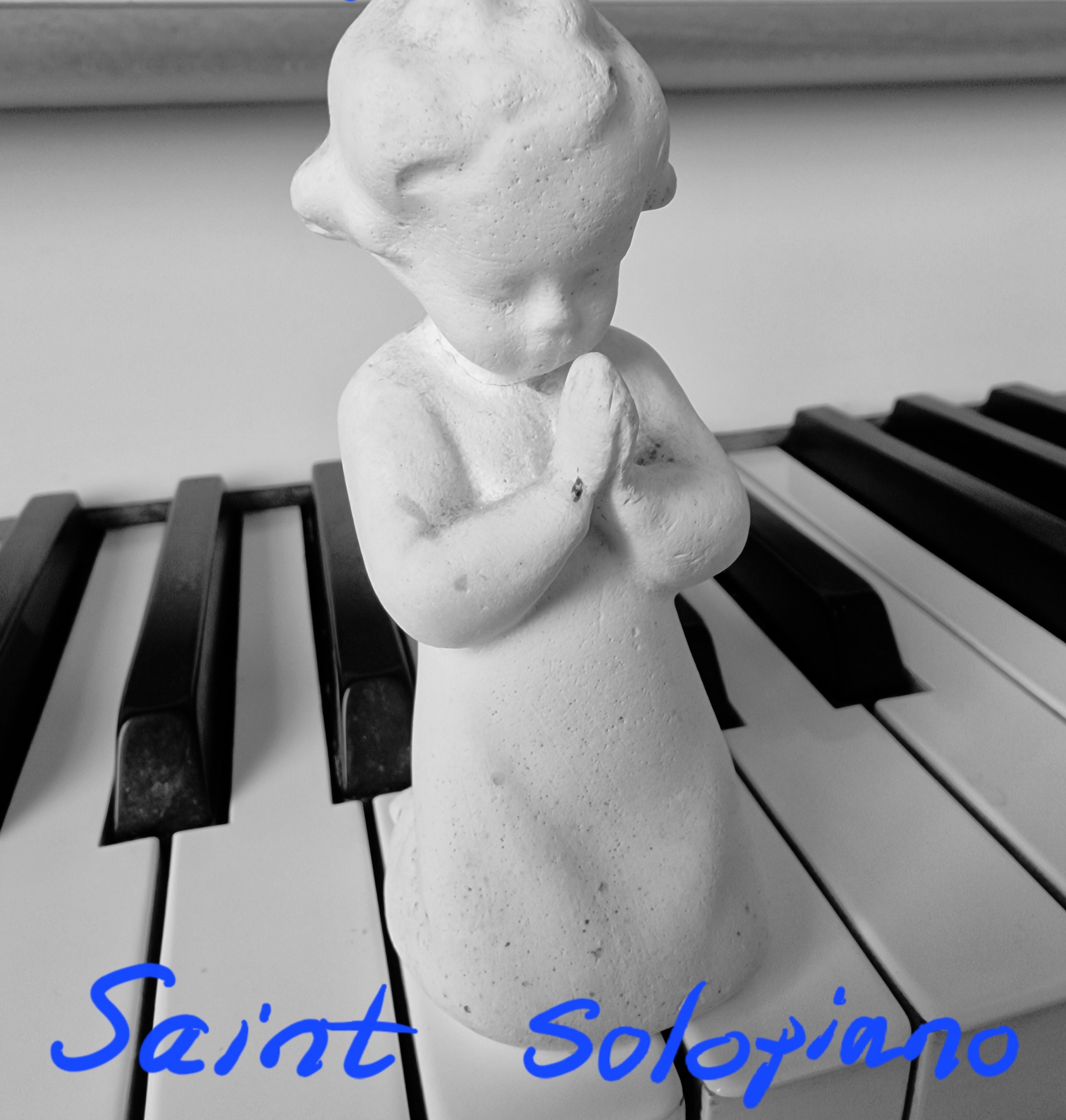
Composed as a tribute to his recently deceased parents, "Saint" occupies that liminal space between neoclassical structure and jazz improvisation, a territory that might prove treacherous in less assured hands. The piece unfolds with a patient, almost ceremonial dignity, suggesting ritual without ever becoming stiff or formulaic. Liungman's approach recalls the meditative qualities of Keith Jarrett's solo improvisations, yet maintains a distinctly European sensibility – less concerned with the ecstatic release that characterizes much American jazz piano, more attuned to the bittersweet poetry of Scandinavian introspection.
The influence of Nils Frahm becomes apparent in the work's textural awareness, the way silence functions as more than mere absence. Liungman allows phrases to breathe, to dissipate into the acoustic space before introducing new melodic material. This restraint proves crucial; "Saint" never overwhelms with sentiment, never lapses into the maudlin territory that claims so many elegiac compositions. Instead, it achieves something considerably more difficult: it conveys profound grief while simultaneously affirming life's continuity.
The late Esbjörn Svensson's ghost hovers over proceedings as well, particularly in the way Liungman navigates the terrain between written composition and spontaneous invention. The piece possesses a through-composed quality even as it embraces improvisational freedom – a paradox that the finest jazz musicians spend lifetimes attempting to resolve. Here, the partly improvised sections never feel like indulgences or diversions; they emerge organically from the harmonic landscape, as inevitable as they are unpredictable.
Harmonically, "Saint" draws from post-romantic vocabulary without becoming derivative. One detects echoes of Satie's simplicity, Bill Evans' chord voicings, perhaps even touches of Brad Mehldau's sophisticated reharmonizations, yet the synthesis remains distinctly Liungman's own. The jazz crossover elements never announce themselves crudely; they're woven seamlessly into the fabric, enriching the palette without compromising the work's essential coherence.
The emotional trajectory proves particularly compelling. Beginning in a state of contemplative sorrow, the piece gradually – almost imperceptibly – shifts toward acceptance and even quiet celebration. This transformation occurs without melodrama, without the manipulative dynamic surges that lesser composers employ. Instead, Liungman trusts his materials, allows the harmonic progression and melodic development to carry the narrative weight. The result feels earned rather than imposed.
Technically, the recording captures the instrument beautifully, preserving the full resonance of the piano without artificial enhancement. One hears the subtle mechanics of the instrument, the felt meeting string, the sympathetic vibrations of the soundboard – details that ground the performance in physical reality even as the music reaches toward transcendence.
Perhaps "Saint" succeeds most profoundly because it avoids the twin pitfalls of memorial music: it neither wallows in despair nor offers false consolation. Instead, it presents grief as a complex, evolving experience – painful yet generative, isolating yet ultimately connecting us to the universal human condition. The fragility and strength mentioned in the press materials aren't abstract concepts here; they're audible in every phrase, every dynamic gradation, every moment of harmonic tension and release.
For listeners familiar with contemporary piano composition, "Saint" will resonate as a worthy addition to the canon. For those discovering Liungman for the first time, it serves as an eloquent introduction to a mature artist capable of transforming personal loss into something approaching grace. This is music that honors memory without being imprisoned by it – a rare and valuable achievement.