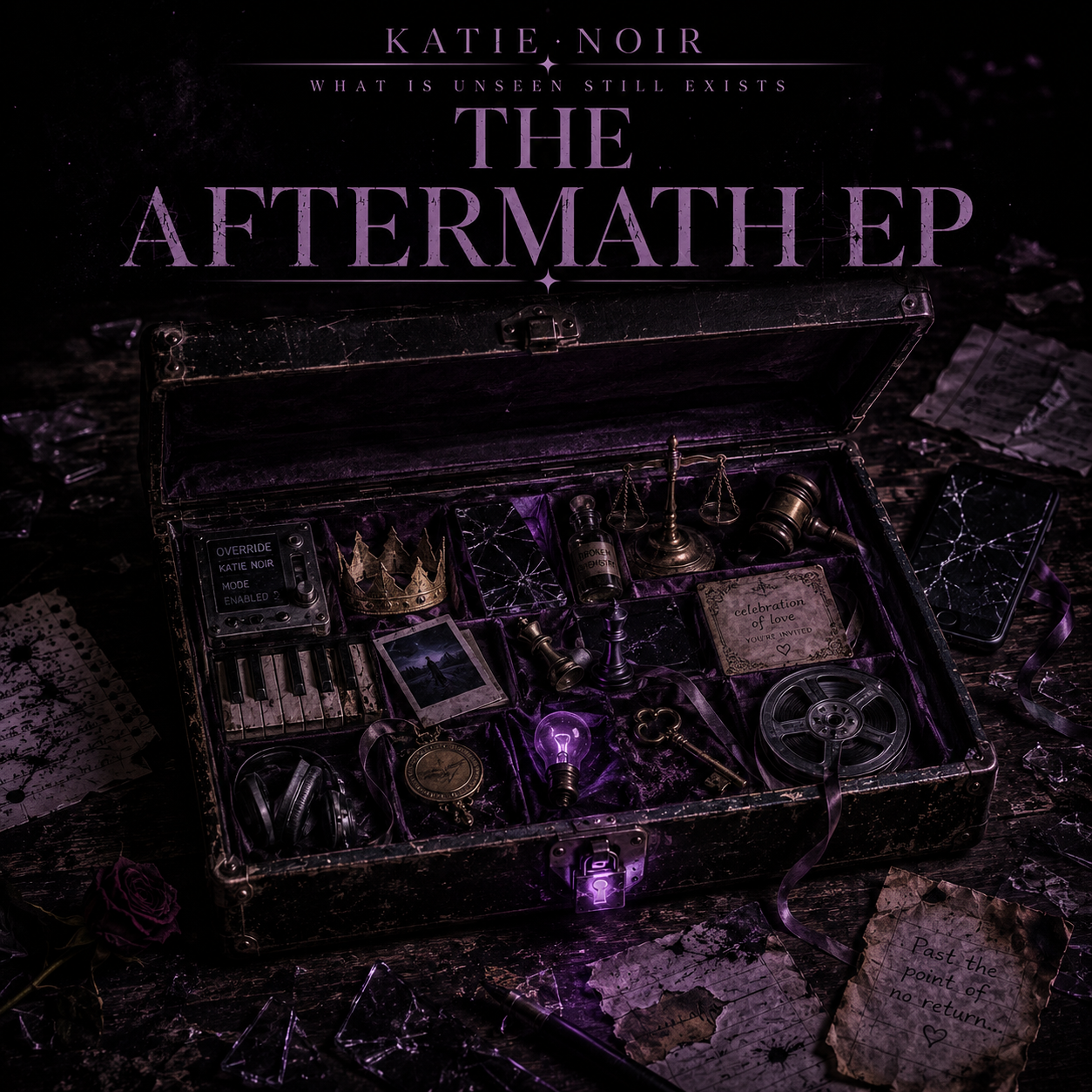
Noir is a twenty-one-year-old German medical student who produces, writes and performs alone, and who has kept her face out of the frame on purpose. That decision hangs over the whole record. Her debut, *What Is Unseen Still Exists*, was a private world made audible. This follow-up asks the more interesting question: what happens once the world answers back? Structured in five chapters (The Reality, The Vulnerability, The Healing, The Loyalty, The Acceptance), it plays like a diary that has been photocopied and pinned to a noticeboard, with the author watching from across the room.
The opener, "Factory Preset", is a sneer at conformity delivered with enough pop polish to make the irony stick. "Paper Crown" follows with a bureaucratic grievance, the sort of song only an independent artist who nearly lost her record to distribution paperwork could write, and it is far funnier than the subject has any right to be. Then comes "Vulnerability Hangover", the title track in all but name, which captures the particular 3 a.m. dread of having said something true to everyone at once. It is the best thing here, and it earns the phrase, because Noir understands that regret after honesty is rarely about the honesty. It is about the loss of control.
The middle stretch is where the record gets properly dangerous. "If I Needed You Yesterday", "No Love No Pain" and "Hypocrite" form a run of attachment and absence that shifts from longing to accusation to something close to self-prosecution. "Hypocrite" is staged as a courtroom in which the prosecutor slowly realises she is also the defendant. Plenty of songwriters point the finger. Few follow its trajectory back to their own chest, and Noir does it without a trace of self-pity. Beat by beat, the electronic textures shade from glossy to gaunt, as if the production itself were losing its nerve.
Relief arrives in "When I Play Piano", a small, honest tribute to music as somewhere to put feelings that do not need answering, and in "Someone I Never Met", an admiring song to a storyteller whose influence she has felt without ever shaking a hand. These are quiet pieces, and the record needs them.
Genre-hopping is usually the refuge of the undecided, but here it works as vocabulary. Noir reaches for hip-hop when she needs bite, R&B when she needs ache, and cinematic sweep when the story outgrows the song. "I Prefer Jason", the lead single, is the clearest case: a satire of a fictional celebrity wedding that picks warmth and personality over spectacle, with a bounce that makes the moral go down easily. It is the funniest moment of the year in this corner of pop, and it never sneers at its subjects the way lesser satire does. "Game Over" bristles with protective fury beside it, proof that her humour and her loyalty come from the same place.
That loyalty drives the last third. "Still The Best", "Worth The Light" and "Steady Heart" are written for women who became part of her emotional life, and they handle grief, betrayal and endurance with a tenderness that never tips into sentiment. The hush around "Steady Heart" is remarkable, a song about a heart that holds when the body won't.
Then the record turns on its narrator. "Abandoned" asks who looks after the person forever looking after everyone else, and arrives at an uncomfortable answer: that self-neglect can hide inside productivity, and that turning distress into something useful is not the same as being healed. The closer, "Point Of No Return", refuses the comfort of a tidy ending. The songs are out, she can be found, the private has become public. Acceptance here means acknowledging what cannot be undone, and it lands harder than any triumphant finale would.
What lingers is the sense of an artist thinking aloud while the consequences are still arriving. Anonymity, usually a marketing gambit, becomes the record's quiet argument: you may have the songs, but you do not get the person. *The Aftermath EP* is generous, funny, raw and unusually self-aware. For a second record made in a hurry, it is a startling piece of work.