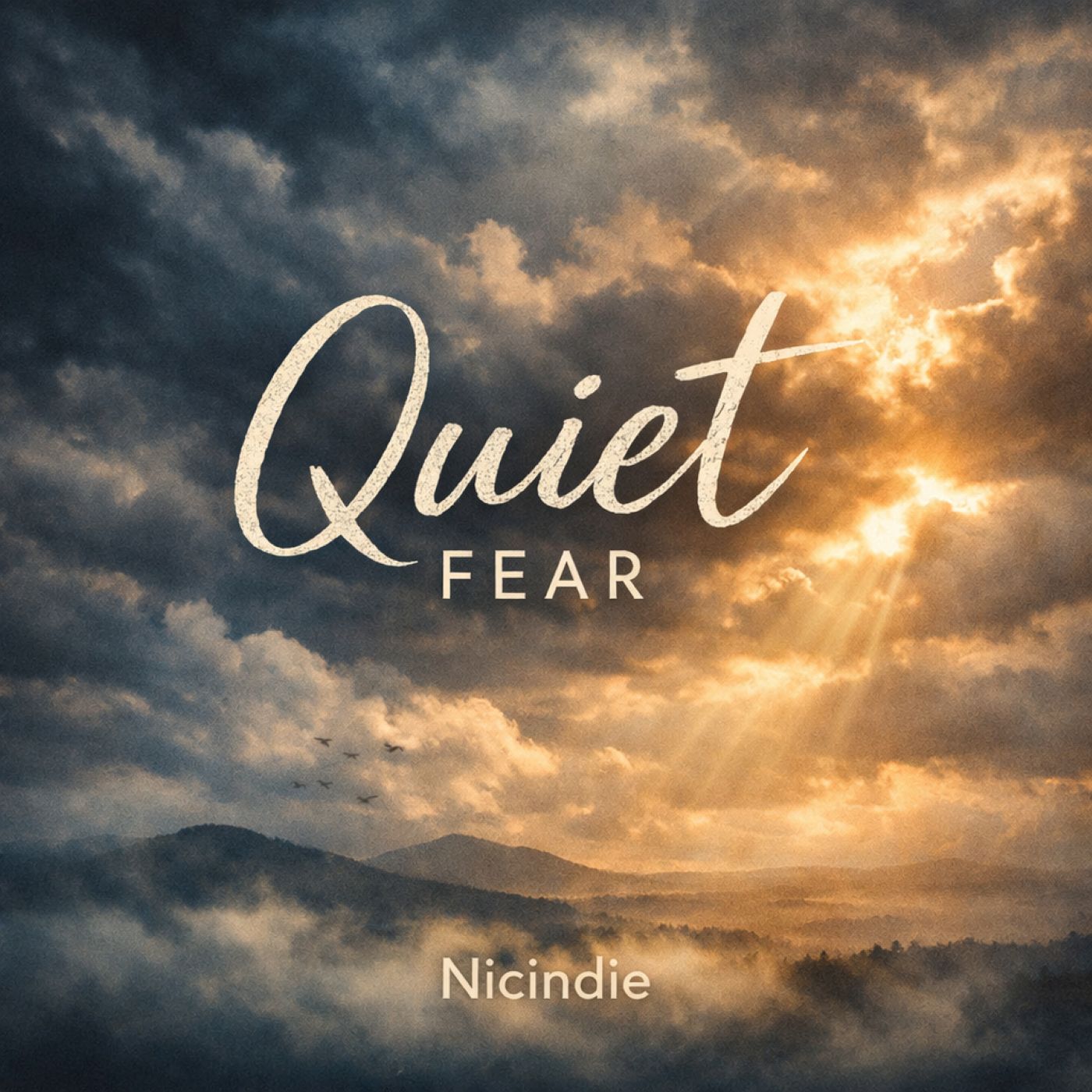
The premise is disarmingly simple. This is a record about the mornings that begin already tired, about the plans quietly cancelled, about the slow drift away from the people we love when everything starts to feel like too much. Nothing here is exaggerated for effect. Nicindie resists the temptation to dramatise a condition that, for those who live with it, is defined precisely by its lack of drama — and that restraint is the song's great achievement.
What elevates "Quiet Fear" beyond a well-meaning confessional is its formal daring. The vocal, we're told, is AI-generated, and rather than treating that as a gimmick or a shortcut, Nicindie has folded it directly into the song's meaning. The voice carries a faint remove, a softness that suggests someone speaking from behind a curtain rather than standing in the room with you. It is an unnervingly apt choice: anxiety often feels precisely like this, a version of yourself heard through glass, present but never quite arriving. The technology becomes text rather than mere tool, and the effect is closer to an inner monologue caught on tape than a conventional vocal performance. Pop music has long borrowed vocoders and pitch correction to manufacture distance or artifice; Nicindie inverts the trick, using synthetic vocals to manufacture intimacy with a feeling that resists being spoken aloud.
Structurally, the song traces a quiet arc — isolation first, then the fear of honesty, and finally a flicker of hope that letting someone in might lighten the load. It is a modest trajectory, and rightly so; recovery from anxiety rarely resembles a triumphant chorus swell, more a series of small, unglamorous decisions to stay open when closing off would be easier. Nicindie writes that arc with a lyricist's patience, letting the emotional weather shift by degrees rather than forcing a cathartic climax the material hasn't earned.
The accompanying lyric video, reportedly built around the same reflective, unhurried mood, seems a natural extension of the song's guiding idea — that anxiety so often lives in the spaces we choose not to discuss. Visually withholding rather than illustrative, it trusts the listener to fill the silences themselves, which is precisely the right instinct for material this internal.
What lingers most, though, is the sense of address. "Quiet Fear" doesn't perform suffering for an audience; it extends a hand to anyone who has carried the same weight without a name for it. It offers recognition rather than resolution, and that, for anyone who has spent a morning explaining away a heaviness they cannot quite articulate, will land harder than any grand statement could.
Small in scale, exact in execution, and unusually honest about both its subject and its own construction, "Quiet Fear" is a genuinely affecting piece of songwriting — proof that the most unassuming records are sometimes the ones that stay with you longest.