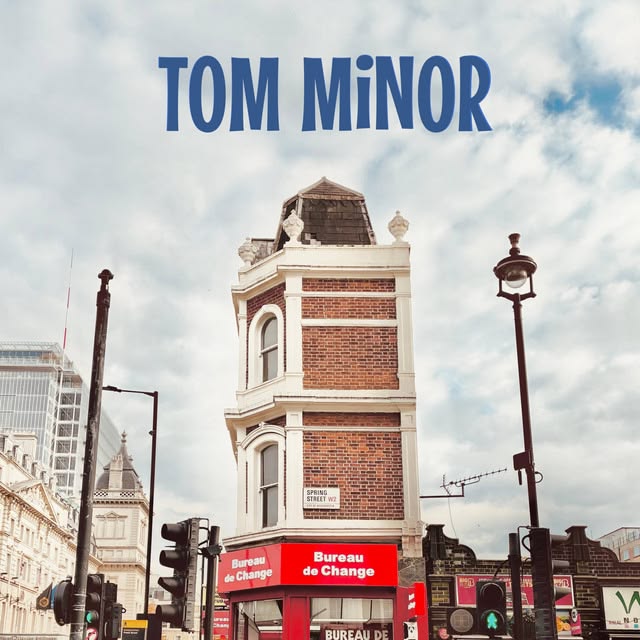
This is a man who has clearly spent time staring at one of those red-and-white bureau de change signs on a high street somewhere and thought: there's a song in this. Not a subtle song, mind. Minor announces himself with a cheerful "Wotcha!" and signs off with an equally cheerful "Gotcha!", bookending four minutes of bait-and-switch that plays out as both melodic conceit and lyrical sting operation. The bureau, it turns out, isn't selling you change at all — it's selling you short-change, dressed up in the language of progress and necessity. It's a swindle wearing a financial advisor's tie, and Minor knows it.
Musically this is where the record earns its stripes. Rather than settling into a groove and riding it, Minor restlessly shunts the song through indie rock, two-tone, tango and bolero, sometimes within the same verse, like a man flicking through radio stations on a long drive and refusing to commit to any of them. It shouldn't work. By any sensible songwriting logic it shouldn't work at all. And yet there's a logic to the illogic — the constant tonal lurching mirrors the song's subject matter so precisely that the chaos starts to feel less like indecision and more like argument. The music is doing what the lyrics are saying: nothing here holds its shape for long, and that's rather the point.
Producer Teaboy Palmer deserves credit for not smoothing any of this over. The temptation with a song this magpie-ish must have been to find some unifying sonic glue and stick everything down with it. Instead the seams show, deliberately, gleefully — and the record is better for the rawness of the join-work.
Lyrically, Minor is playing a longer game than the cod-Biblical framing of the press notes might suggest. The money-changers-in-the-temple allusion is a red herring of sorts; this isn't really about commerce at all, or rather it's about commerce as the latest disguise for an older grievance — the gap between what the powerful promise and what they deliver, between "transition" and theft, between the vending machine and the rifle range. It's politically agitated without being remotely preachy, which is harder to pull off than it sounds and rarer still in guitar music that still wants you tapping your toes.