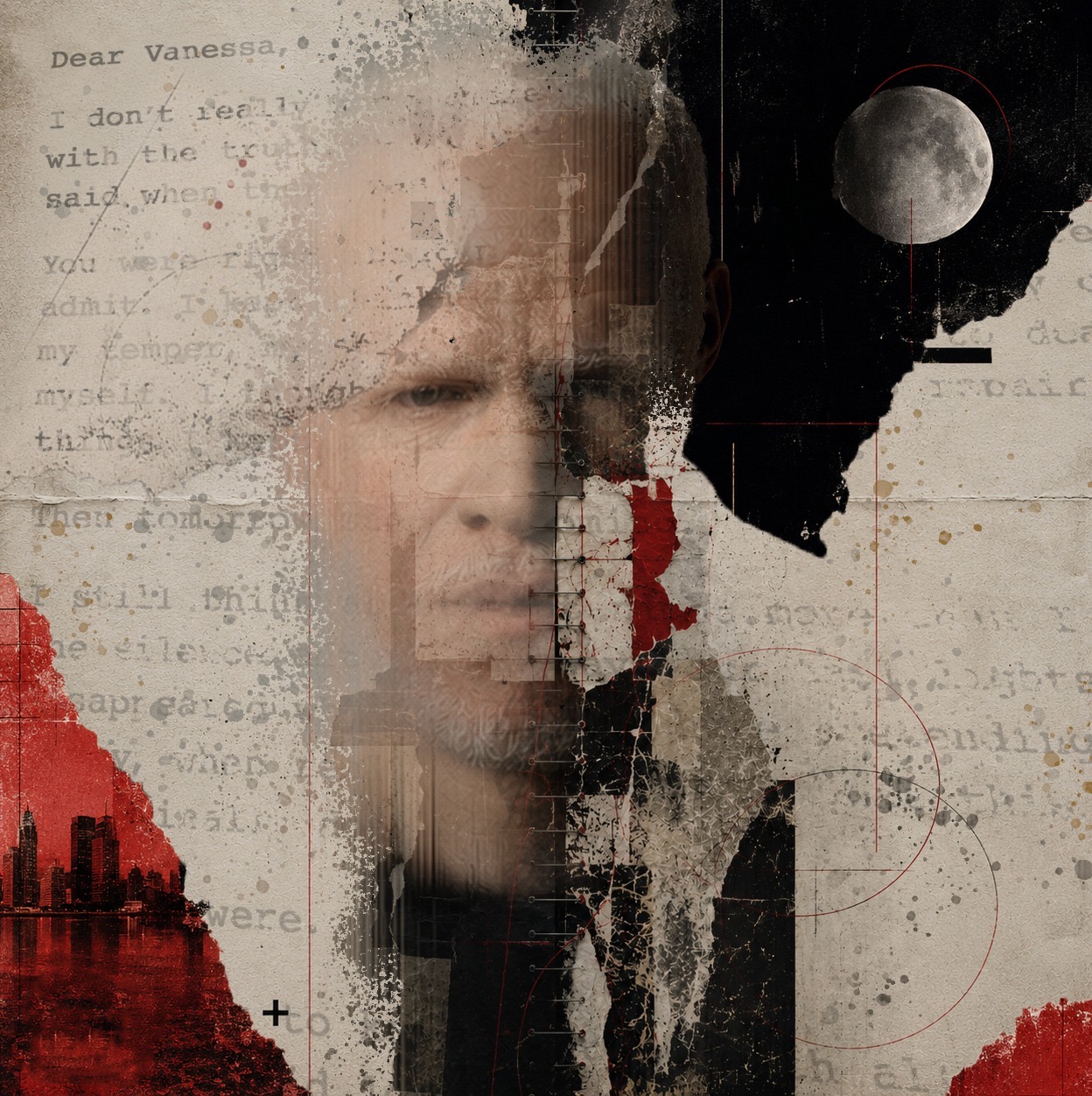
The backstory reads like tabloid fodder — Big Brother housemate, basketball-community founder, a man who's rubbed shoulders with Giggs and Bashy and Big Narstie — and you'd be forgiven for expecting bravado. Instead, "Operate" arrives stripped of swagger, built from the unglamorous material of a man examining his own failures under fluorescent light. London, that great churning indifferent machine, becomes the backdrop for a far quieter drama: a relationship ending, a body breaking down, and a mind finally still enough to notice what it had been avoiding.
The song's organising image — *"you drove away into the night, with my heart in your brake-lights"* — does what good pop lyricism has always done at its best: it takes an ordinary, almost banal moment (a car pulling away) and freights it with everything unsaid. Brake-lights, not headlights. Not the glow of arrival but the red warning of departure, receding. It's the kind of line that a lesser writer would have reached for and missed; DARNELL lands it with the offhand precision of someone who lived it rather than crafted it for effect.
Production-wise, the cinematic pop instincts serve the song rather than swallow it — strings and swell deployed with restraint, the arrangement building not toward a triumphant chorus but toward something closer to acceptance. Nothing here insists on catharsis. The song seems to know that real accountability doesn't resolve into a key change; it just sits with you, uncomfortable, until you've earned the right to move on.
What gives the track its peculiar charge is the parallel history hovering behind it — the fact that this song once belonged, however briefly, to someone else. Max Sarre's version, reshaped for his own life and championed by BBC Introducing, exists now as a kind of shadow text, a road not taken. DARNELL reclaiming the song, restoring his own particulars to it, turns "Operate" into something almost archival: not just a single but a correction, a return to source. Pop music rarely gets to watch its own variants in real time; here you can, if you're inclined, hear the difference between a song built for someone else's wounds and one built for the writer's own.
"Operate" won't reinvent the breakup ballad. It doesn't need to. It does something quieter and harder: it tells the truth about whose fault it actually was, and trusts that confession, stripped of self-pity, can carry its own kind of melody.