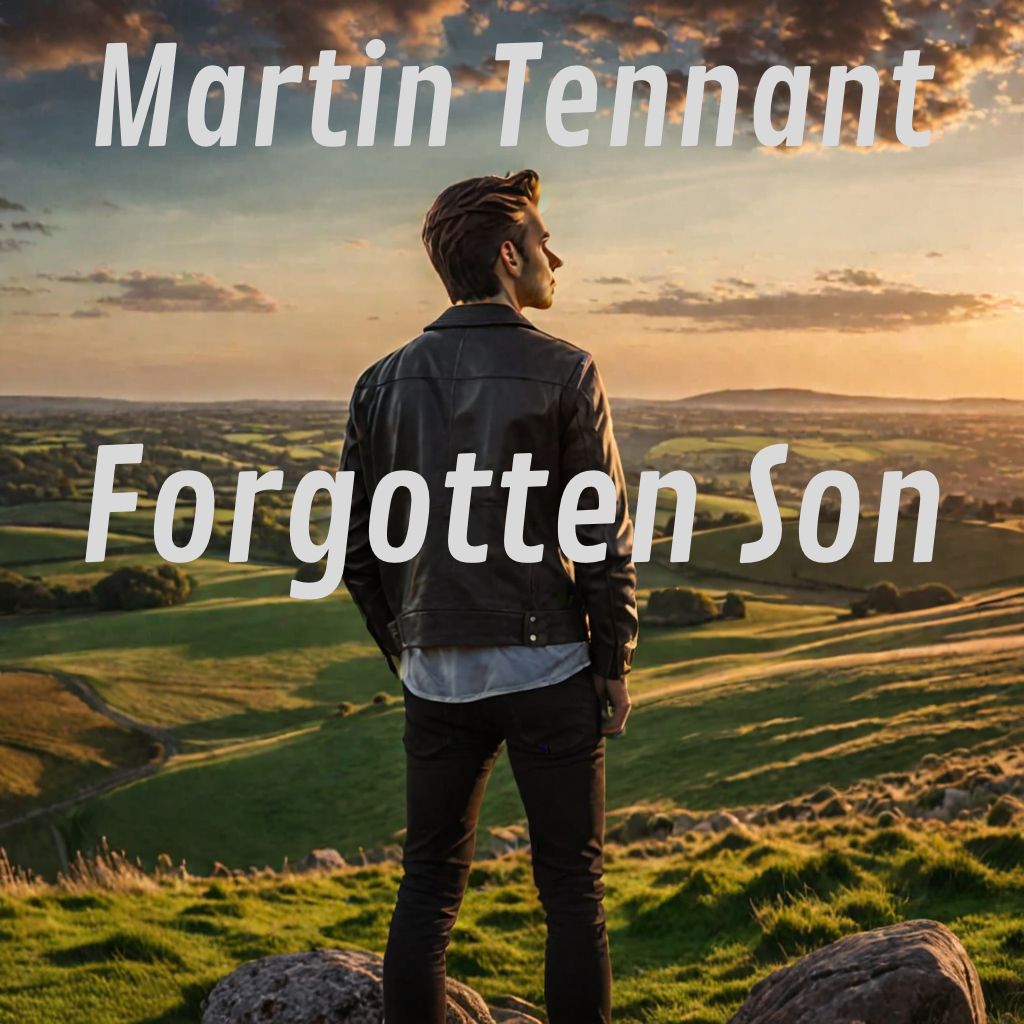
Scottish music has always carried a particular weight in its bones. From the bleak romanticism of the Trashcan Sinatras to the howling confessionals of Frightened Rabbit, the country has a habit of producing songwriters who treat emotional honesty not as a stylistic choice but as a moral obligation. Martin Tennant, emerging quietly from that same storied landscape, appears to understand this lineage intuitively. "Forgotten Son" doesn't borrow from it — it inhabits it.
From the opening bars, the song establishes its intentions with admirable economy. The guitar work is the kind that sounds deceptively simple, the sort of thing that takes years to unlearn flashiness in favour of feeling. Each chord lands like a considered thought rather than a reflex, and Tennant's voice — warm, lived-in, carrying the faint grain of someone who has turned a difficult feeling over in his hands many times before committing it to tape — sits above it with quiet authority. He is not performing vulnerability here. He is simply being vulnerable, which is an altogether rarer and more affecting thing.
Lyrically, "Forgotten Son" navigates themes of identity and displacement with the kind of restraint that lesser writers would abandon at the first chorus, reaching instead for melodrama. Tennant resists that pull entirely. The title itself is telling — not "abandoned" son, not "broken" son, but *forgotten*, which implies something more passive and therefore more painful. To be forgotten is not to be rejected with force but to simply slip from someone's attention, to become background noise in another person's life. It is a quietly devastating distinction, and the song earns it.
The production on the remastered version is worth addressing directly. Where demo recordings often have a rawness that becomes their own kind of charm, this official release adds dimension without sacrificing the intimacy that presumably made early listeners — fans, friends, the apparently perceptive local pub owners of Scotland — respond so warmly. The arrangement breathes. Nothing is overcooked. The instinct to leave space rather than fill it speaks well of whoever had a hand in these decisions, whether that's Tennant himself or a collaborator of similar temperament.
References to 90s and early-2000s British indie are appropriate here, though not in any obvious or derivative way. You might catch a passing shadow of early Idlewild, perhaps a harmonic sensibility that nods toward Starsailor at their most unguarded, but "Forgotten Son" never feels like an exercise in nostalgia. The past is filtered through a contemporary self-awareness. Tennant knows those records well enough to have moved beyond imitation into something that simply shares their values: melody that serves emotion, production that serves the song, and performance that serves the truth of the lyric.
That Future Hits UK responded positively is unsurprising. That BBC radio came calling — twice, within consecutive weeks — suggests an industry beginning to sit up straight. These are not the metrics of novelty. They are the metrics of something that resonates.
At 260 YouTube subscribers and under a thousand TikTok followers, Martin Tennant is, by the cold arithmetic of the streaming age, an emerging artist. But numbers have always been a poor measure of necessity, and "Forgotten Son" has that quality above all others: it feels *necessary*. Not to the market, but to the person who made it — and that, consistently throughout the history of music that actually matters, is where the best of it begins.
The debut album cannot come soon enough.