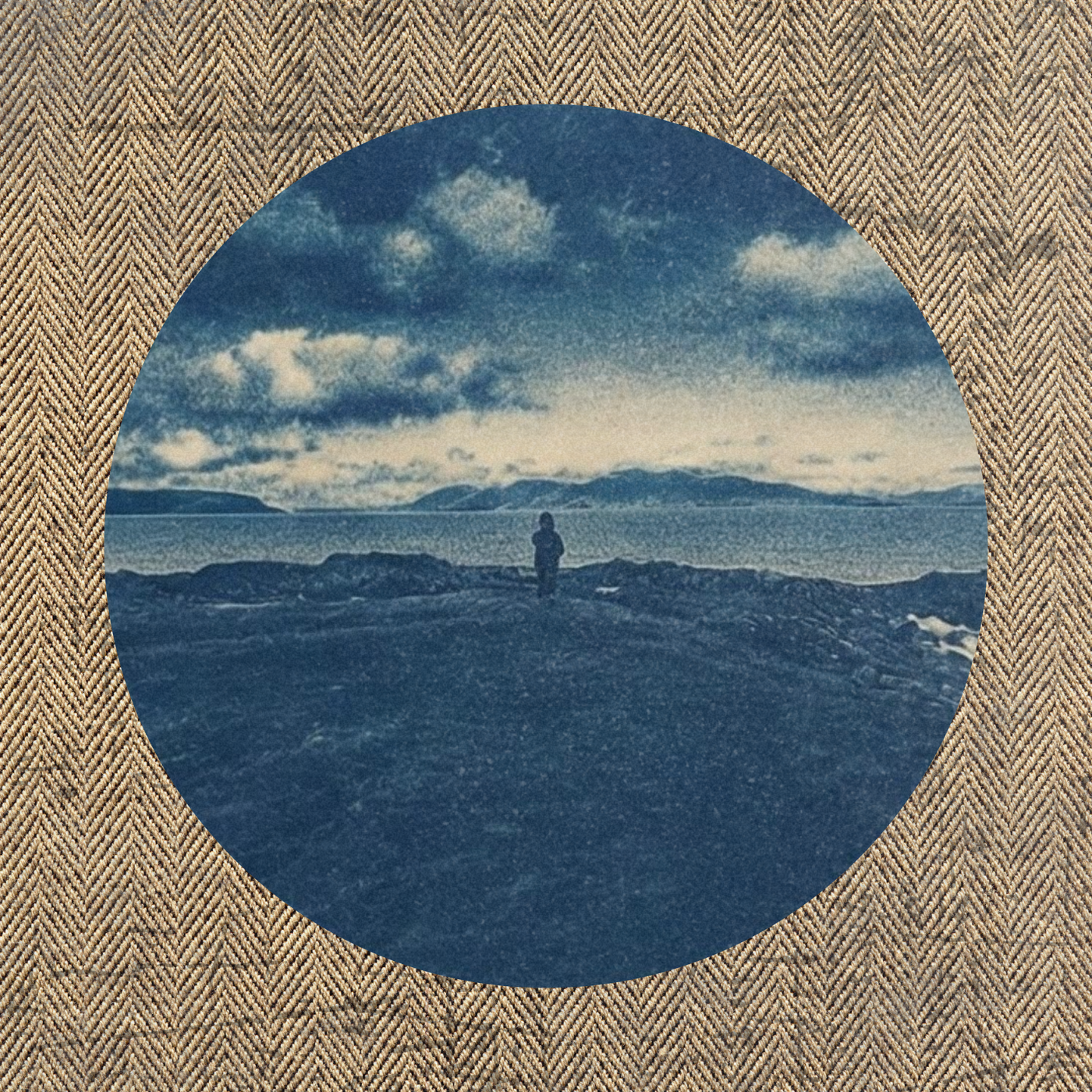
Finlay Birch arrives not with a bang but with a breath held and slowly, gratefully released. Recorded live at An Tobar, the arts centre tucked into the village of Tobermory, the track carries the acoustic memory of its surroundings — high ceilings, stone walls, the particular hush of a room that has hosted folk music, community gatherings, and quiet contemplation in equal measure. Producer Dylan Cooper, whose CV runs from Charli XCX to Lil Peep, might seem an unlikely custodian for something this delicate, but his instincts here are impeccable: he treats the room as an instrument, letting the live foundation breathe before layering in atmospheric synth textures that hover at the edges like mist off the sea, never intruding, always suggesting.
Birch's voice sits in the lineage of the great confessional songwriters — the late Nick Drake's spectral intimacy, Elliott Smith's bruised precision, the wide-open desolation of Bon Iver at his most stripped back. Yet there is nothing derivative in how he deploys these influences. Where Drake sometimes retreated so far inward that the listener felt like a trespasser, Birch extends an invitation. The song's central thesis — that emotional burden need not be carried alone, nor carried forever — is delivered not as a proclamation but as a realisation arriving in real time, the way insight actually tends to arrive: quietly, sideways, while you're looking out a farmhouse window at a storm.
The arrangement makes a virtue of restraint. The layered backing vocals that surface in the song's later passages do not push toward catharsis so much as simply acknowledge it, like voices joining from an adjacent room rather than crashing through the door. It is a production choice that speaks to considerable maturity — the temptation in a debut single is always to announce yourself too loudly, to ensure you are heard. Birch trusts the song to carry itself.
What Birch has understood, and what separates the genuine article from mere aesthetic approximation, is that folk music at its most powerful is not about performance — it is about transmission. A feeling, faithfully documented, passed from one body to another. "Weight Will Unwind" does exactly that. It catches you in the chest not because it is technically accomplished (though it is), not because its production is sophisticated (though it is), but because it is recognisably, uncomplicatedly true. The weight does not have to be permanent. Most of us know this, somewhere. Birch makes us feel it.
If his forthcoming debut album sustains this quality across its full length — and if songs written across nearly a decade of lived experience have sharpened rather than softened his voice — then Finlay Birch is not simply a promising Scottish newcomer. He is the real thing. The mist is lifting. Pay attention.