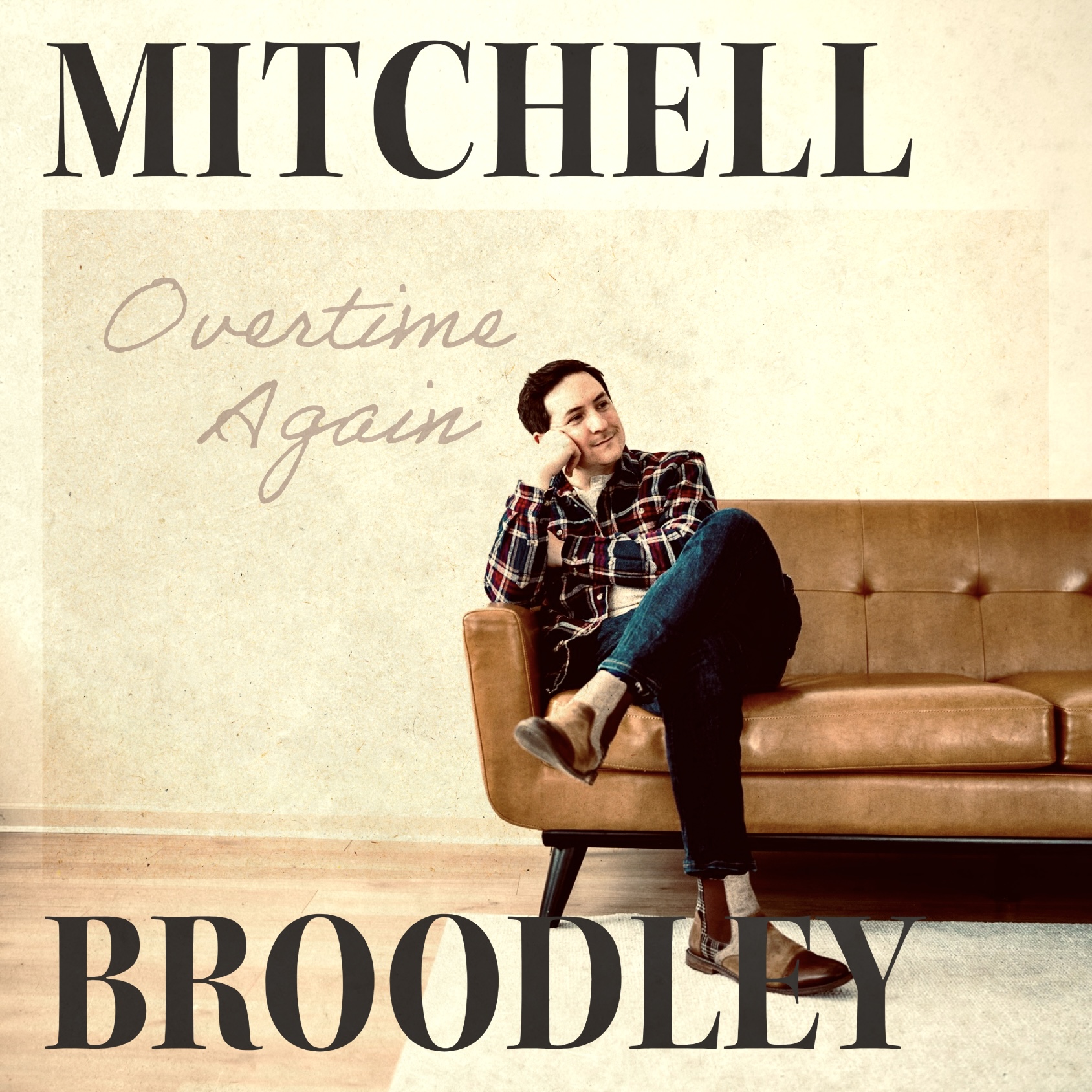
The conceit is deceptively clean. A long-distance relationship, each visit measured in hours rather than days, and the clock running down the way clocks do at the end of a game you desperately don't want to end. The football metaphor — praying for overtime, for those stolen extra minutes together — could, in lesser hands, have curdled into something unbearably cute, the kind of sports-themed country song that gets played in stadium car parks and forgotten immediately. Broodley resists this fate almost entirely. The imagery earns its keep not through novelty but through *accuracy*: the feeling of watching time drain away from something precious is universal, and football — with its visible clock, its clear finality, its sudden death — turns out to be a surprisingly apt frame for romantic dread.
The production deserves particular attention. Broodley self-produces while drawing on Nashville session musicians, and the result occupies that precise, difficult register between contemporary country polish and something more weathered and genuine. The arrangement gives the lyric room to breathe — no small achievement at a moment when Nashville's mainstream instinct is to bury sentiment under glossy noise. The instrumentation holds back where a lesser producer would pile in. This is music that trusts its own emotional intelligence.
Broodley's vocal delivery has the quality — increasingly rare in any genre — of sounding like a man who has actually lived the thing he is singing about. At fifty-something, returning to music after decades of building a life entirely elsewhere, he is constitutionally incapable of performing the kind of synthetic earnestness that afflicts so many younger artists who reach for authenticity as a style choice rather than a fact of existence. When he sings about wanting time to stop, you believe that he has, at various points, desperately needed it to. The voice carries weight precisely because the biography does.
It is worth noting, too, what *Overtime Again* is not doing. It is not performing rustic credibility through deliberately rough production. It is not weaponising nostalgia. It is not — and this is perhaps its most quietly radical quality — trying to be anything other than a very good song about a very common human experience. After a debut holiday single that reportedly reached the top of Amazon Music's category charts, Broodley has arrived at his second release with the unusual confidence of a man who is not in a hurry to prove anything. The song feels *considered*. It feels like the work of someone who spent years listening before he returned to speaking.
The comparison that keeps presenting itself, somewhat surprisingly, is not to any obvious country antecedent but to the quieter end of Guy Clark, or perhaps to early Lyle Lovett — artists for whom intelligence and restraint are not concessions to sophistication but the natural expression of how they think about the world. Broodley is not in that company yet. But *Overtime Again* is the kind of single that makes you want to hear what happens next.
Which is, when you think about it, exactly what good songs are supposed to do.
*"Overtime Again" is available on all major streaming platforms. Mitchell Broodley is currently being serviced to country radio.*