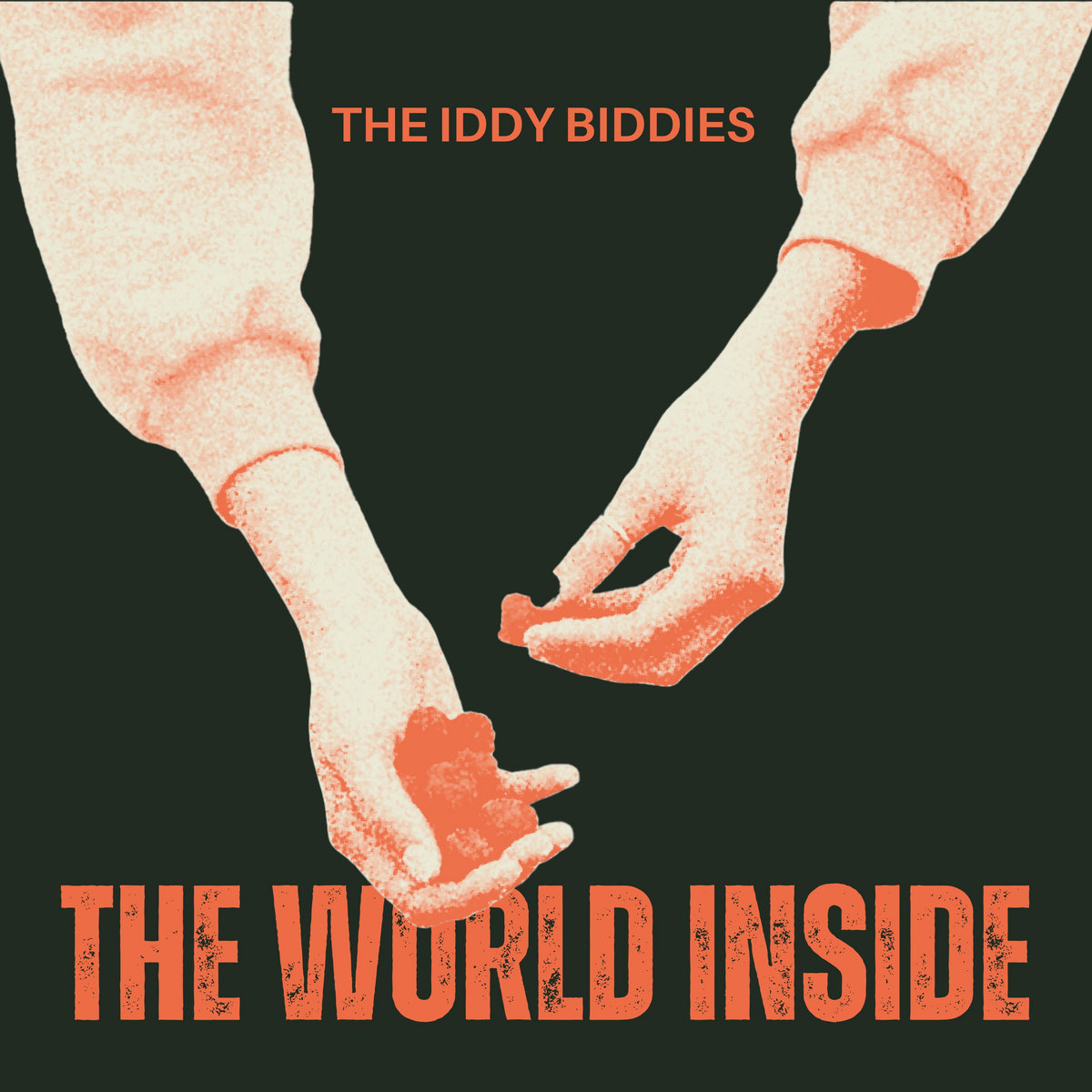
From the opening philosophical provocation of "It's Just a Show," the band announces its preoccupations with the confidence of a band that has done the reading. The ghost of Alan Watts haunts these grooves like a benevolent poltergeist, whispering that the performance we call daily life is largely theatre — elaborate, exhausting, and entirely self-authored. Wallenstein has internalised this idea so completely that the song never tips into lecture. It breathes. It aches. It is the kind of indie-folk track you hear once and spend a fortnight trying to shake.
The Iddy Biddies wear their influences the way the best bands do: openly, but never slavishly. The harmonic debt to Elliott Smith is audible and unapologetic — chromatic chord movements that turn corners you didn't see coming, melodic lines that seem to resolve and then think better of it. The narrative sprawl, meanwhile, recalls early Decemberists, that peculiarly literary tradition of American storytelling that somehow feels more at home on a grey Tuesday than any stadium anthem. And yet the collective never sounds derivative. They sound like students who have graduated.
"Mr. September" is the record's most adventurous gambit — a psychedelic character study that slides through time signatures like a man late for an appointment he never intended to keep. It is Wonderland logic applied to the modern condition, absurdist on the surface and devastatingly precise underneath. "Fortunate Sons" crackles with social electricity, the sort of song that sounds like it has always existed, waiting only to be transcribed. And "Words You Like To Say" has the laconic, wounded precision of a very good short story — a song about the weaponisation of language, delivered with the restraint that makes it all the more devastating.
"Strange World" deserves particular attention. Built on chromatic progressions and a mid-tempo pulse that feels simultaneously urgent and meditative, it captures the peculiar weight of private fear in a way that few contemporary folk acts manage. The arrangement is stripped but never spare — every note is earning its place. It is the sound of a band that has learned the most important lesson available to any musician: silence is not the absence of music, it is music's most persuasive argument.
The record closes with "In Heaven's Lobby," a soaring spiritual that refuses cheap consolation. The grace it offers has been hard-won over eleven tracks of honest reckoning, which means when it arrives, it lands. The Iddy Biddies describe the album as a "dinner invitation" — music that arrives when you have something important to share. The metaphor is apt and rather beautiful. This is not background music. It requires, and rewards, your full and undivided presence.
*The World Inside* is the work of a collective that has decided, collectively, to mean something. In a landscape cluttered with competent forgettables, that decision alone is worth celebrating. The execution makes it essential.