The twelve months Dodds invested in crafting this piece weren't spent merely writing notes. His focus on "refining note resonance, subtle timing changes, key velocities, and spacing" reveals a composer working at the level where music becomes intimate communication. These aren't the broad strokes of romantic virtuosity but the careful calibrations of an artist who understands that emotional truth lives in the details. Every held note, every carefully weighted key press, every measured silence serves the larger narrative Dodds is telling.
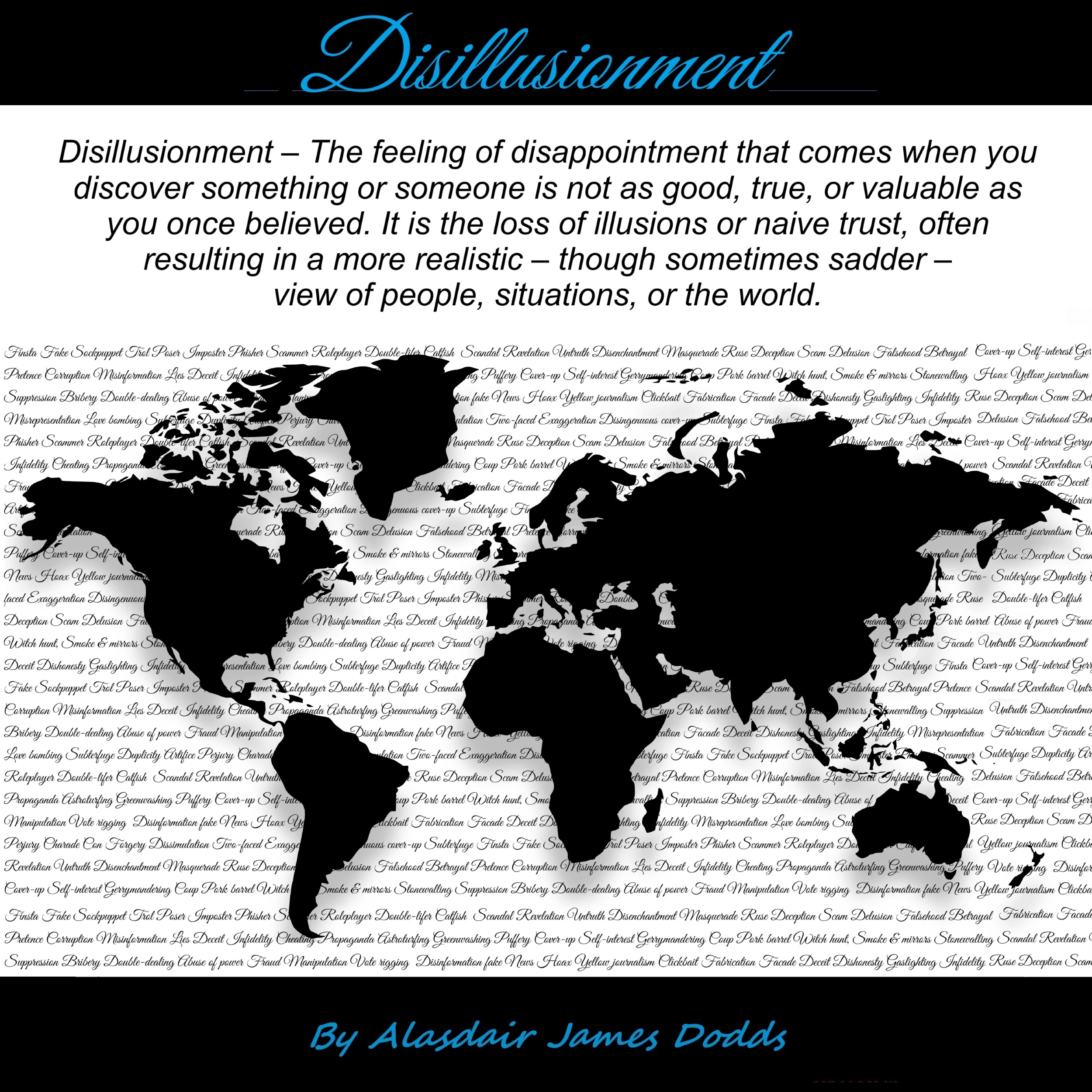
That narrative explores territory both universal and deeply personal. Dodds frames *Disillusionment* as reflecting his perception of a world "shrouded in illusion or distorted information," but the piece never becomes didactic or heavy-handed. Instead, it traces the emotional arc of discovering that something once believed true proves otherwise—that moment when clarity arrives accompanied by disappointment. The genius lies in how Dodds transforms this potentially bitter experience into music that moves "to a place of balance and beauty."
The compositional architecture supports this journey beautifully. Dodds works within the traditions of romantic impressionism and cinematic scoring, two vocabularies he has honed across thirteen singles and film credits including work for National Geographic and feature films. But *Disillusionment* shows him at his most refined, stripping away orchestral colour to focus purely on what the piano can reveal. The piece demonstrates his ability to traverse "a wide emotional spectrum" even within the constraints of solo piano—no small achievement.
The accompanying video adds another dimension entirely. By separating the notation into cool blue for the left hand and warm orange for the right, Dodds creates a visual representation of the music's "intimate emotional interplay." This isn't merely decorative; it reveals the dialogue between the two hands, showing how Dodds structures the piece as conversation rather than monologue. The video also serves pianists wanting to learn the work, a generous gesture from a composer who clearly wants his music performed and shared.
What emerges from Dodds' background makes *Disillusionment* even more remarkable. As a self-taught musician who began at eleven and developed his skills privately for over twenty years while pursuing management, he brings an outsider's perspective to composition. Dyslexia prevented formal lessons, forcing him to find his own path to musical expression. That unconventional route shows in the best possible way—*Disillusionment* sounds like the work of someone who learned music as a language of personal necessity rather than academic exercise.
John Lubbock OBE's commitment to perform Dodds' music with the Orchestra of St John's speaks to its substance. When a conductor of Lubbock's stature encounters a composer's work and immediately plans to programme it, that signals music worth serious attention. Similarly, Frances Wilson's in-depth interview for her "Meet the Artist" series positions Dodds within a lineage of thoughtful, articulate composer-pianists who can illuminate their own creative process.
*Disillusionment* rewards repeated listening. The "depth, poignancy, and intimacy" Dodds sought to infuse into the sound reveals itself gradually. First hearings might register the piece as simply beautiful piano music. Subsequent encounters expose the structural intelligence, the harmonic choices, the rhythmic subtleties that create its emotional impact. This is music that trusts the listener to meet it halfway, to bring their own experiences of disillusionment and discovery to the encounter.
For a composer who describes his work as "emotionally reflective," Disillusionment represents the apex of that aesthetic. It's music that thinks and feels simultaneously, that offers both "reflective and thought-provoking" engagement without sacrificing immediate emotional connection. Twenty-seven years after first sitting at a piano, Alasdair James Dodds has created something that justifies every hour of those twelve months spent sculpting sound into meaning.