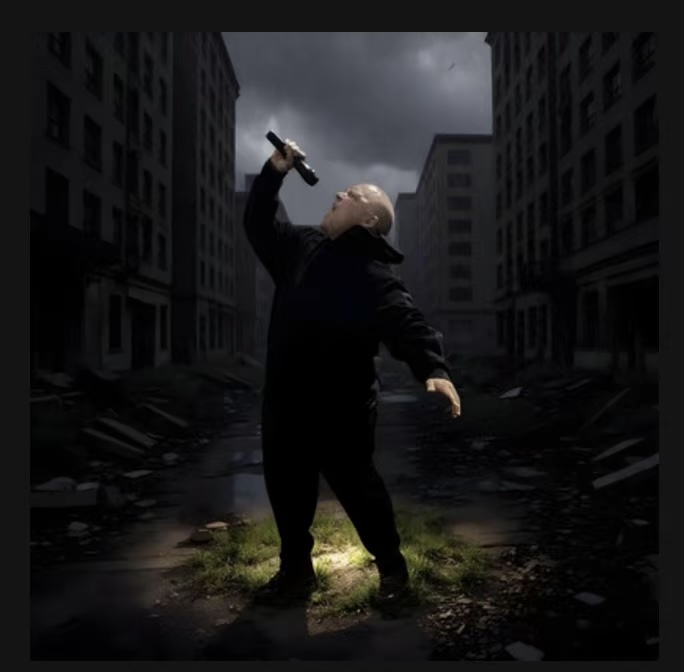
The premise itself is disarmingly simple: a parent looks at society's most vulnerable – the homeless, the addicted, the mentally unwell – and recognises in them the children they once were, children who might have been loved as fiercely as his own sons. It's a premise that could easily collapse under the weight of its own good intentions, yet Petersen navigates this territory with genuine care. The title question hangs throughout the track like an unanswered prayer, directed not at any individual but at the machinery of society itself, at the collective failure of systems and communities to sustain those who needed them most.
What makes this single remarkable is its refusal to offer easy absolution or tidy solutions. Petersen admits in his own words that he once viewed homelessness and addiction through the lens of personal responsibility – "people who had simply made bad decisions" – and the song carries the weight of that confession. This isn't a finger-wagging exercise in virtue but rather an examination of how parenthood can shatter our comfortable assumptions. The song becomes a document of transformation, capturing that vertiginous moment when judgement gives way to recognition.
Musically, the arrangement serves the song's emotional architecture without overwhelming it. There's a restraint here that speaks to maturity – no melodramatic crescendos or manipulative strings, just enough space for the central question to breathe and resonate. Petersen's vocal delivery carries a directness that suits the material; this isn't a performance designed to showcase technical prowess but rather to communicate something essential and true.
The decision to donate proceeds to mental health charities isn't mere window dressing but feels integral to the song's DNA. It suggests that Petersen understands the ethical dimension of writing about vulnerability – that bearing witness carries with it certain obligations. Too often, songs about social issues become exercises in self-congratulation for the artist, but here the gesture feels like an acknowledgment that empathy without action rings hollow.
There's also bravery in the song's specificity. By anchoring the narrative in the experience of fatherhood, Petersen makes himself vulnerable to charges of privileged discovery – the idea that it shouldn't take having children to recognise the humanity of the suffering. Yet the song seems aware of this tension and doesn't shy from it. Instead, it offers a model of how minds can change, how compassion can be learned, and how personal experience can crack open our hardened assumptions about others.
The single works because it asks its question sincerely, without pretending to possess the answer. Why don't we love them? Why do we allow systems to fail? How do we reconcile the love we have for our own with the indifference we show to others? These questions linger long after the final notes fade, which is precisely the point. This isn't a song designed to make listeners feel good about themselves but rather to make them sit with their own discomfort, their own culpability.
"Why Don't They Love You Like I Do" positions Petersen as a songwriter willing to grapple with difficult truths, both societal and personal. It's a single that trusts its audience to meet it halfway, to do the uncomfortable work of self-examination. In a musical landscape often dominated by escapism and surface-level engagement, that alone makes it worthy of attention.