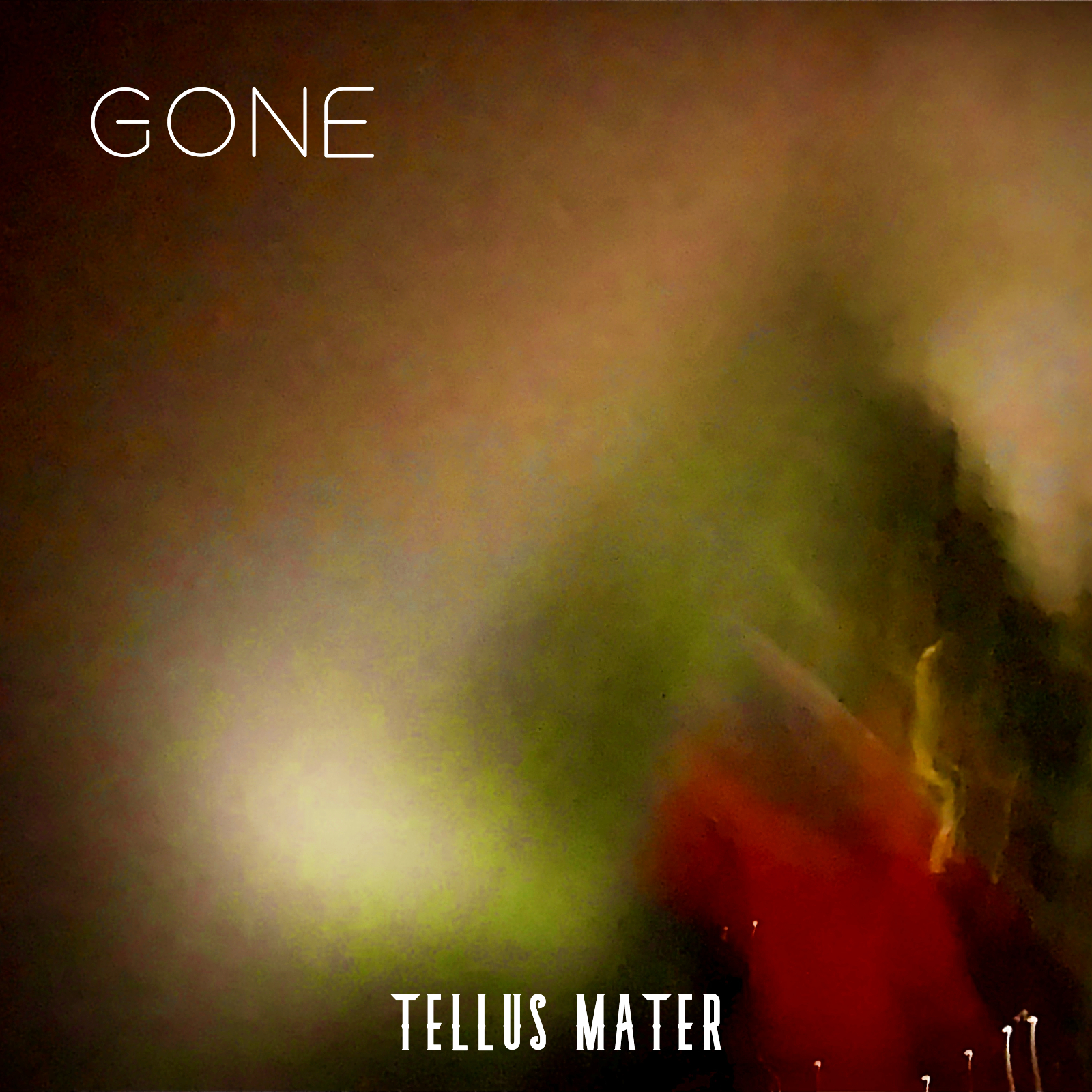
Rouse's pedigree speaks for itself—East of Gideon's halcyon days selling out the Whisky a Go Go in early '90s Los Angeles, sharing stages with the holy trinity of that era's revolutionary rock (Kravitz, Nirvana, Rage Against the Machine), and studio time with Butch Vig, no less. Yet "Gone" suggests an artist who has consciously shed the bombast of those heady days for something altogether more introspective, more deeply felt.
The press materials speak of "haunting, introspective" qualities, of "expansive atmospheres with raw, personal lyricism," and for once, such descriptors don't feel like marketing hyperbole. This is music that understands the difference between emptiness and space, between absence and loss. The themes—loss, distance, emotional aftermath—are hardly novel territory, but it's in the execution, in that promised "restraint and quiet intensity," where Rouse appears to have found his most authentic voice.
What's particularly intriguing is the artist's trajectory: from the collaborative energy of a band environment to the solitary pursuit of a solo project, from the perpetual motion machine of Los Angeles to the relative stillness of Florida. This geographical and artistic shift feels embedded in the DNA of Tellus Mater's work. There's a sense of an artist who has traveled far—not just physically, but emotionally and spiritually—and returned with hard-won wisdom about what truly matters in a song.
The collaboration history is telling. Working with Butch Vig—the man who gave us *Nevermind* and helped define the sonic architecture of '90s alternative rock—suggests someone comfortable with big, textured production. Greg Ladanyi's involvement points to an appreciation for pristine engineering. And the mention of "experimental innovator Gaza X" hints at a willingness to push boundaries, to explore the margins where convention breaks down.
"Gone" emerges from this rich soil as what one imagines is a distillation rather than an explosion. In an era of maximalist production and attention-grabbing histrionics, Rouse's choice to pursue "restraint and quiet intensity" feels almost radical. It suggests an artist secure enough in his craft to trust in understatement, to believe that sometimes the most powerful statement is the one not fully voiced.
The cinematic quality mentioned in the release is worth pondering. Cinema, after all, is as much about what's left off-screen as what's shown, about the power of implication and suggestion. If "Gone" operates in this register—building emotional weight through atmosphere and nuance rather than direct assault—it positions itself in a particularly interesting space within contemporary songwriting. This is music for headphones and late nights, for moments of reflection rather than catharsis.
One can't help but think of other artists who've made similar journeys: the introspective turn of later-career Nick Cave, the haunted Americana of Mark Kozelek, the atmospheric soundscaping of The War on Drugs. These are artists who understand that growing older as a musician needn't mean growing less relevant; it can mean growing more focused, more willing to excavate the uncomfortable truths that youth either doesn't see or doesn't dare examine.
The title itself—"Gone"—is appropriately minimal, a single syllable carrying the weight of absence, of things lost and irrecoverable. It's the kind of title that invites meditation rather than declaration, that acknowledges the impossibility of fully articulating certain emotional states.
"Gone" promises to be a worthy addition to the catalog of an artist who has clearly earned the right to be heard on his own terms.