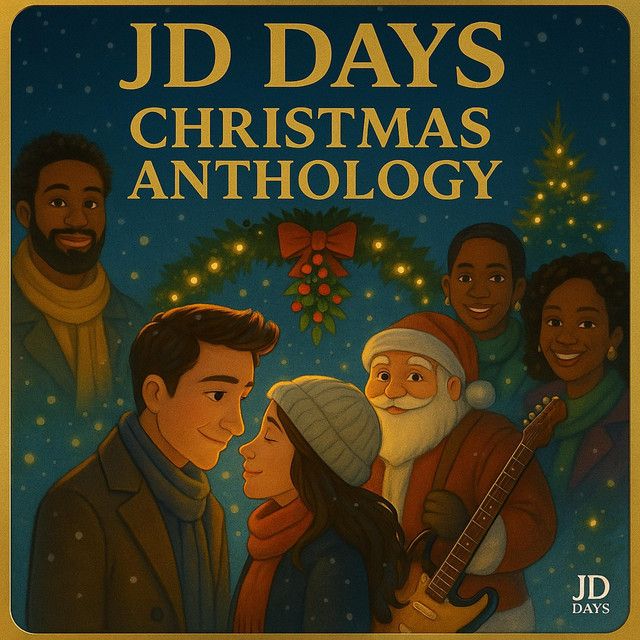
The UK-based collective, led by singer-songwriter James, has crafted a project that oscillates between earnest sentimentality and genuine emotional resonance. Opening with "Evergreen Christmas," the album immediately establishes its visual language—you can practically see the snow falling through the chord progressions, each one carefully constructed to evoke that peculiar mixture of nostalgia and longing that defines the season. The production values are immediately apparent; this is not a hastily assembled cash-grab compilation, but a considered work with genuine ambition.
The balance between original compositions and reimagined classics proves surprisingly astute. Six original tracks provide the album's backbone, allowing JD Days to establish their own festive mythology—complete with snowy New York romances and rock-and-roll sleigh rides—while four traditional selections anchor the collection in familiar territory. "Here Comes Santa" emerges as a particular highlight, a modern-rock anthem that manages to inject genuine energy into the Santa mythos without descending into novelty territory. The guitars bite with just enough edge to appeal to listeners who typically flee from Christmas music's more saccharine tendencies.
"Angel Woman" demonstrates the collective's ability to craft moments of genuine beauty. Described as a "dawn-lit ballad of grace, hope, and renewal," it delivers on that promise with restraint and sophistication. James's vocals, steeped in pop-rock and folk traditions, find their most comfortable register here—warm without being cloying, hopeful without veering into the mawkish. The production allows breathing room, a welcome contrast to the wall-of-sound approach that characterises much contemporary seasonal music.
The album's conceptual framework—positioning these tracks within a wider narrative arc—could easily have collapsed under its own ambition. Yet the inclusion of ten "bridge videos," each narrated with what the press materials describe as "a warm American female voice," suggests a project conceived with unusual thoroughness. These interludes serve to guide listeners through the anthology's emotional trajectory, from "Mistletoe" through to the closing instrumental reprise of "Evergreen Christmas." Whether this enhances or interrupts the musical experience will likely depend on individual tolerance for guided listening.
The finale, a rendition of "All You Need Is Love," represents both the album's thematic culmination and its riskiest maneuver. Tackling a Beatles composition requires either tremendous hubris or genuine conviction; JD Days appear motivated by the latter. Their version, focused on "togetherness and forgiveness," serves the album's overarching themes without attempting to overshadow the original—a wise decision that speaks to the project's broader intelligence.
JD Days have created a Christmas album that actually attempts something beyond seasonal redressing of existing formulas. Whether "lighting the dark" through music and animation represents the future of festive releases remains uncertain, but *Christmas Anthology* makes a compelling argument for artistic ambition during the year's most commercially calculated season.
For those seeking something beyond the endless rotation of Mariah Carey and Wham!, JD Days offer a thoughtful alternative—one that believes Christmas music can still aspire to art rather than merely commerce.