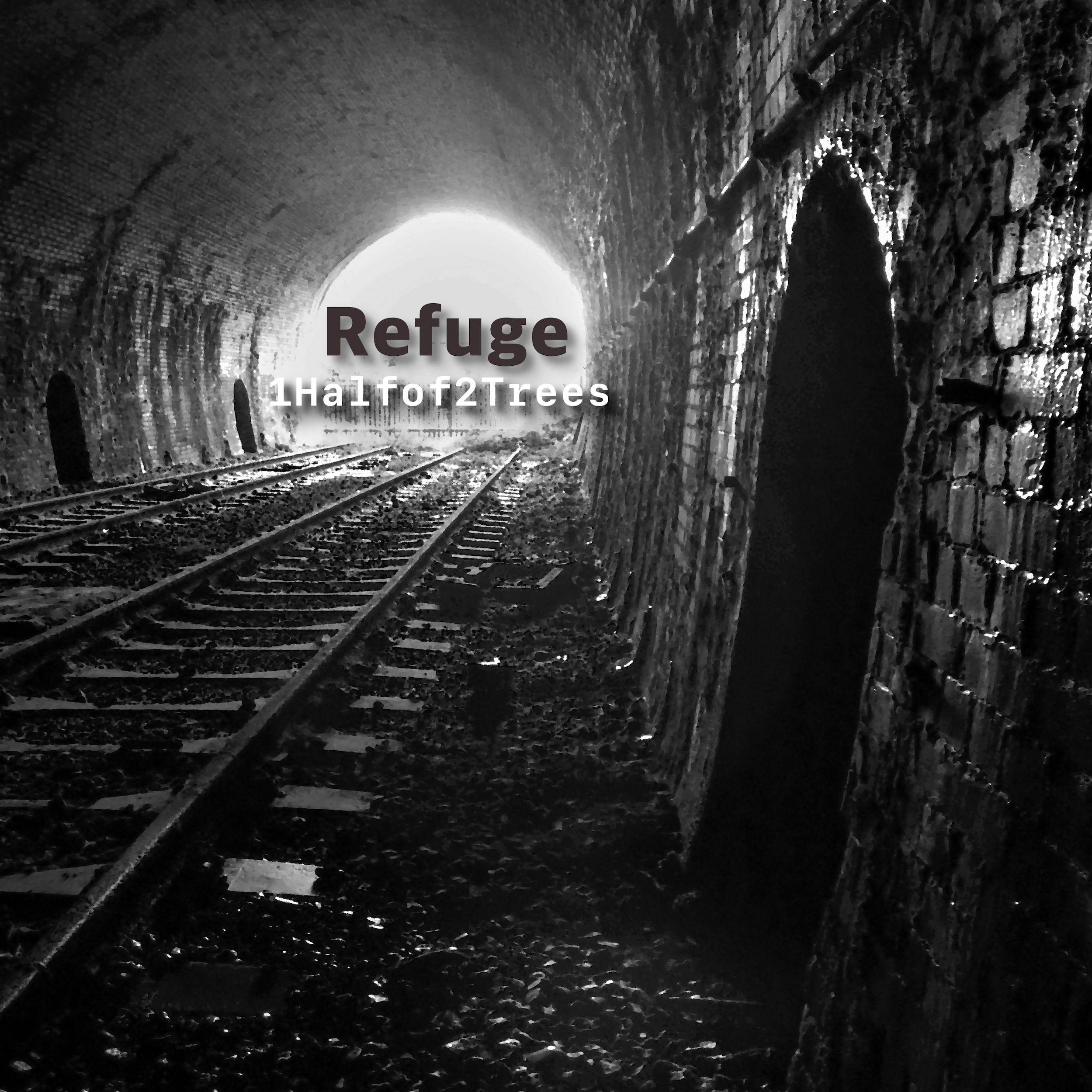
From the opening moments, *Refuge* establishes itself as a work concerned with texture and space. The production bears the hallmarks of someone who has spent considerable time with Zero 7's downtempo explorations and Tears for Fears' synth-driven emotional architecture. Yet this isn't mere homage—1Halfof2Trees demonstrates a particular facility for layering instrumentation in ways that create a sense of intimate vastness, as though each track exists within its own carefully controlled emotional ecosystem.
The EP's centrepiece, "Wake," stands as its most compelling achievement. Built around the painful recognition of watching a loved one succumb to misinformation, the track manages to articulate a distinctly modern form of helplessness. The song never descends into didacticism or finger-wagging; instead, it captures the quiet devastation of watching someone drift beyond reach, the frustration of truth becoming fungible, relationships strained by epistemological divorce. The arrangement mirrors this thematic preoccupation—vocals float atop carefully constructed instrumental beds that suggest both yearning and resignation, a musical embodiment of trying to break through glass walls.
That all instruments and vocals were performed by a single individual might typically raise concerns about artistic claustrophobia, yet *Refuge* benefits from this solitary vision. The consistency of perspective lends the EP a cohesive emotional through-line that more collaborative efforts sometimes lack. The exception comes on "Home," where the artist's brother Chris contributes bass to the verses, providing subtle textural variation that grounds the track without disrupting its established aesthetic.
The singer-songwriter sensibility that underpins these compositions prevents them from floating too far into ambient territory. There's an attention to melody and structure that keeps the material tethered to pop conventions, even as the production choices—chillwave influences, downtempo pacing—push against those boundaries. This tension proves generative rather than awkward, creating music that feels both accessible and emotionally complex.
What remains particularly notable about *Refuge* is its refusal to offer easy resolution. The EP's title suggests sanctuary, yet the music itself never quite provides that comfort. Instead, these songs exist in the space between seeking solace and recognising that such solace may be illusory. The political and social commentary never becomes explicit sloganeering but rather permeates the work as ambient dread, a background radiation of unease that colours every arrangement choice and lyrical turn.
The decision to remain strictly a recording artist rather than translate this material to live performance makes artistic sense. These tracks feel designed for private listening, for headphone contemplation rather than communal experience. They reward attention and repeated engagement, revealing subtleties in production and arrangement that might be lost in venue acoustics.
*Refuge* positions 1Halfof2Trees within a lineage of bedroom auteurs who transform personal spaces into creative laboratories. The home studio origins don't hamper the sonic ambition; rather, they enable a particular kind of uncompromising vision. When artists quote Walt Whitman—"the good, the beautiful, and the true exist for their own sake"—there's always risk of pretension, yet here it reads as genuine statement of intent. This EP pursues its aesthetic and thematic concerns without obvious regard for commercial considerations or contemporary trends.
The result is a brief but substantive collection that captures a particular moment of cultural anxiety while maintaining enough artistic distance to achieve universality. *Refuge* confirms 1Halfof2Trees as an artist worth monitoring, someone capable of translating interior turmoil into compelling sonic architecture.