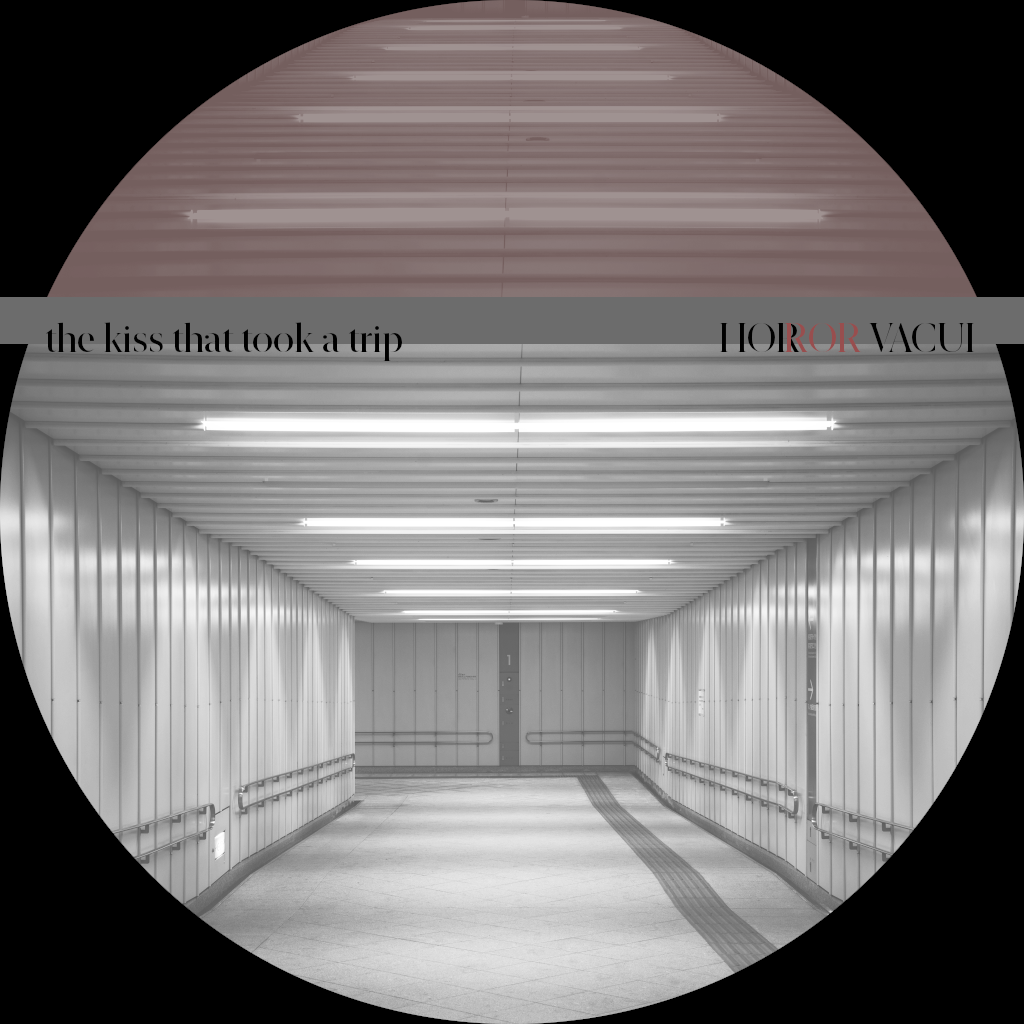
The title itself—Latin for "fear of empty space"—carries a delicious irony given the track's expansive runtime and willingness to luxuriate in silence, repetition, and gradual development. Where contemporary music abhors a vacuum, frantically filling every second with hooks and drops, *Horror Vacui* embraces space as a compositional element. Trello understands what the shoegaze pioneers and post-rock architects knew instinctively: that tension requires release, that climax demands patience, and that the most affecting moments in music often arrive after we've been made to wait for them.
From its opening passages, the track establishes itself as a meditation rather than a statement. Trello's lo-fi aesthetic—deliberately eschewing technical polish in favour of atmosphere and melody—creates an intimacy that belies the composition's grand ambitions. This is bedroom post-rock in the most literal sense, crafted entirely in his home studio with the kind of obsessive attention to detail that only solitude affords. The sound palette draws from an admirably eclectic range of influences: the patient build of classic post-rock, the textural richness of ambient and new age, the melodic sensibility of indie-pop, and—crucially—moments of noise and dissonance that prevent the piece from collapsing into mere prettiness.
The structure unfolds organically, eschewing verse-chorus conventions for something more akin to movements in a classical composition. Motifs appear, develop, recede, and return transformed. Guitars layer upon guitars, each part adding another dimension to the sonic architecture. There's an almost painterly approach to dynamics here—Trello knows when to pull back, when to surge forward, and when to simply let a single element breathe in relative isolation. For listeners weaned on Explosions in the Sky, Mogwai, or Godspeed You! Black Emperor, these are familiar gestures, but Trello brings his own sensibility to bear, one that owes as much to the melodic sophistication of alternative rock as to post-rock's more experimental impulses.
What's particularly striking about *Horror Vacui* is its refusal to coast on atmosphere alone. While many contemporary post-rock efforts settle for pretty textures and predictable crescendos, Trello has woven genuinely memorable melodic ideas throughout the piece. The easy listening and pop influences he cites aren't window dressing—they're fundamental to the composition's DNA, preventing it from disappearing into formless ambience. There's always something to hold onto, even in the track's most abstract passages.
The incorporation of noise and dissonance adds necessary grit to what could otherwise become soporific. These moments of controlled chaos feel earned rather than arbitrary, emerging naturally from the composition's internal logic. They remind us that Trello's project has always existed in the spaces between genres, drawing from rock's raw power, pop's melodic clarity, and experimental music's willingness to unsettle and surprise.
For the patient listener—and patience is the price of admission here—*Horror Vacui* offers substantial rewards. This is music designed for deep listening, for those moments when you can surrender to the journey rather than demand instant gratification. Put it on during a long drive, a solitary evening, or any situation where time can expand and contract according to the music's own internal clock. Let it play in the background while working, and you'll find it creates a space for concentration. Listen actively with headphones, and whole new dimensions reveal themselves in the layered production.
It's tempting to frame *Horror Vacui* purely as a act of resistance against contemporary listening habits, and there's certainly an element of that. But to reduce it to mere contrarianism would miss the point. Trello isn't being deliberately difficult or perversely uncommercial—he's simply following the demands of his artistic vision, wherever it leads. That the result happens to swim against the cultural current speaks less to any antagonistic intent than to a fundamental mismatch between what the market demands and what the muse requires.
The lo-fi production values work in the track's favour, lending it a warmth and presence often absent from more professionally polished post-rock productions. You can hear the room, sense the process, feel the human hands shaping the sound. This is important: Horror Vacui never feels like an exercise in technical showmanship or a demonstration of studio wizardry. Instead, it's a genuinely felt piece of music, crafted by someone more interested in emotional resonance than sonic perfection.
Nearly two decades into The Kiss That Took A Trip's existence, M.D. Trello remains committed to the project's founding principles: melody and atmosphere over technical proficiency, artistic integrity over commercial calculation. Horror Vacui stands as perhaps the purest distillation of this ethos—a twenty-minute assertion that some ideas simply cannot be compressed, that certain musical journeys require time to unfold properly, and that there remains an audience willing to take that journey.
For devotees of post-rock, this is essential listening. For those with more conventional alternative rock sensibilities but open minds and patient ears, it offers a worthwhile excursion into more expansive territory. And for everyone else, frantically swiping through their playlists in search of the next dopamine hit? Well, they'll never know what they're missing. Sometimes, that's just how it has to be.