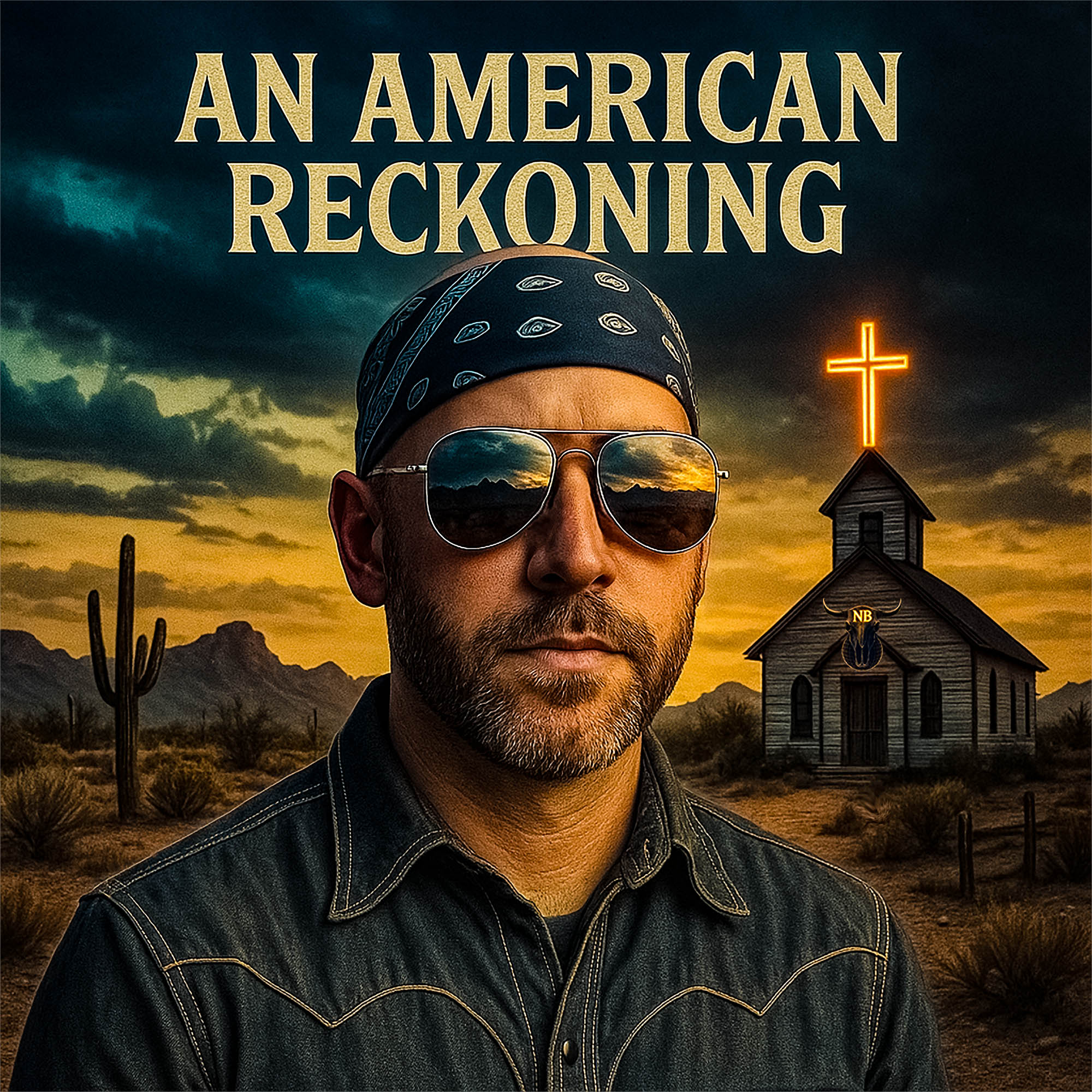
Brightwell operates within the Americana tradition whilst systematically dismantling its more comfortable assumptions. His "Moonshine Disco" aesthetic—that curious amalgam of Southern grit, queer divinity, and outlaw gospel—finds its fullest expression here across thirteen songs that function less as individual tracks than as interconnected testimonies. The Philadelphia-based artist possesses a voice of remarkable composure, never raising itself to histrionics yet carrying an authority born from lived experience rather than studied technique.
"The Joke's on the Devil" establishes the album's austere methodology immediately. Just voice and guitar, stripped of ornamentation, the song unfolds with prophetic patience. Brightwell's irony cuts multiple directions simultaneously—the believer who has witnessed institutional betrayal yet refuses to abandon the spiritual ground beneath, finding dark humour in the contradictions. The production throughout favours deliberate sparseness, each instrumental choice justified by necessity rather than convention.
"The Silence Broke Its Spine" exemplifies his architectural approach to arrangement. Guitar lines trace fragile geometric patterns whilst Brightwell's vocals navigate through them with careful deliberation, like someone crossing damaged ground who knows exactly where the solid footing lies. The space between notes matters as much as the notes themselves, allowing his mythic storytelling to expand into the silences. This cinematic quality—frequently invoked but rarely this earned—stems from restraint rather than bombast, trusting the listener to inhabit the landscapes his lyrics sketch in careful strokes.
The album's political dimension never descends into didacticism. Brightwell understands that effective political art embeds its arguments within lived experience rather than declaiming them. His queerness isn't decorative or apologetic—it's foundational, reframing traditional Americana narratives from positions systematically excluded from the genre's mythmaking. He reclaims gospel and country traditions not through rejection but through recontextualisation, making them carry truths they were never designed to accommodate.
The Lyric Artifact transcends typical deluxe packaging conceits. Each song occupies its own designed page, some scorched, others pristine, all watermarked with symbolic systems that transform the lyrics into something between scripture and evidence. The attention to accessibility—screen-reader compatible, deliberately formatted—suggests an artist who understands that inclusivity strengthens rather than dilutes artistic intention. Bound in what Brightwell calls "the emblem of Sélune," the booklet positions itself as keeper rather than mere companion piece, insisting that the words matter as much on the page as in performance.
Brightwell's refusal of false consolation distinguishes this work from much contemporary roots music. He isn't interested in nostalgia for imaginary better Americas, nor does he offer healing for wounds not yet properly diagnosed. His country exists now, contested and unfinished, where grace and violence share soil. The album's redemptive moments—and they exist—emerge through confrontation rather than avoidance, earned through reckoning rather than granted through sentiment.
By the final track, the thirteen songs cohere into something liturgical, a folk mass for a nation still learning to hear voices it spent centuries suppressing. *An American Reckoning* doesn't demand agreement—testimony rarely does—but it insists on being heard, and Brightwell commands both the craft and conviction to make that insistence matter. This is roots music with eyes unblinking, gospel for the restless, Americana that refuses comfortable fictions. Not background music, then, but something to carry forward, scorched and intact.