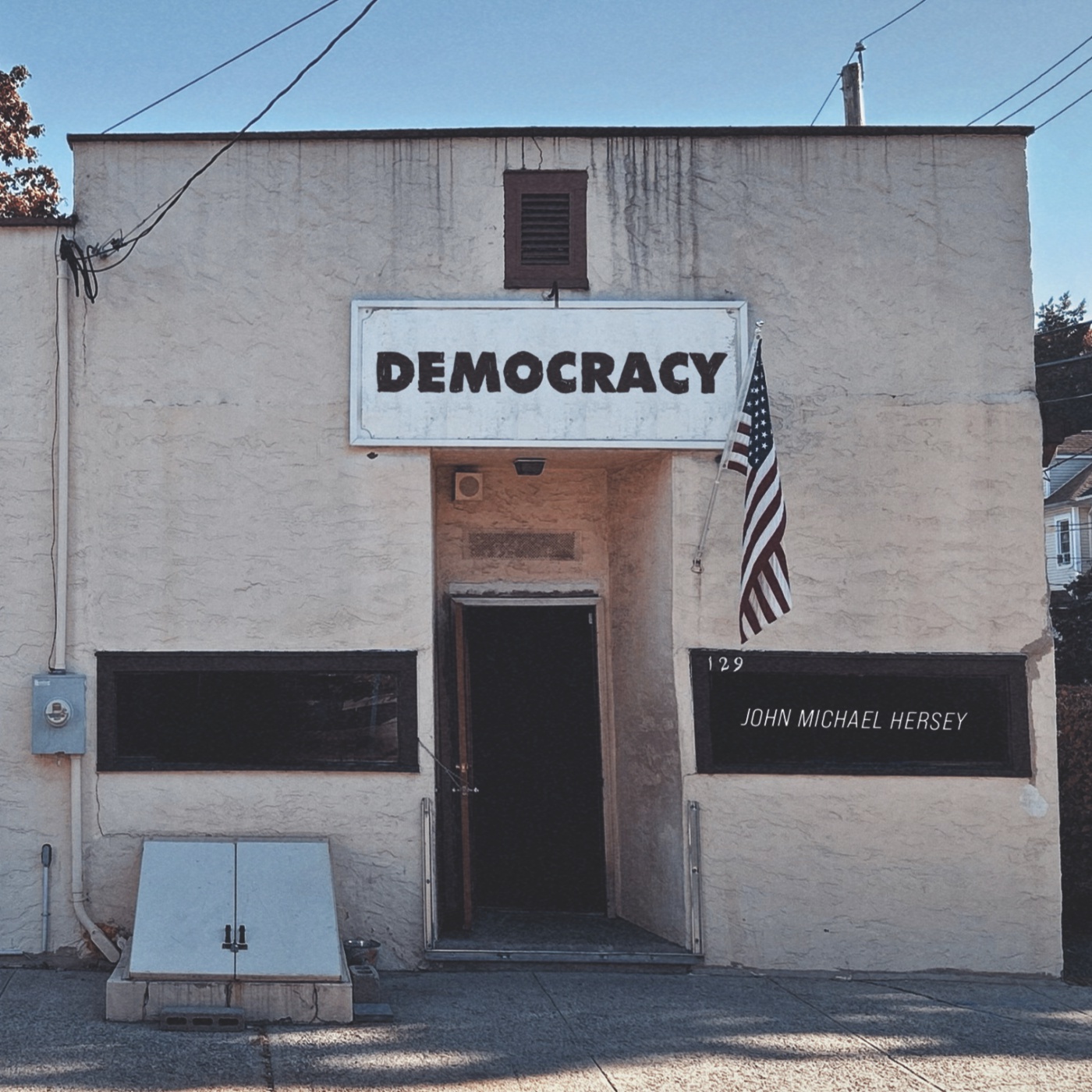
The opening title track establishes the album's ambitious scope immediately, as the assembled drinkers articulate the fractures running through the American experiment. Hersey wisely avoids partisan sermonising, instead channelling the genuine confusion and anxiety of citizens watching their country become unrecognisable. JR's subsequent lament, "I'll Never Let Go," strikes a more intimate note—the aging troubadour's acceptance of obscurity carries a poignancy that feels autobiographical, though twenty-one albums hardly suggests failure. The vocal performance here showcases Hersey's ability to convey world-weariness without descending into self-pity.
"Everybody Dance" proves one of the album's cleverest gambits. Suzie's connection between disposable pop culture and creeping authoritarianism might read as undergraduate political theory, but Hersey's sardonic arrangement—all synthetic drums and vapid hooks—makes the critique land viscerally rather than intellectually. The juxtaposition between this commercial confection and the raw confession that follows demonstrates Hersey's command of dynamics and mood.
Jason's "Liberty" represents the album's most harrowing moment. The laid-off factory worker's journey from unemployment to armed rage to last-minute redemption unfolds with novelistic detail, Hersey's guitar work alternating between jittery anxiety and explosive release. That he makes Jason's attraction to violence comprehensible without endorsing it speaks to the maturity of the writing. Janie's answering confession, "Nowhere," matches Jason's desperation with her own, the two characters bonding through mutual damage. The moment when she presents him with his portrait—a gesture of recognition and dignity—achieves genuine tenderness.
The second act's descent into expressionist nightmare, with politicians and skinheads stepping through the television screen, risks shattering the album's naturalistic foundation. Yet Hersey commits so fully to the surrealism that it works, these cartoon villains embodying the characters' worst fears made manifest. "Backlash" and "Uncle Darren" function as bitter vaudeville, Hersey's musical versatility allowing him to pastiche political rally anthems with acidic precision.
Howard's arrival shifts the emotional register profoundly. "Here We Are," the duet between Jason and the recently released prisoner, builds from tentative connection to full-throated solidarity, two men from different circumstances discovering common ground. The piano arrangement recalls early Springsteen—that same combination of hope and hard-earned wisdom.
"The Sleep of Angels" stands as the album's devastating centrepiece. Howard's nightmare-plagued recollections of incarceration unfold over sparse instrumentation, Hersey's voice dropping to a near-whisper that demands absolute attention. The restraint here—no swelling strings, no dramatic crescendos—makes the horror more palpable. Pablo and Enrique's subsequent narrative, "The Boy with a Bomb," extends the violence outward, moving from personal trauma to political extremism with chilling logic.
The climactic confrontation, with Jason's concealed pistol finally revealed, could have played as melodrama. Instead, Janie's decision to embrace him rather than recoil feels psychologically true—she recognises his desperation because she shares it. The gun drops not through moral platitude but through human connection, the album's thesis made flesh.
"Connected," the closing anthem, walks the knife-edge between genuine transcendence and kumbaya sentimentality. Hersey just about pulls it off, the environmental message feeling less like afterthought than logical culmination. We've spent the album watching people destroy themselves and each other; the final revelation of the earth painting suggests we might redirect that energy toward collective survival. The arrangement builds with appropriate grandeur, Hersey's piano and guitar combining with full band for the first time, the sonic expansion mirroring the thematic one.
Democracy represents an extraordinary achievement—a rock musical that interrogates American decline without offering easy answers, that portrays violence and addiction without exploitation, that finds moments of grace amidst the wreckage. Hersey's fusion of genres feels organic throughout, each song dressed in whatever musical clothes its emotional content demands. The comparisons to Elton John's keyboard facility and Mark Knopfler's guitar eloquence prove apt, but Hersey has fashioned something distinctly his own—a kind of blue-collar chamber piece that honours both the intimacy of the confessional singer-songwriter tradition and the communal power of musical theatre.
Whether this concept album will reach beyond Hersey's devoted following remains uncertain. The material demands close attention, rewards repeated listening, resists easy consumption. But for those willing to spend election night in this dive bar with these damaged, searching souls, Democracy offers something increasingly rare: popular music that grapples seriously with how we might live together, fail together, and perhaps find our way through the darkness together. Twenty-one albums into an uncompromising career, John Michael Hersey has created his most complete and devastating statement. The bar will close eventually, but these songs will linger long after last call.