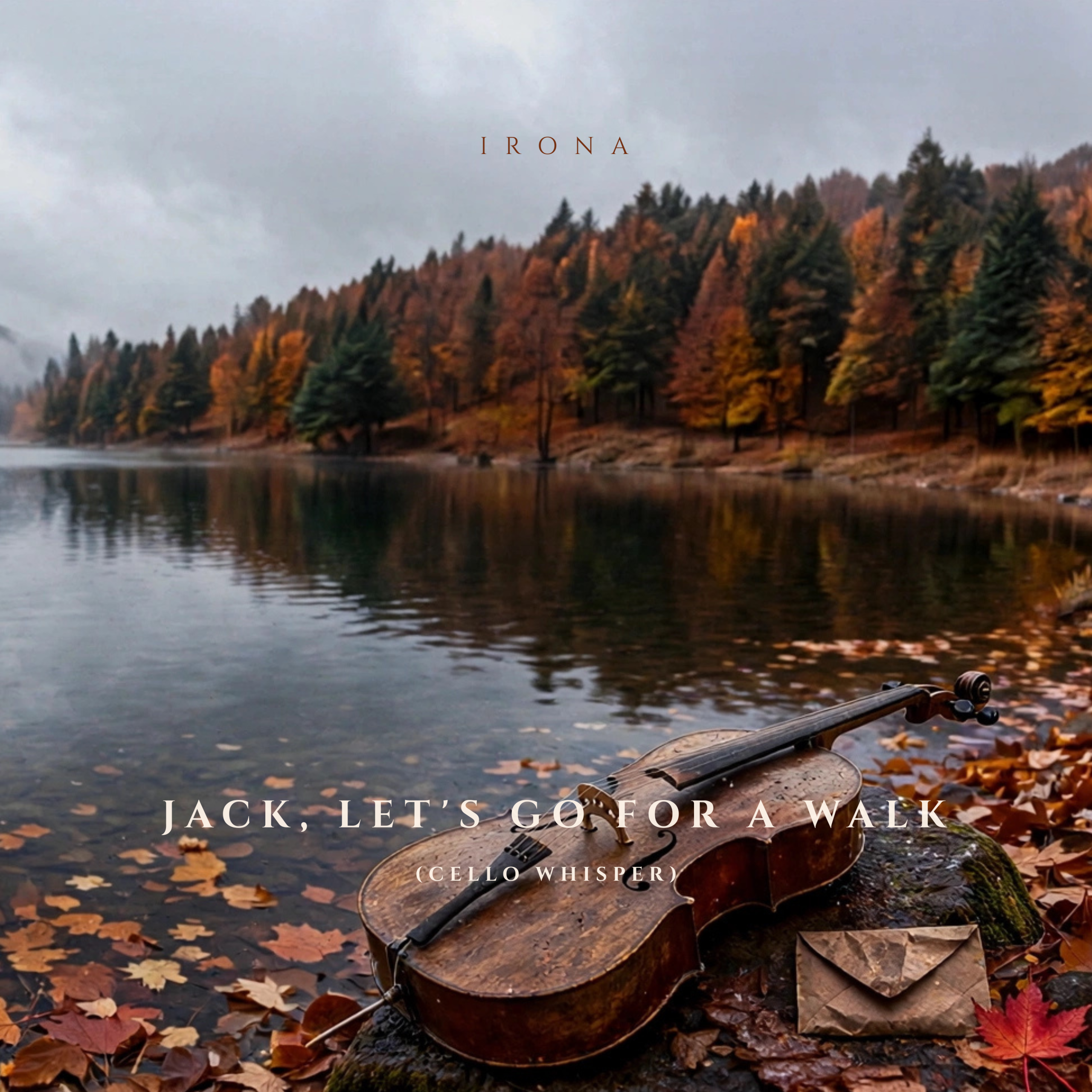
The song gives its first moments to a felted piano, notes padded so thoroughly they seem to arrive from the next room. The cello comes in behind it, and from then on it is the song's conscience. It doesn't weep, as film-score cellos so often do. It breathes, leans and withholds, and it behaves less like an accompanist than like a very old friend who knows what is about to be said and has decided to walk alongside. The analogue bass supplies a pulse as steady as a footstep. The word "Whisper" in the title is an instruction the whole production follows.
IRONA's vocal is the best thing here, and it is the least showy thing here. She sings with restraint, close to the microphone and slightly under the note, trusting the listener to lean in. A weaker singer would turn the narrative into a grievance. The woman in this song waited through distance, through silence, through seasons, and loved him without asking him to become anyone else. He did not change, and she does not punish him for it. Her ache is real, but it carries no accusation, and that absence of blame is what holds the song together. Dignity is a hard note to hit in a love song, and she hits it repeatedly.
The writing is shrewd about its own central image. Two mountains face each other across a valley: equal in height, each fixed in place, and for ever separated by the distance that makes the view worth having. It is a simple metaphor, and it carries the song's whole argument. Love can be real and mutual in its way and still fail to close the gap. Accepting that is a different thing from losing, and the song never confuses the two. Its closing movement, where waiting becomes leaving, is handled with such tact that you hardly notice the ground shifting under you until it has shifted.
Genre labels slide off it, which is to its credit. There is singer-songwriter candour in the confessional frame, indie-folk grain in the textures, and art-pop nerve in the way the arrangement lets silence do the heavy lifting. The orchestral sensibility gives the piece the scale of a film without breaking the intimacy of a letter read aloud. The spaces between phrases are scored as carefully as the phrases themselves, and the song is the better for it.
At a time when singles are routinely engineered to survive fifteen seconds of distracted scrolling, "Jack, Let's Go for a Walk" asks for four minutes of attention and repays them. It is a lovely, composed and quietly devastating piece of work, and the walk of the title turns out to be one the listener will want to take more than once.