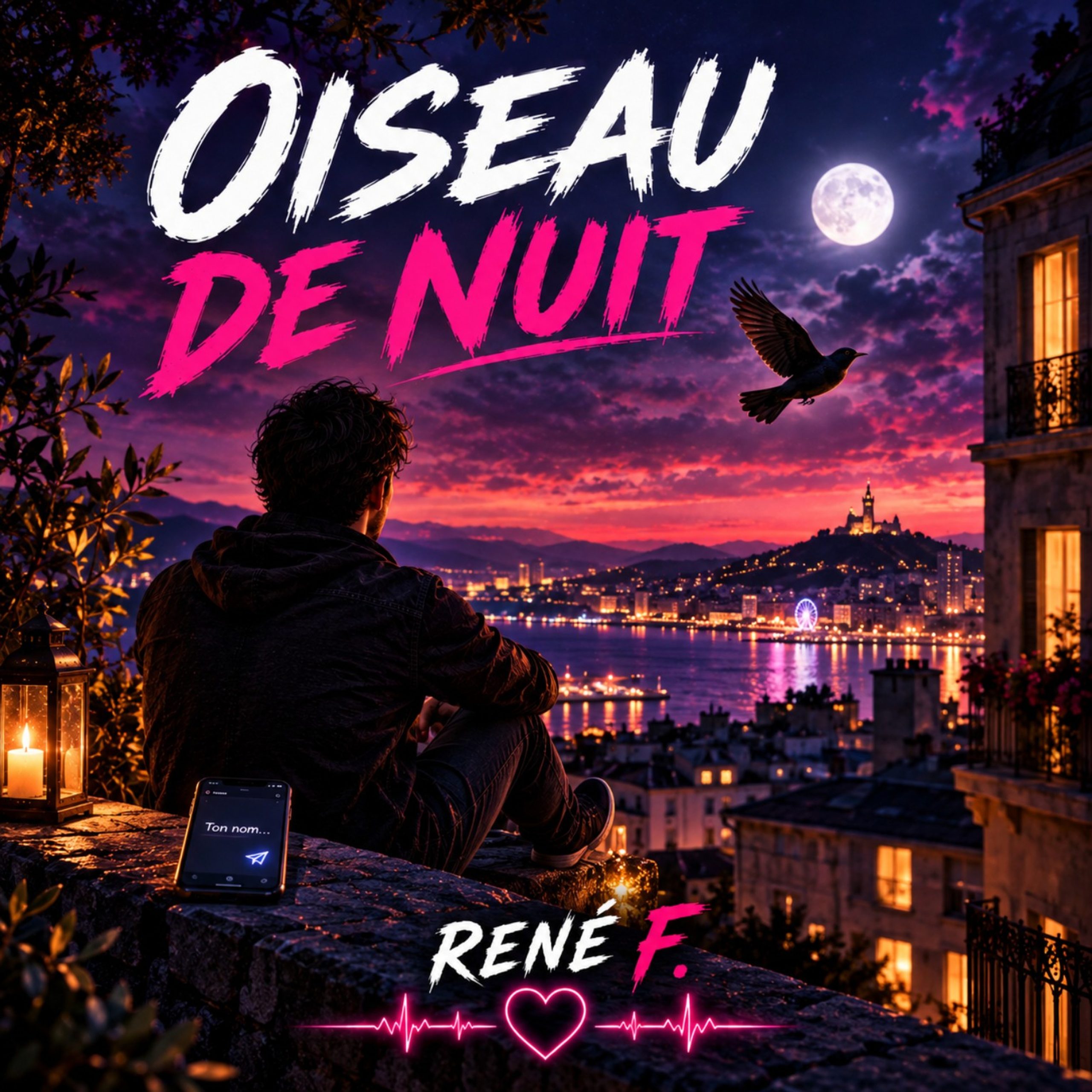
The French have long understood that a pop song can be a small room with the lights turned low. From Gainsbourg's smoky confessions to Françoise Hardy's tender self-effacement, the tradition runs on restraint, and René F. is a worthy inheritor. He doesn't shout his longing across the street. He lets it murmur, wait and reconsider, which is precisely what the lyric is about. A name on a screen, a thought that keeps returning, a draft saved and never delivered: these are the small, humiliating, universal furniture of modern romance, and he arranges them with a novelist's eye for the telling detail.
The sound matches the subject. The atmosphere is nocturnal without being gloomy, romantic without being syrupy, and contemplative in a way that rewards the patient listener rather than the distracted one. This is contemporary French pop, polished enough for the playlist and intimate enough for headphones, and it keeps its dignity throughout. Nothing is oversold. The production leaves air around the voice, as a good film director leaves silence around a close-up, and that space becomes the song's most eloquent instrument. You can almost hear the hesitation in the gaps.
That cinematic quality is no accident. René F. writes with the visual imagination of someone who thinks in scenes: the dark window, the lit rectangle of the phone, the city holding its breath. The accompanying imagery extends the narrative, but the song would conjure its own film even without it. It is a short story set to music, and, rarer still, one that trusts its listener to supply the ending.
Plainness is the other great virtue here. René F. favours direct, accessible language over ornate poetic gymnastics, and the choice is a brave one. Pop is littered with writers who mistake obscurity for depth, and who bury a simple ache beneath layers of borrowed profundity. He says what he means, in words anyone can carry home, and trusts the feeling to do the rest. The result is humane rather than hermetic, a song that puts an arm around your shoulder instead of lecturing you from a podium.
It is also, quietly, a song about courage, and the nerve it takes to remain tender in a culture that prizes the instant reply and the performed certainty. The narrator never quite finds the bravery to press send, yet the act of singing the hesitation aloud is itself a kind of declaration. That paradox gives the track its ache and its warmth in equal measure. By the final bars, the unsent message has been delivered after all, not to its intended recipient but to everyone who has ever stood in the same dim light, wondering.
There are reservations, of course, though they are minor. Those who prefer their pop angular or abrasive may find the mood a touch too consistent, and a bolder dynamic swerve in the closing section might have lifted the song from lovely to devastating. But these are the quibbles of a listener who wants more, which is the highest compliment a single can earn.
"Oiseau de nuit" is a graceful, well-judged piece of songwriting, and an excellent calling card for an artist with a clear sense of who he is. Play it late, play it alone, and try not to reach for your phone.