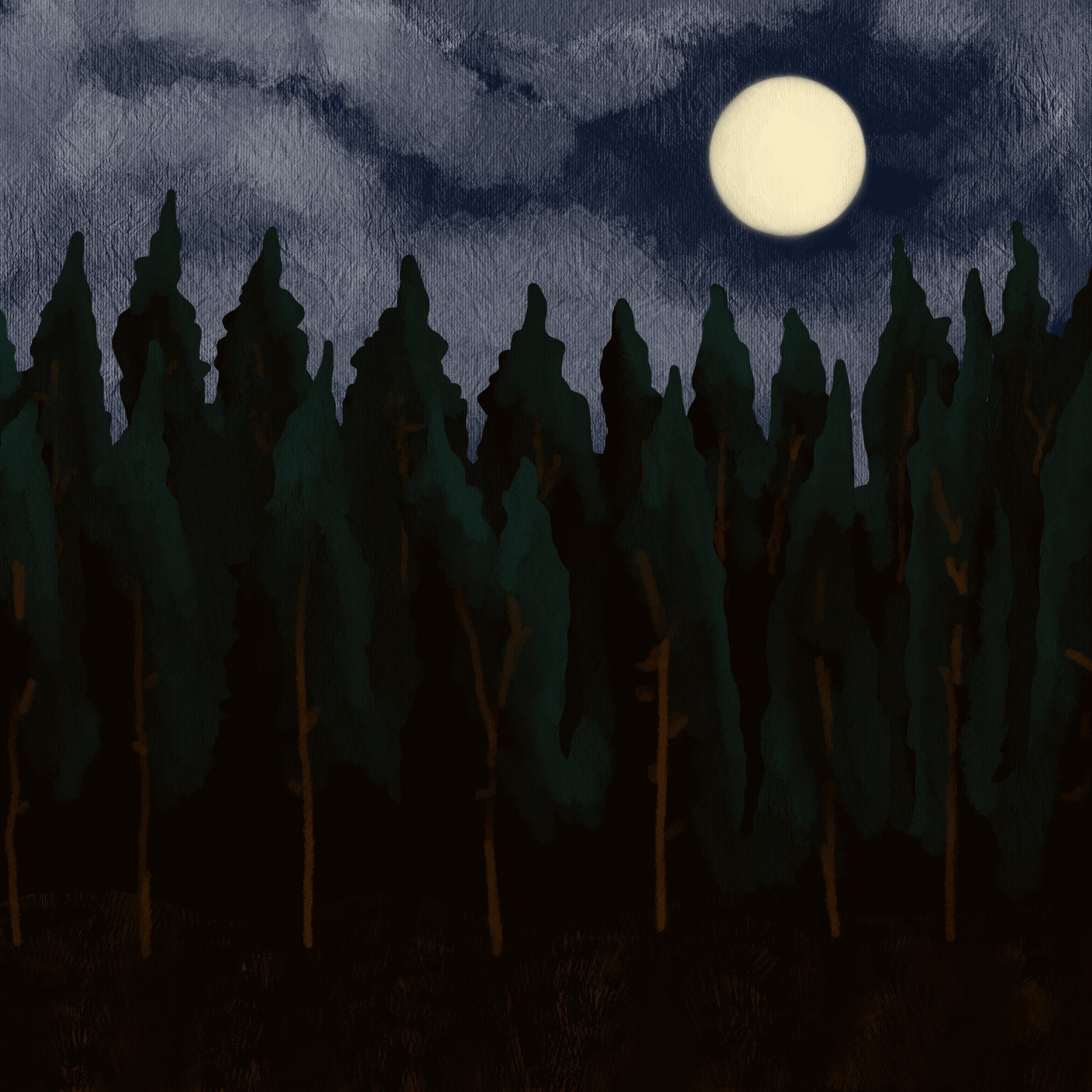
Fabello, a Maine native now resident in London, made the record entirely alone. He wrote, recorded, mixed and mastered it himself, and the result has the peculiar intimacy of a diary left open on a kitchen table. Ten songs, thirty-nine minutes, and almost every one sways in 3/4 or 6/8, circling a home key of D tinted by lydian brightness. It is a tidy conceit, and in lesser hands it might have curdled into formula. Instead it becomes a kind of gravitational pull. You are rocked, and then, just as you settle, a tritone or a half-step clash tugs at the blanket.
That tension is the record's whole method. Beautiful chords are never permitted to remain merely beautiful; a single wrong-feeling note slips in, like a draught under a door. The effect is of one long lullaby sung by someone who knows the nursery will soon be empty. It begins with the droning hypnosis of "Tired", where familiar places drain of colour before swelling into a fuzzed-out guitar outro, and it ends with "Stranger", driving and despondent, which has the nerve to close on a chord left unresolved. Pop music so rarely trusts its listener to sit in unfinished business. Fabello trusts us completely.
The lyrics work by accumulation rather than declaration. He is a collector of objects and rooms (houses, ceilings, doors, lakes), and he arranges them until the absence between them becomes the subject. "Yellow Tile Floor", just voice and acoustic guitar, is the album's quiet masterpiece, a study of survivor's guilt and squandered chances told through shards of early childhood. As its final chord rings, you hear the singer rise and walk away from the microphone. Most producers would have scrubbed that moment out. Keeping it is a small act of courage, and it lands like a hand on the shoulder.
Elsewhere the palette widens without losing its nerve. "The Way Down" pairs glockenspiel with dissonant alt-rock crunch and haunting harmonies, staging a reunion of ex-lovers in a rainstorm while the water climbs verse by verse. "A Duplex in the Sky" is the heaviest thing here, all jagged riffs and glitched vocals, a surreal tour through violence and fragility that proves Fabello can bare his teeth. "From the Clouds" starts as delicate fingerpicking, blooms into a lilting full-band arrangement, and bows out in a heavy prog-folk outro that would not embarrass the more adventurous corners of Sufjan Stevens or Manchester Orchestra. Those comparisons are earned, though Fabello's voice, which travels from a restrained murmur to high, harmonised cries, is entirely his own.
There are lovely sleights of hand in the sequencing, too. "Peaks and Valleys and Valleys and Valleys" masquerades as a love song until its closing lines quietly reveal it to be about loss. "Untitled" offers promises of eternal presence, only for the speaker to be unmasked as time itself, a twist that could have felt gimmicky and instead feels like a trapdoor opening. The line about being "the space between you and your youth that you can't ever cross" will lodge in the chest for days. Between them, "East Lake House" drifts past on reverb and a vocoder choir, and the instrumental "Luther Shimp", all acoustic guitar and glockenspiel, sways with a tenderness words would only spoil.
Water threads through everything: rain, ponds, lakes, floods. It rises until it is both the setting and the metaphor, memory itself as a slow inundation. That Fabello renders all this with such restraint, and such oddly proggy flourishes (a chorus with an extra bar, an outro slipping between 6/8 and 7/8, an instrumental coaxed from a spider-capoed guitar), marks him as a songwriter of genuine ambition hiding inside a modest frame.
Fans of Death Cab for Cutie, The Antlers and Copeland will find a kindred spirit here, but *November 2008* deserves a wider audience than that shorthand suggests. It is pastoral and unsettled, nostalgic and dissonant, intimate and vast. It is also, quite simply, one of the most affecting records of the year. Play it late, play it loud enough to catch the footsteps leaving the room, and let the water rise.