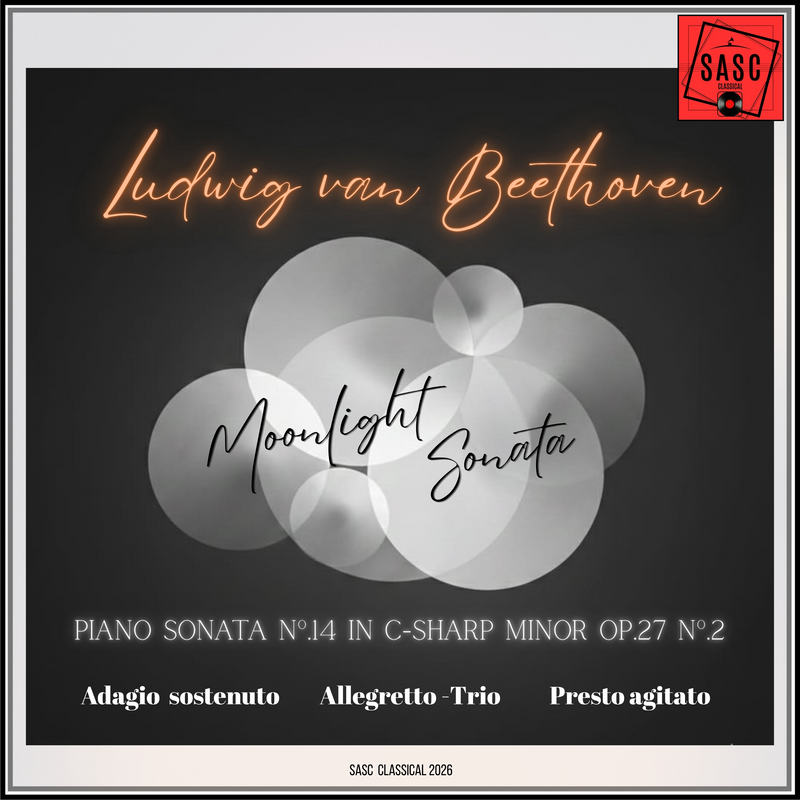
The stated philosophy is refreshingly unfashionable: no new interpretation, no clever reinvention, but fidelity to the composer's spirit and to the great recordings that have shaped our sense of how this music should sound. Such modesty is rarer than it should be. We live among performances that announce their own originality before the first chord has faded, and a release that simply wishes to serve the music arrives like a window thrown open in a stuffy room.
The opening Adagio sostenuto is where any account of this sonata is made or broken, and here the restraint pays handsomely. The rocking triplets are kept low and level, never nudged into sentiment, while the bass octaves tread beneath them with a sombre inevitability. The melody floats above in its dotted rhythm, more murmured confession than public declamation. Nothing is rushed and nothing lingers for effect. The music is allowed to breathe at its own pace, and the listener is drawn in rather than addressed. This is the quiet introspection the label promises, and it is delivered without a trace of affectation.
The brief Allegretto is often treated as an awkward interval, a mere stepping stone between two titans. Liszt's famous description of it as a flower between two abysses is apt, and the lightness here is exactly right: the phrases lilt, the trio has a faintly rustic grace, and the little dance holds its ground without pretending to be more than it is. It brings a moment of daylight, and its fragility makes what follows more alarming.
And what follows is alarming indeed. The Presto agitato breaks over the listener with real force, its arpeggios surging and its hammered chords landing with weight and clarity. The tempo is driven but never frantic, so the architecture of the movement stays visible even at its fiercest. The turbulence feels earned, the inevitable answer to the sorrow of the first movement, and the closing bars arrive with the shock of a door slammed on the past.
Then there is the acoustic, which deserves separate praise. The press material speaks of digitally re-simulating the great historic recordings in concert halls that no longer exist, and the idea is as ambitious as it is risky. Such technology can easily produce something clinical and museum-like. Here the effect is warm and plausible, with a natural bloom around the sound and a sense of space that never smothers the detail. One hears the piano in a room, not in a laboratory, and the piece gains a certain dignity from the setting.
Purists will ask what a sonata recorded a thousand times can possibly gain from yet another outing. The answer is perhaps nothing new, and that is rather the point. This is a Beethoven cleansed of habit and gimmick, offered in the spirit in which it was written, and it reminds us why a nickname once resented has been loved ever since. For anyone new to the sonata it is an ideal introduction, and for those who know it well it is a welcome return to first principles.
Warmly recommended.