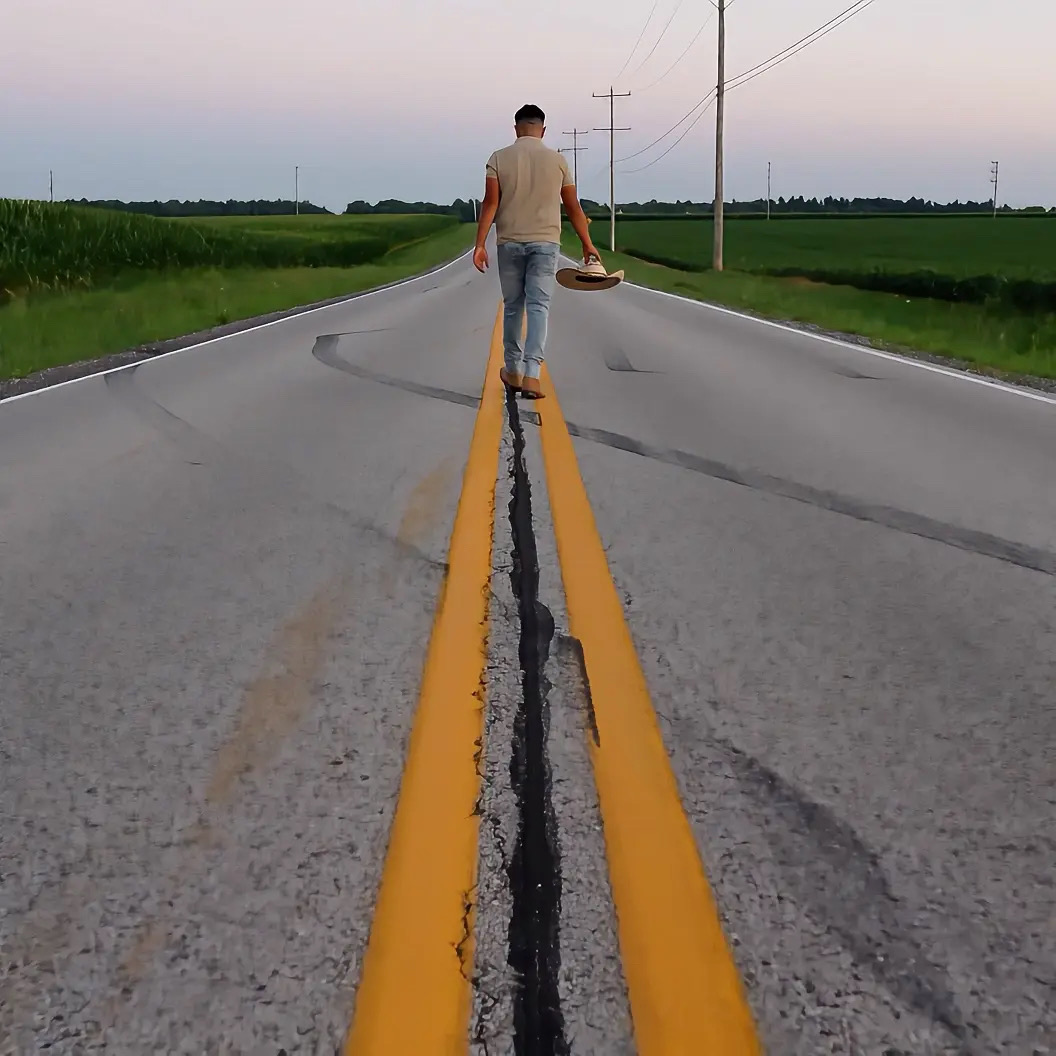
The origin story is almost comically unglamorous, which is to its credit. Morten, one third of Popkanon, took a walk through an autumnal Norwegian landscape and found himself asking whether he had anything left to offer after a run of difficult life events. Most songwriters would have answered with a shrug and a sad piano. Morten answered with a yes, and then built a song to prove it. The question mark in the title has been quietly replaced by a full stop, and the whole record leans on that decision.
It opens with strings, and not the syrupy kind that usually announce a sentimental pop song's intentions. They are restrained, almost conversational, laid across the first two verses with the patience of someone who knows the payoff is coming. The vocal approach owes an obvious debt to the airy, melismatic phrasing of Justin Bieber, but there is no pastiche here. The influence is absorbed rather than copied, with the lead line sitting comfortably in that sweet spot between confession and invitation. You believe the singer because he doesn't oversell it.
Then comes the turn. Jack Flash, who also mixed the record, brings in the synths late, and the song changes its clothes without losing its character. This is the part that nods toward Avicii and Kygo, those architects of the Scandinavian festival swoon, and it is where the track earns the word "anthem". The synth textures do not simply pile on; they open the frame, so that what began as a private reflection becomes something a crowd could sing back. Blending two such different halves is a notoriously difficult trick, and the seam is practically invisible. Credit to the mix for that, and to the arrangement's confidence in letting the build take its time.
RarriQUESO deserves particular praise. His additional verse and his reworking of certain melodies could easily have felt like a guest slot bolted onto a finished song. Instead they give "More to Give" a rhythmic looseness and a warmth that the original demo, by the band's own account, was waiting for. His phrasing bends the tune in places where a straighter delivery would have flattened it, and the Latin inflection adds a pulse that keeps the Scandinavian polish from tipping into the antiseptic. It is a collaboration in the truest sense, three sensibilities leaning on each other rather than taking turns.
The lyrics are plainspoken, even blunt: block out the negativity, learn something new, meet people, go places, life is too short. On paper this is the stuff of motivational posters. In performance it lands, because the melody carries the sincerity and the production never winks at the listener. Irony is refreshingly absent. In a pop landscape that so often hedges every emotion with a smirk, a song that simply says "dive into the unknown" and means it feels almost radical.
The music video, with its cool blue light and its close, wary portraiture, supplies the necessary counterweight. It resists the temptation to illustrate every line with a sunrise or a mountaintop. Instead it keeps the camera near the faces, letting the neon-cold palette suggest a night that is about to give way to something warmer. The imagery matches the song's emotional arc: introspection first, release afterwards. It is economical, atmospheric, and it trusts the music to do the heavy lifting.
Popkanon have now reached 22 releases, and the evidence of this one suggests that their method of inviting different artists into the room, then letting each leave a fingerprint, is a sustainable and rewarding way to work. Every collaborator here leaves the song richer than they found it.
"More to Give" is a feel-good record with a spine. It takes a lonely question asked on a cold walk and answers it with strings, synths and a generous heart. The title, in the end, is a promise, and for once it is one the band keeps.