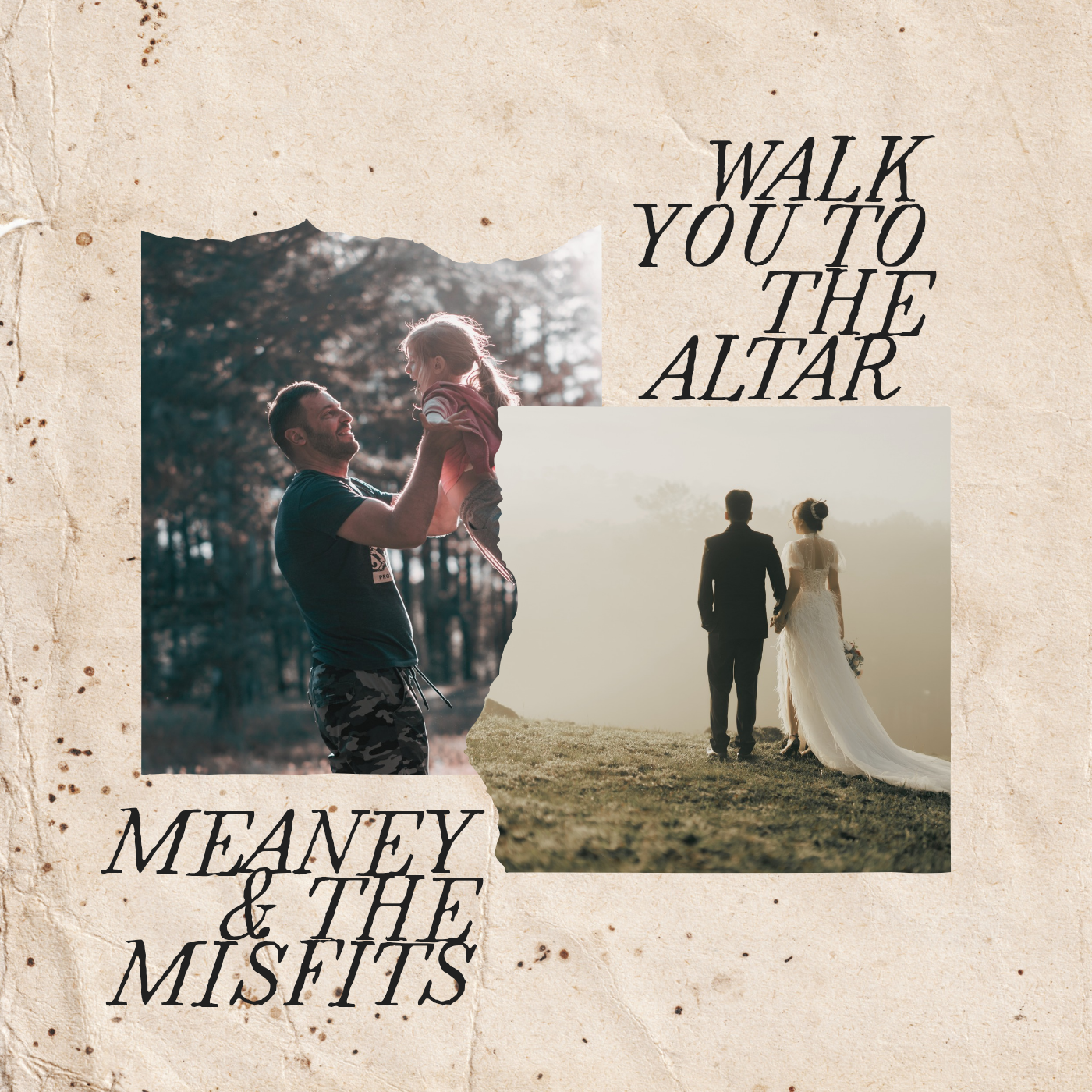
The hook is a children's game. "Ready or Not" is what you shout before you go looking for the kid hidden behind the shed, and Meaney turns it into the spine of the whole song. He hands the phrase back at each stage of a life, and each time it lands differently. First it is playground bluster. Then it is the nervous joke of a man standing over a newborn daughter with no instruction manual. Finally it is the grim, tender truth of a father at the end of the aisle, with the dress, the flowers and the whole terrifying business of letting go. It is an old songwriter's trick, the refrain that gathers weight as it repeats, and Meaney works it with the patience of a craftsman who knows better than to hurry it.
Whatever technique was used, the sound is honest to the point of audacity. Home recording is usually an apology wrapped in lo-fi fuzz. Here it is the aesthetic, and the whole case for the record. The natural resonance of the room and the closeness of the microphone put the singer practically at your shoulder, and every breath and small hesitation is left where it fell. Nothing has been sanded down for the algorithm. In a week when much of the pop landscape is polished until it reflects only the listener's own boredom, a record this unvarnished feels almost impolite, and all the better for it.
The lyrics are the thing, and Meaney knows it. Asked what makes the release stand out, he offered two words: "The lyrics." That is either supreme confidence or admirable economy, and the song backs him up. The old oak tree, the baby in the crook of the arm and the altar form a small cinema of ordinary landmarks, each one sketched in a few strokes and then left alone. He trusts the listener to supply the rest, and anyone who has ever watched a child outgrow a coat, a bike or a bedroom will do exactly that. Sentimentality is the obvious hazard, and Meaney gets close enough to feel its breath. What keeps him upright is the wry edge of the hide-and-seek motif, a reminder that childhood was always a game of counting down and then being found.
This is folk music in the plainest and most useful sense. It is about people, written for people, and sung by someone who is clearly one of them. It stands comfortably beside the English tradition of the kitchen-table troubadour, the songwriter who understands that the biggest subjects (time, love, loss, inheritance) are best approached in carpet slippers rather than a cape.
Meaney has said that luck is the combination of preparation and opportunity. On the evidence of this single, the preparation is done. The years of watching, listening and holding on have gone into a song that earns its sentiment honestly. All that remains is the opportunity, and "Walk You to the Altar" deserves plenty of it. Play it late, play it quietly, and perhaps ring your dad afterwards.