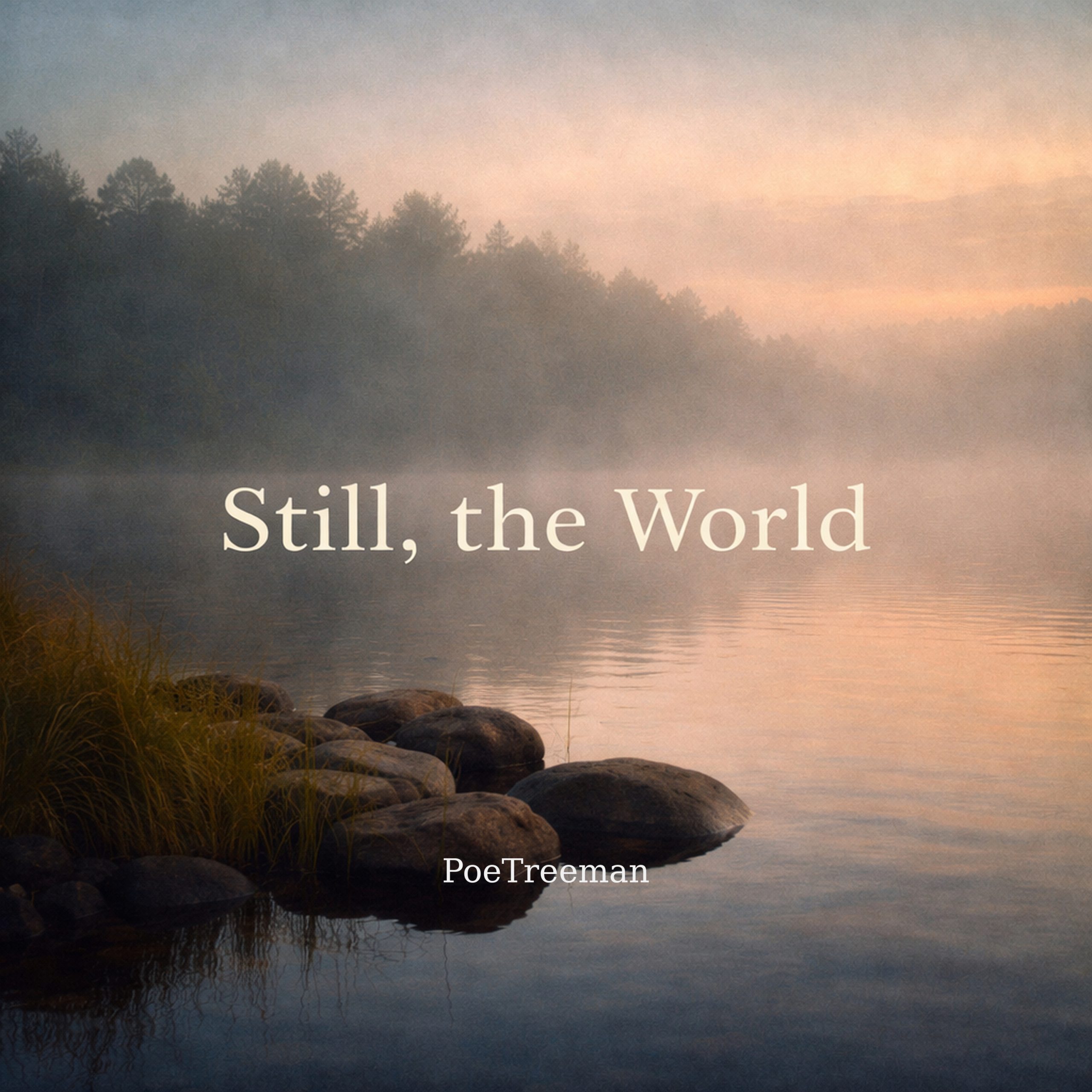
The comma in the title matters. It can be read as a command to stand still, or as a shrug of defiance: the world carries on regardless. Langston, who wrote every word and note, keeps both readings in play across the album. Americana, indie folk, country-rock and soft rock are the neighbouring territories he works, and he treats the borders between them as mere suggestions.
"Wherever You Are" opens the album and sets out its stall at once. It is a song of longing that stretches toward the horizon rather than huddling in the bedroom, and it frames everything that follows: the distance between people, and the stubborn instinct to close it. From there the record follows its emotional weather. "Edge of the World" has the vertiginous pull of its title, "It's My Bad" gets an honest apology into a pop song, and "The Art of Being Alone" makes solitude sound like a craft you can learn rather than a sentence you must serve. It is the album's quiet centrepiece, and the sort of title Leonard Cohen might have nodded at approvingly.
Elsewhere the mood lifts without turning saccharine. "Kind Heart" and "Gonna Be Alright" are the sort of reassurances that can curdle in lesser hands, but Langston earns them. He sounds like a man who has checked the evidence before offering comfort. "Love Paradigm" is the one title that threatens pretension, and it dissolves the worry with a straight-backed tune. "Hold On Babe" sits close to the Laurel Canyon tradition. "Moon's Ache" is a lovely, lopsided phrase, and "By Thunder" closes the record with a rumble of weather and a sense of arrival.
The arrangements are the album's quiet triumph. Intimate acoustic moments, close enough to hear the room, alternate with full-band sweeps, and the transitions feel like a conversation rather than a shuffle of moods. The contemporary sheen of the production is kept on a leash, polishing without sanding away the grain. The press notes are candid that AI-assisted tools played a part in the recording and arrangement, with Langston retaining control of creative direction, sequencing and mastering. Whatever one makes of the method, the result is a record with a human hand firmly on the tiller. Its warmth is unmistakably authored.
The decision to weave male and female voices through the album is the shrewdest stroke of all. It gives each song its own character, so that a lyric of regret and a lyric of resolve do not have to share a single throat, yet the record never fragments. The voices read as members of one extended family, trading confidences across a long kitchen table. That sense of company is no small achievement on a record so concerned with loneliness.
Ambition here lies in sincerity, a currency that pop has devalued so thoroughly that spending it freely now feels almost radical.
*Still, the World* will not set the charts alight, nor does it want to. It is a record for long drives, late kitchens and the hour when the day's noise finally drops away. PoeTreeman has made something modest in manner and generous in spirit, and it has the rare decency to leave you feeling a little better about the world, standing still or otherwise.