The opener, "Don't Shoot The Messenger," sets out the band's stall in under a minute. A man sits his friend down to confess that the friend's girlfriend has been unfaithful. The kicker, delivered with the timing of a seasoned music-hall comic, is that the other man in the affair is the confessor himself. It is a small comic tragedy in the tradition of the Kinks at their most sardonic, sung with a straight face and a glint in the eye. Mark Leo, who calls himself a "song & dance man" without a flicker of irony, sells every syllable. His voice has the swagger of a 1950s jukebox idol and the slight hysteria of someone who has just realised the joke is partly on him.
That tension is the EP's engine. Love, loss, obsession and ego are the subjects, and Leo handles all four as a man who has been burned and is damned if he won't make a good story of it. Wit and authenticity usually fight each other in pop, and here they shake hands. Nobody is performing pain for sympathy, and nobody is hiding behind a gag either. The laughs land because the hurt underneath them is plausible.
Musically, the band have dug up rockabilly, doo-wop and mid-century Americana and refused to lay them out like museum pieces. Tenor saxophone, the great unfashionable weapon of the guitar band, gives the sound its muscle and its sweat. Darrian Loehne's guitar slices and twangs without showing off, and the rhythm section of Shane Wheeler on drums and Thomas "Tomcat" Thompson keeps everything rolling with the looseness of players who learned their trade over four-hour sets in dive bars. You can hear those years in the grooves. Nobody acquires this kind of telepathy in a rehearsal room.
The band describe their sound as vintage without nostalgia and modern without abandoning the past, which could be mere press-kit varnish. In practice the claim holds. The production, overseen by Jake Halkey at Rustbelt Studios in Royal Oak, keeps the warmth of old tape but has a bite and punch that belong firmly to the present. Nothing here is a costume, and the fifties are treated as a language the band speak fluently rather than a fancy-dress box.
Then there is the matter of Arctic Monkeys. Anyone who met the band through that viral cover of "Love Potion No. 9" will have heard the comparison, and in thirty-second clips it is easy enough to see why. A full listen scotches it. Alex Turner's gang borrowed from the past to sound cool, while Lyons Lane live there. The Monkeys are a reference point and no more, and Lyons Lane are a far more ramshackle, affectionate and theatrical proposition.
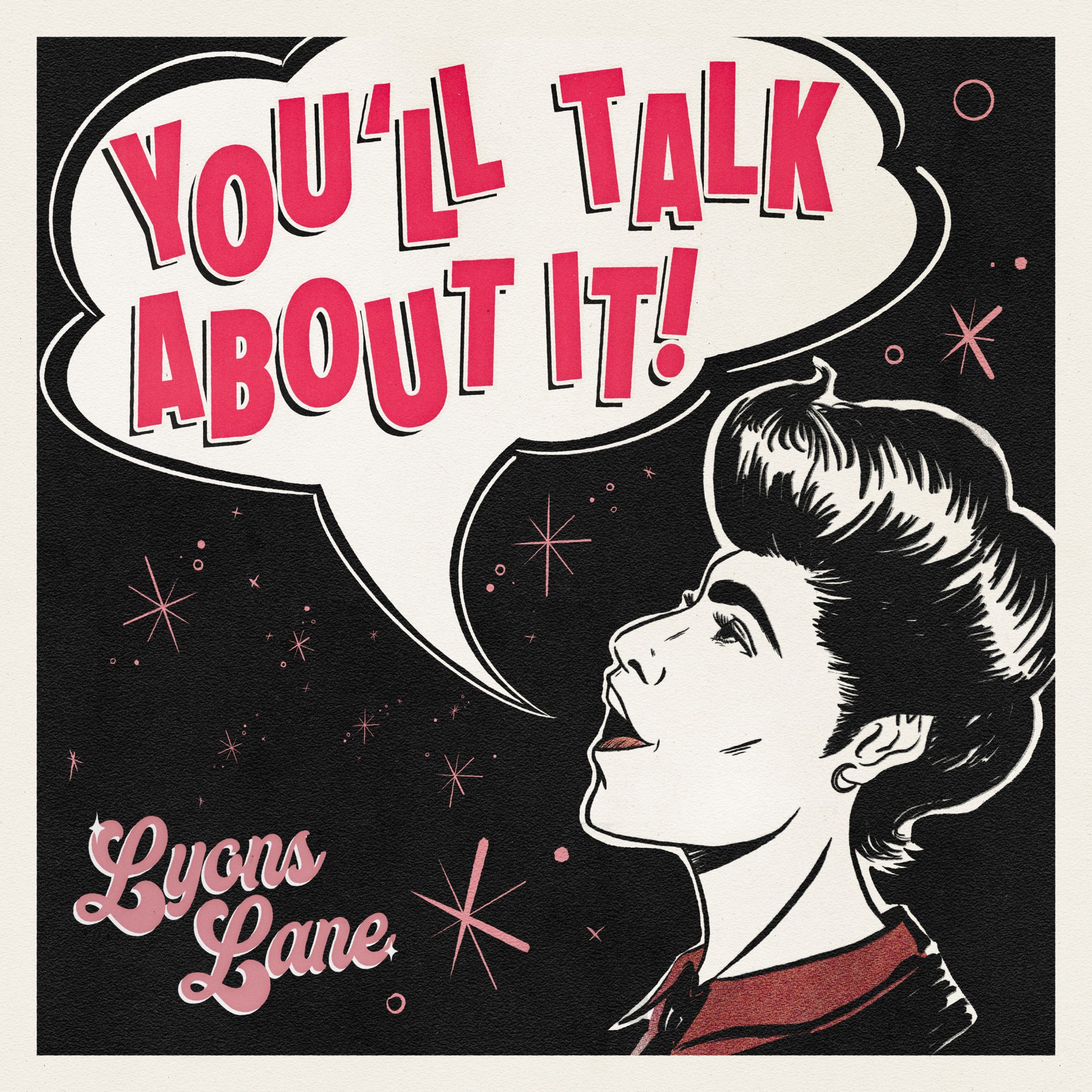
The EP is short, and like all the best short records it leaves the listener hungry and slightly giddy. A few rough edges remain, and I hope they stay. Polish would sand off what makes this band worth talking about. A sold-out Magic Bag, the same room the White Stripes once filled, and nearly two million streams suggest the talking has already started.
The title is a dare, and on the evidence of these songs the band can afford it. You will talk about it, and you will play it again tomorrow.