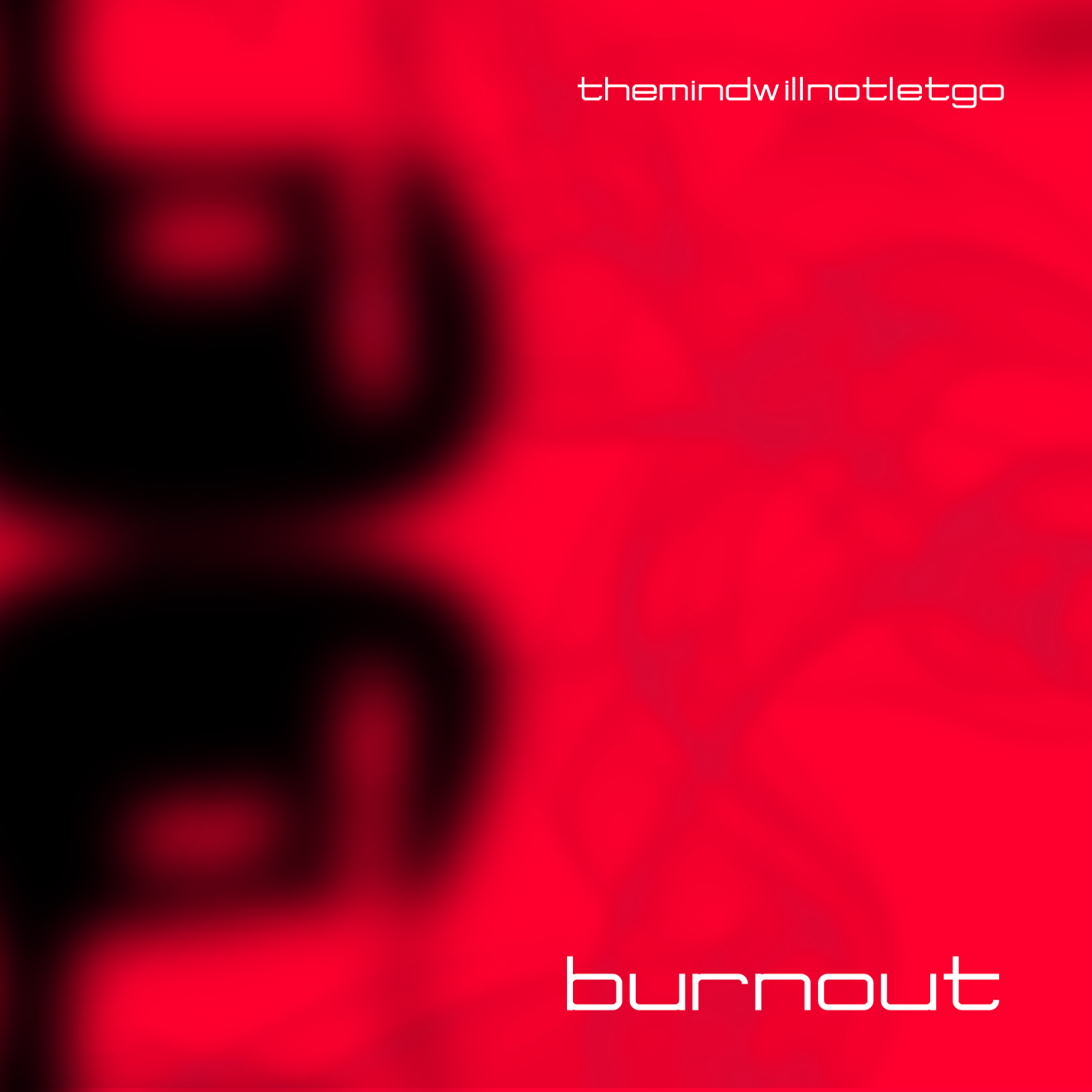
The obvious entry point is "crashandburn," the lead single and the record's beating, arrhythmic heart. It opens at a sprint, all punk urgency and clenched teeth, before the floor drops away into a half-time chorus so wide open it feels architectural. The trick — and it's a genuinely clever one — is how the song refuses to resolve its own tension. Male and female vocal lines don't harmonise so much as argue, circling the same desperate impulse to regress into something primal, fully aware that the only exit is a breakdown. The artist has described writing it without knowing whether it was a love song, a breakup song, or a suicide note, and settling on all three at once. That refusal to pick a lane is the record's defining move, and it pays off.
Elsewhere, the sequencing does real work. "lucky," featuring Corey Roberts, kicks the record off at a breathless 174 BPM, immediately establishing that nothing here is going to coast. "wildfirehurricane" and "paynomind" ease the tempo down without losing any of the density — high-gain guitars stacked in layers thick enough to obscure the drums, then pulled back just enough to let a hook through. By the time "spit" and "beautifulpain" arrive mid-album, the pattern is clear: hook-heavy, major-key melodies dragged through minor-key dread, like pop songwriting filtered through a horror film's colour grading.
"she" and "usedtobe" form a late-album gut-punch, tightening the emotional screws before "crashandburn" detonates at track six — a sequencing choice bold enough to suggest genuine confidence in the record's back half, since most albums would have buried their single earlier and coasted after. Instead, closer "amistilldreaming" slows everything to a crawl at 100 BPM, stretching out to nearly five minutes, a genuinely unsettling comedown after the density that precedes it. It's the sound of adrenaline finally metabolising into exhaustion, and it's the smartest sequencing decision on the record.
What makes *burnout* worth your attention isn't just the craft, though the craft is considerable — the guitar tones alone suggest hours nobody but the artist will ever fully appreciate. It's the singularity of vision. Home-studio records this ambitious usually betray their limitations somewhere: a thin mix, a compressed low end, a chorus that oversells itself because nobody was around to say no. This one doesn't. The mastering is loud and competitive without curdling into fatigue, and the dark pop-punk instincts never tip into pastiche.
Call it melodic rock for people who find melodic rock too polite, or dark pop-punk for people who think pop-punk stopped being dangerous around 2007. Either way, *burnout* earns its title honestly: it's a record about running yourself into the ground, made by someone who clearly did exactly that to finish it.