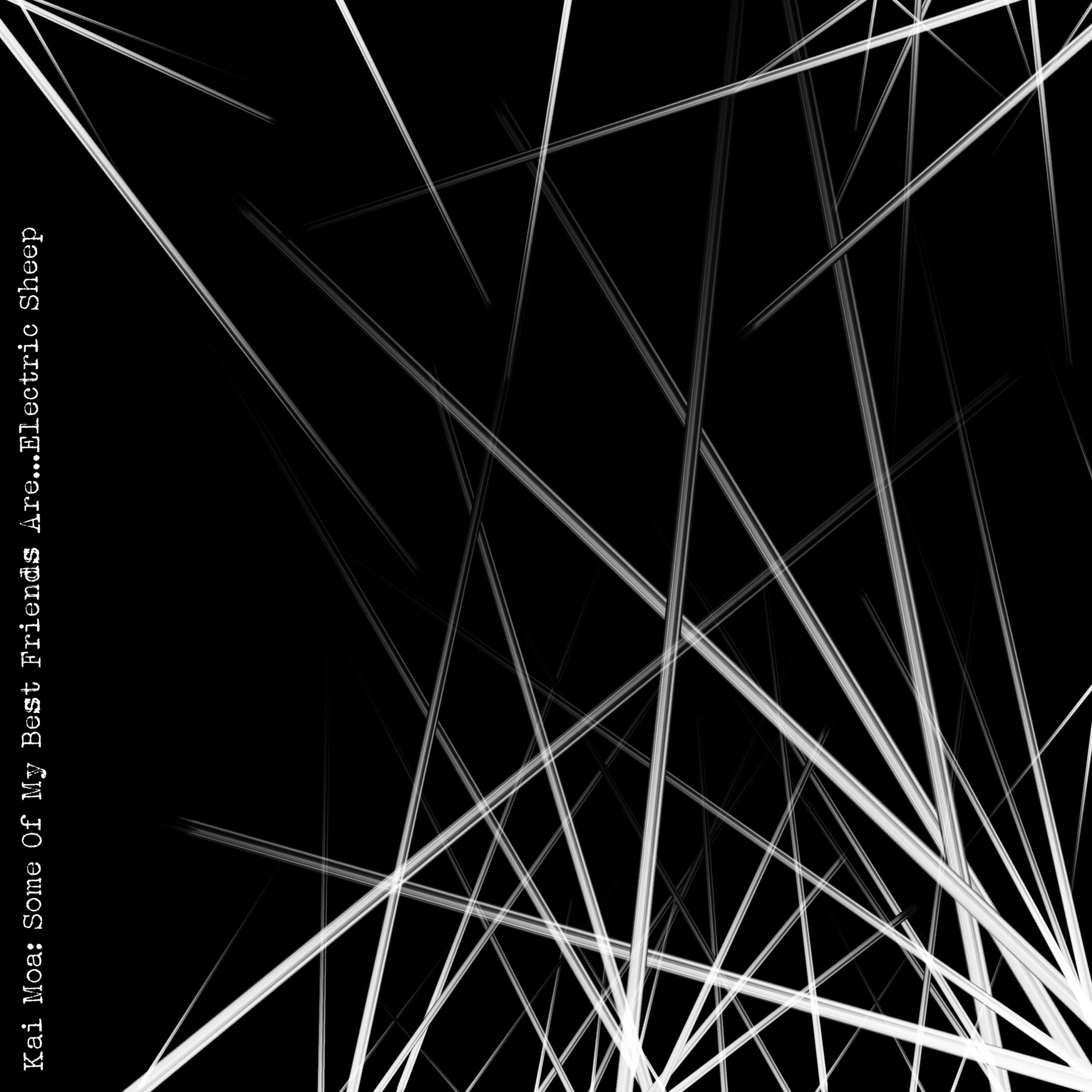
The opening track, previously unheard until now, sets the tone with a masterstroke of pacing. It begins as industrial noir: disjointed rhythms clatter against one another like loose scaffolding in a gale, the kind of soundscape that suggests a city built from broken glass and static. Then, without ceremony, the floor drops away. A portal — Moa's word, and a fitting one — opens onto something closer to cosmic jazz, piano chords blooming with unexpected warmth. What follows is a drum solo of genuine ferocity, the sort of playing that only makes sense once you learn its author has spent years behind a kit in jazz ensembles, post-rock outfits and punk bands alike. The chord progression underneath owes a clear debt to the psychedelic jazz of decades past, but the solo builds with such uncontainable momentum that it eventually detonates into a filthy, low-ceilinged techno stomp. Three distinct records happen inside four minutes, and none of the joins show.
This is the trick Moa performs throughout: he treats genre boundaries the way a magpie treats a fence, as something to be perched on rather than respected. IDM curdles into alt-pop, ambient passages give way to dubstep's low-end menace, and industrial textures needle through the lot of it. The reference points on the press sheet — Arca, Squarepusher, Aphex Twin, Boards of Canada, Autechre — read less like influences than a family Moa has adopted wholesale, and he wears the inheritance lightly, never once collapsing into pastiche.
The name itself is a clue worth following. "Kai Moa" plays on the word chimera, that mythological beast stitched together from three different animals, and biology's own term for an organism carrying more than one set of DNA. It is a tidy piece of self-mythology, but it holds up under scrutiny: this music really is composite, really is fused rather than blended, its seams visible and deliberate rather than sanded away. Even the title carries four buried references the artist has declined to spell out, a small act of mischief that rewards repeat listening more than it demands it.
Moa's background as a drummer explains much of what makes the EP compelling rather than merely clever. Improvisation runs through the record like a live wire — you can hear a musician reacting in real time even inside heavily programmed passages, which gives tracks that could easily feel like genre tourism a genuine emotional pulse instead. Plans for a live tour, with room for improvisation built in, feel like the natural next step rather than an afterthought.
Debut EPs rarely announce an artist this fully formed. Kai Moa has produced something restless, referential and strange enough to survive well past its release date — a first chapter that already reads like the start of something worth following closely.