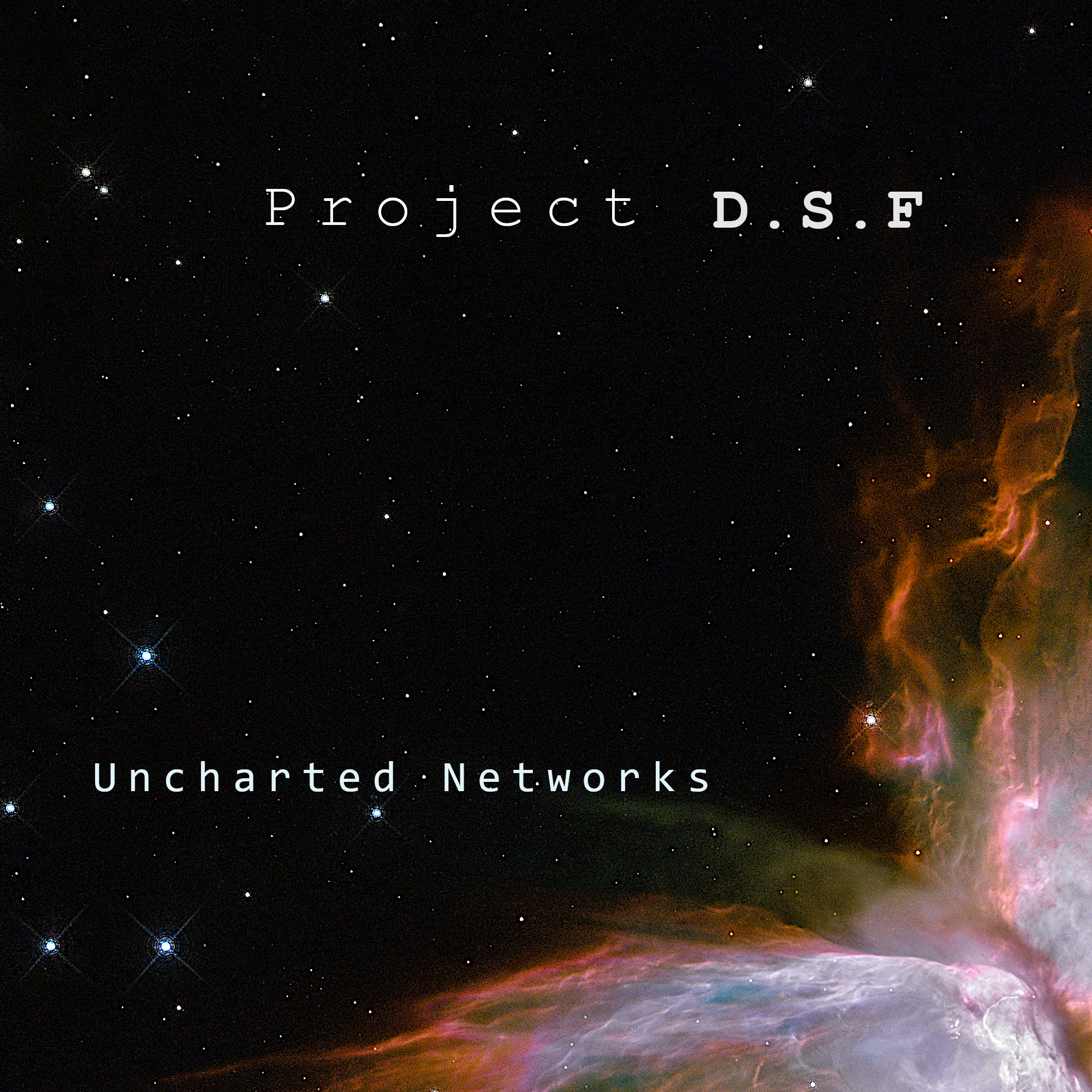
That patience is the whole game here, and it pays off handsomely. Salaar Masud, the studio auteur behind the project, has built a career on the marriage of sound and image, and you can hear the camera pan even without the accompanying footage of spacecraft drifting past unfamiliar worlds. The post-rock lineage is unmistakable — long crescendos, guitars used more as texture than melody, the sense of a band (or in this case, a single obsessive architect) building toward a collapse that never quite arrives in the way you expect. But where lesser hands might simply bolt an orchestra onto a laptop and call it cinematic, Masud understands orchestration as narrative. The brass doesn't simply swell for effect; it arrives like a discovery, a widening of the frame just as the electronic pulse beneath it starts to fracture into something more urgent.
What separates "Transformation" from the glut of ambient-adjacent instrumental music currently clogging playlists is its refusal to coast. Too many artists in this space mistake atmosphere for substance, content to let a pad synth hum indefinitely while nothing of consequence happens above it. Masud instead treats atmosphere as a foundation to be built upon, layering percussion that ticks like a countdown clock beneath the strings, letting the electronica elements glitch and stutter at just the moments when the symphonic writing threatens to become too comfortable. It's a piece engineered around tension and release, and the release, when it finally comes around the four-minute mark, feels less like a climax than a genuine arrival — the sonic equivalent of breaking atmosphere and seeing a horizon you didn't know existed.
There's craft, too, in the sequencing of texture: the way a solitary piano figure surfaces just after the loudest passage, offering a moment of human scale before the track pulls back out to its widest, most orchestral register. It's a trick worthy of the great film composers, and it's deployed here without a hint of pastiche. This is not music aping John Williams or Hans Zimmer for cheap grandeur; it's music that has clearly absorbed those lessons and repurposed them for a smaller, stranger canvas — one artist, one vision, one imagined voyage into the unknown.
As a standalone listen, "Transformation" rewards headphones and a closed door more than it does a shuffled playlist, which is precisely as it should be. This is deliberate, unhurried, purposefully constructed music, and it marks Masud as a genuinely compelling voice in instrumental composition — someone building not just tracks, but destinations.