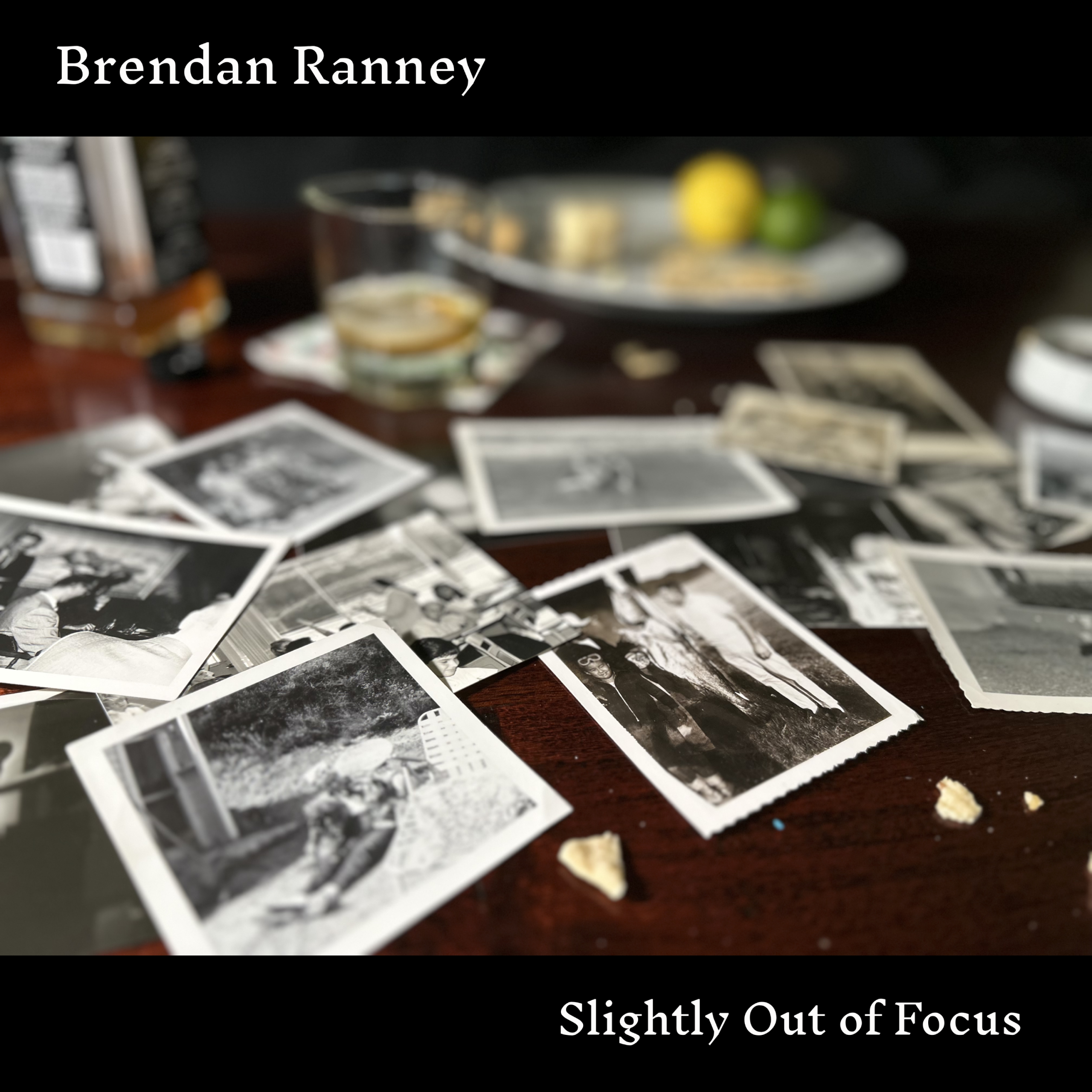
The record's guilty pleasure is its refusal to resolve. Melodic guitar lines drift in and out of focus — pun evidently intended — while fuzz and feedback creep along the edges like static caught between stations. The Sonic Youth influence shows itself not through squall for its own sake but through texture: dissonance used as shading rather than assault. Beneath that noise sits songwriting of real tenderness, the kind that recalls Elliott Smith's hushed confessionals and Pedro the Lion's plainspoken ache. Ranney's vocals stack and layer, doubling back on themselves, so that even his simplest lines arrive with a strange, haunted depth, as though several versions of the same man are singing in slightly imperfect unison.
What gives the album its spine is the story behind it: a box of unpublished poems left by Ranney's late father, discovered by accident and apparently enough to shake loose nearly two decades of dormant creative instinct. You can hear that lineage in the phrasing. These songs favour image over hook, mood over chorus. They read less like verses built for radio and more like private notebooks set to feedback and reverb, the sort of writing that was never meant for an audience and is all the more compelling for arriving anyway.
The Claremont and Fort Wayne bar-band years, spent in outfits like Lurid and the short-lived Dregs, have left their fingerprints too — a scrappiness underneath the polish, a sense that these songs were built by hand rather than assembled in a studio committee. Nothing here feels overproduced. If anything, the album's charm lies in its willingness to stay a little ragged, a little unresolved, mirroring its own title with unusual honesty. Few records are brave enough to admit, structurally, that clarity was never really the point.
Longing runs through the whole thing like a fault line. Desperation, too, though never melodramatically staged — Ranney seems allergic to the grand gesture, preferring instead the accumulation of small, specific details until the emotional picture assembles itself almost by accident. That restraint is the record's great trick. It lets silence do work that a lesser songwriter would have filled with strings or bombast.
*Slightly Out of Focus* will not convert listeners looking for immediacy. It asks for patience, several plays, a willingness to sit inside its haze rather than demand it clear. But given that patience, it rewards handsomely: a genuinely moving document of a man returning, cautiously and on his own terms, to the only language he seems to trust completely. Nineteen years away, and Brendan Ranney has come back not performing a comeback, but simply telling the truth. That, in the end, is more than enough.