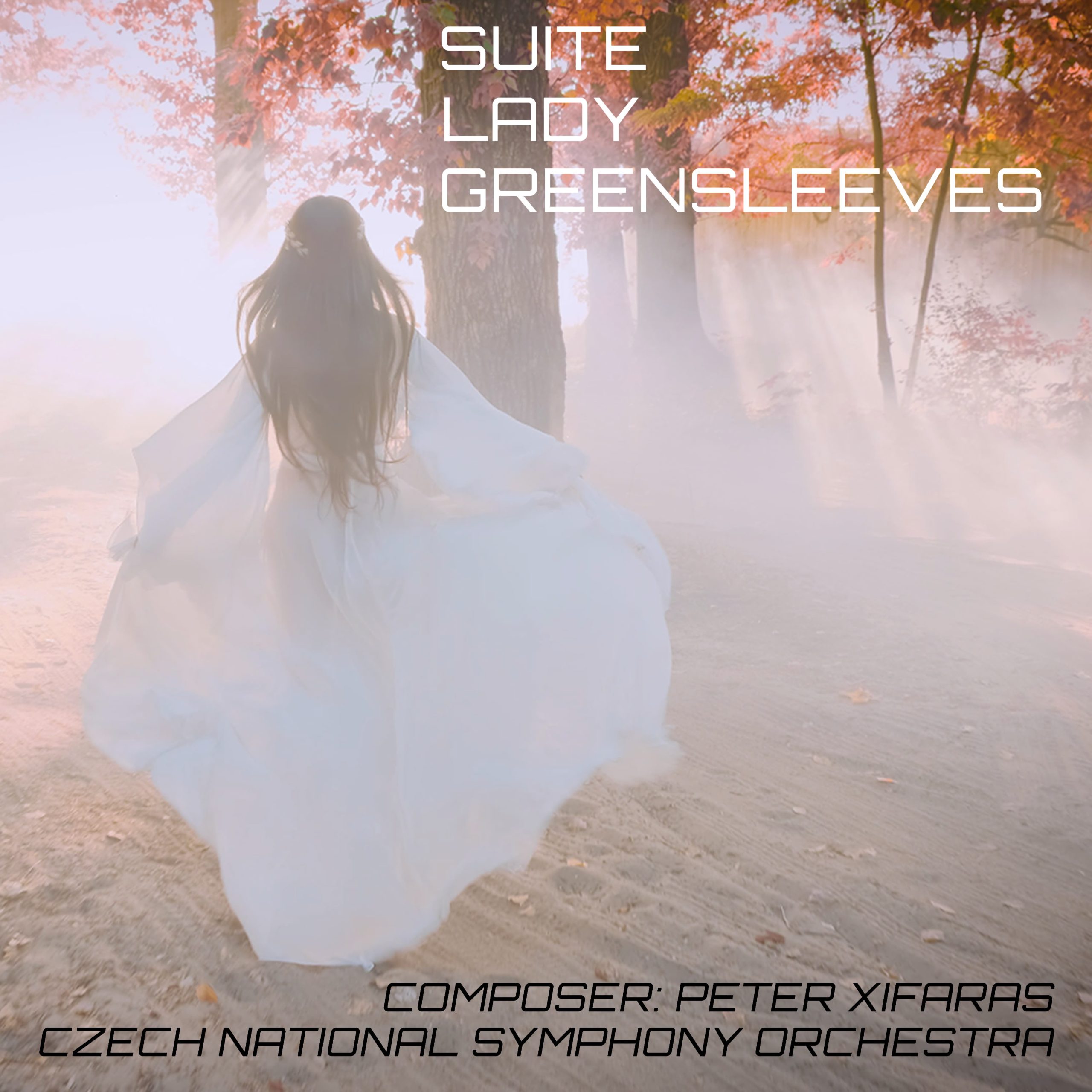
The opening "Prologue" wisely resists announcing the tune outright, offering instead a mist of string writing that hints at the romanesca bass pattern from which the melody ultimately descends — a nod to the composer's own historical note reminding us that the song predates Henry VIII's supposed authorship by decades. It is a smart authorial choice: establish atmosphere before nostalgia, and the payoff lands harder once "Lady Greensleeves" itself finally arrives, stated with an almost embarrassed brevity at just seventy-nine seconds, gone before sentiment can curdle into cliché.
Xander Nichting's violin deserves particular praise. His tone throughout "Love From Afar" carries the ache of a suitor who suspects, correctly, that he has already lost — vibrato held on a tight leash, phrases left unresolved, bow pressure easing off exactly where a lesser soloist would lean in for applause. It is playing of real restraint, the kind that trusts silence as much as sound. By contrast, "May I Have This Dance" allows him room to swagger a little, the orchestra dropping into a courtly triple metre that recalls Ravel's own affection for pastiche without ever tipping into imitation.
Martinka's direction of the Czech National Symphony Orchestra keeps proceedings admirably lean. Xifaras writes for full forces but rarely indulges them; "The Pursuit," which could easily have become a bombastic set piece of galloping strings and blaring brass, instead unfolds with a nervous, syncopated energy — more anxious footsteps than cavalry charge. The composer clearly understands that unrequited love is not a battle scene but a series of small humiliations, and the orchestration reflects that psychological accuracy rather than reaching for cheap spectacle.
The title track's dramatic heart, "Unrequited Love," runs over three minutes and earns every second of it. Xifaras builds the movement on a slow accumulation of string layers, the original melody folded ever further from recognition until only its rhythmic skeleton remains — a neat musical metaphor for a memory fading under the weight of rejection. When the "Epilogue" finally returns to something approaching the tune's original shape, it does so quietly, almost apologetically, closing a suite that has earned its melancholy honestly rather than manufacturing it.
What ultimately distinguishes this recording from the dozen other "Greensleeves" reworkings gathering dust in library catalogues is Xifaras's refusal to let scholarship smother storytelling. He clearly did his homework — the liner notes correcting the Henry VIII myth are proof enough of that — yet nothing here feels like a history lecture set to music. Instead, listeners get a tightly argued, beautifully played suite that treats a four-hundred-year-old melody not as a relic but as raw material for a thoroughly modern tale of heartbreak. Fifteen minutes, eight movements, not a wasted bar among them.
**Recommended**, particularly for listeners who thought they never needed to hear "Greensleeves" again.