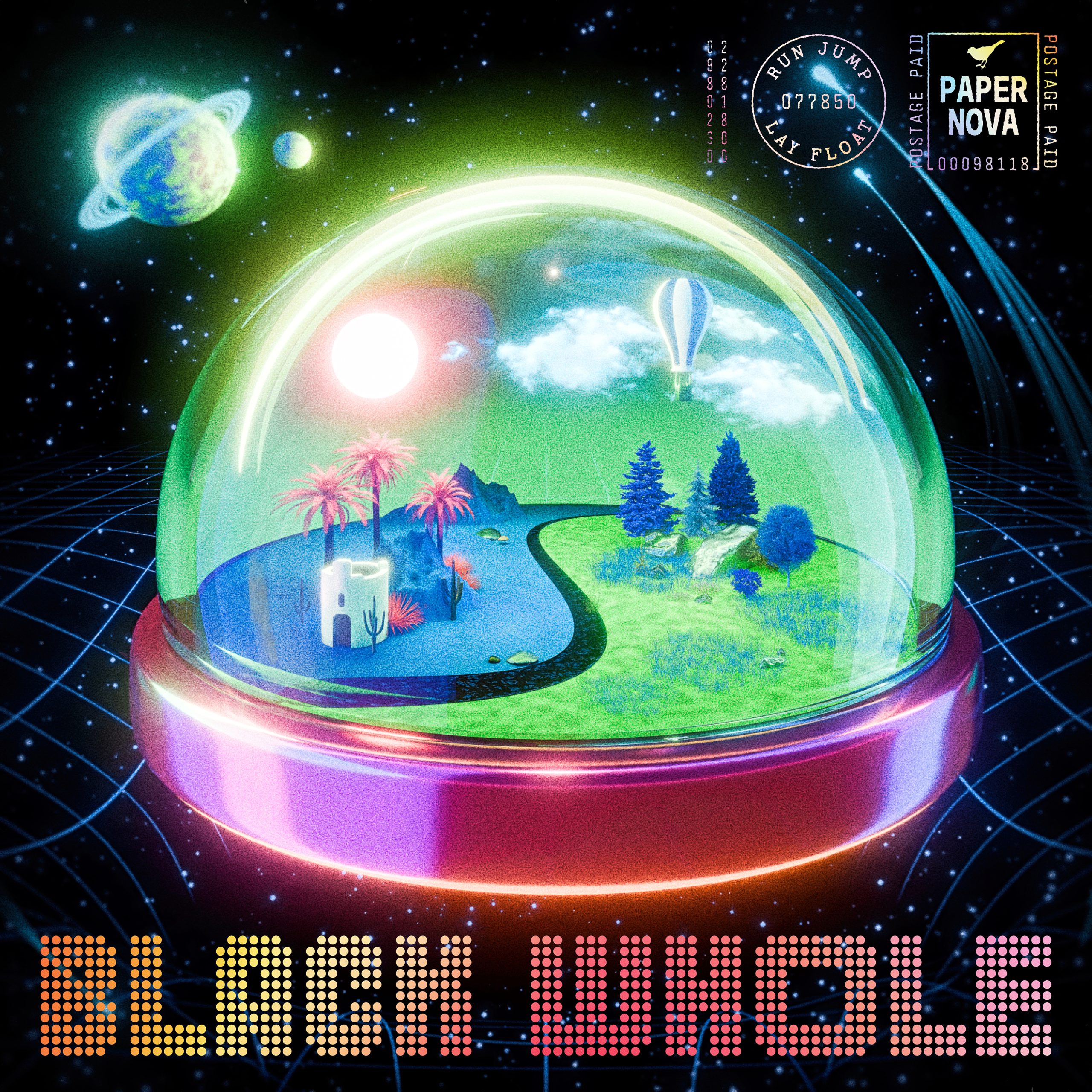
Christiana Wu's voice is the first thing you notice and the last thing you forget. She sings like someone auditioning for three different operas at once and winning all of them — theatrical, yes, but never hammy, stacking harmonies on top of harmonies until the melodies start to feel architectural, less sung than built. John Nguyen's guitar work slides underneath her like scaffolding that occasionally decides to become the whole building, while Miguel Nuñez and Andre Classen hold down a rhythm section flexible enough to lurch from jazz swing to alt-rock crunch without ever losing the plot.
What makes the record genuinely arresting is how unafraid it is of its own subject matter. Political disillusionment, war, the slow erosion of self-belief under other people's expectations, the quiet unravelling of inherited religious certainty — these are not small themes, and plenty of bands would flatten them into vague gestures toward "darkness." Paper Nova instead treat them as material to be worked, turned over, argued with. The title itself does real conceptual labour: not merely a pun, but a genuine attempt to hold the light and dark of a life in the same breath, the same chord change.
Recorded at Earwig Studio out in Tacoma, the album carries a warmth that feels almost defiantly analogue against its heavier lyrical content — drums that thud rather than click, guitars that breathe, vocal takes that sound performed rather than assembled. It's a production choice that pays off enormously on the album's most emotionally exposed passages, where a single crack in Wu's voice does more work than any amount of studio polish could manage.
The record's real achievement, though, is structural: this is an album built to be heard front to back, not raided for singles. Songs bleed into one another thematically, doubt answering disillusionment, defiance answering doubt, until the closing stretch arrives at something genuinely earned — self-empowerment that hasn't skipped the difficulty required to reach it. Early listeners calling it a "no-skip album" aren't exaggerating for the press release; sequencing this patient, this deliberate, is rare enough now to be worth remarking on twice.
None of this would matter, of course, if the songs themselves didn't hold up, and they do — hooky where they need to be, knotty where the material demands it, never showing off for its own sake despite four players clearly capable of doing exactly that. Twelve years is a long time to wait for a defining statement. *Black Whole* feels like one anyway: ambitious without being bloated, heavy without being humourless, and — that rarest of things — a record about darkness that leaves you feeling lighter for having heard it.
**Verdict:** A genuinely commanding return from a band finally matching their ambitions to their abilities.