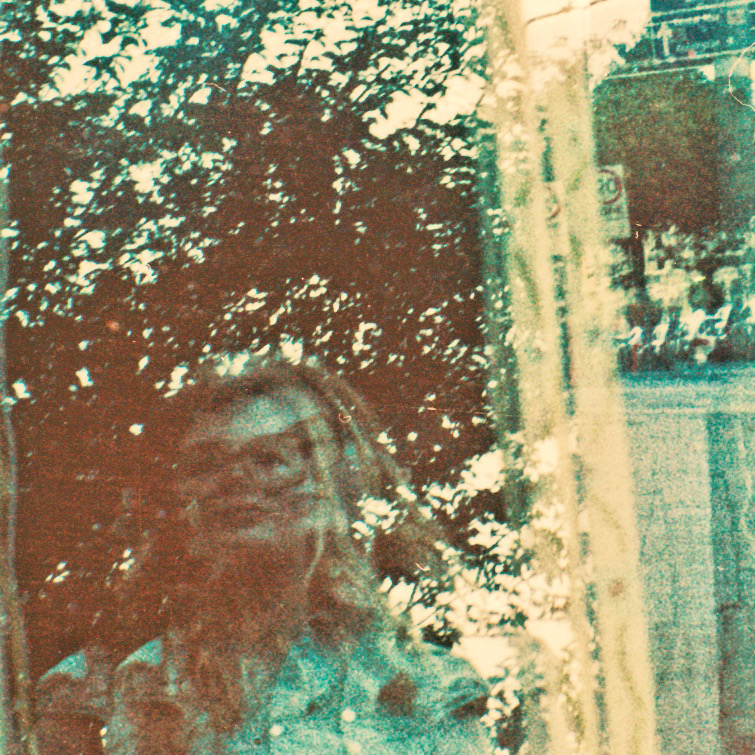
The premise is deceptively simple: a graveyard full of names the singer cannot place to faces, relatives whose lives ran parallel to hers on the same patch of English countryside. But Rose refuses the easy nostalgia trap. She doesn't romanticise the dead into comforting ancestors; she interrogates them. Did they walk this same path? Did they carry the same ache she carries now? The song turns inheritance into a mystery rather than a certainty, and that's a braver choice than it first appears — most songwriters mining family history settle for warm sepia-toned reverence. Rose wants something thornier: recognition without resolution.
The old-camera imagery she's spoken about threading through the track is the smartest structural decision here. A photograph developed nearly a century ago, its fingerprints still visible on the surface, becomes the perfect metaphor for a song that's fundamentally about proximity without contact — you can see the mark someone left, touch the same surface they touched, and still never know them. It's a tactile, almost forensic way of writing about grief and lineage, closer to how a conservator might describe restoring a damaged artefact than how a typical singer-songwriter describes missing family. That specificity is what elevates the concept beyond generic ancestry-tourism songwriting.
Rose has described her own delivery as theatrical, and on the strength of this concept, that instinct seems entirely earned rather than indulgent. A song built on unanswerable questions needs a voice willing to sit inside uncertainty without smoothing it over — flattening this material into polite folk balladry would have betrayed the source material. Theatricality, deployed correctly, is simply emotional precision turned up loud enough to be heard.
What's most affecting is how the song refuses closure by design. Rose isn't chasing genealogy for answers; she's using it to sit with not-knowing as a permanent condition, and to suggest that continuing a legacy doesn't require understanding it fully. She won't know the photographs her ancestors took, but she can keep taking her own. That's less a resolution than a quiet act of faith — the kind of ending that trusts the listener to carry the ambiguity home rather than handing them a tidy bow.
Coming from an artist who has spoken candidly about how illness reshaped her relationship to music-making, the song's preoccupation with continuity and legacy carries an undertow that's hard to ignore, though Rose is careful never to spell it out directly. That restraint is its own kind of craft. Nothing here is over-explained; the listener is trusted to sit with the same unresolved questions the singer sits with.
If this is the opening statement of a new project, it's a confident one — small in geography, expansive in feeling, and unafraid to end on a question mark rather than an answer. Few songwriters manage to make genealogical curiosity feel this urgent, this personal, this quietly haunted. Riri Rose has.