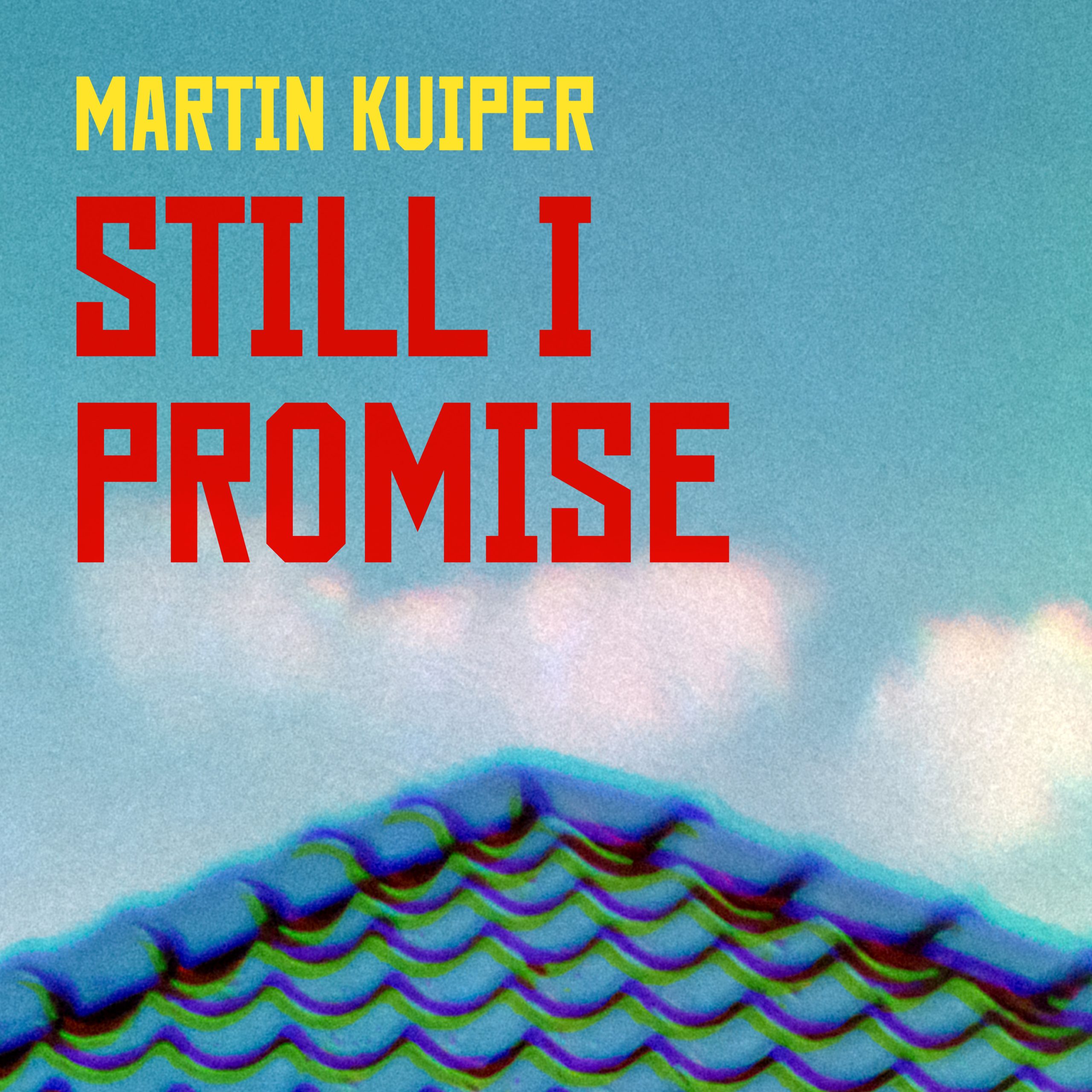
The song opens on a note of quiet retreat — a man asking for room to breathe — before the chorus arrives like sunlight breaking through cloud cover. It is a trick many songwriters attempt and few pull off: withholding the hook just long enough that its arrival feels earned rather than engineered. Kuiper clearly understands the mechanics of tension and release, and he deploys them here with the confidence of a craftsman who has spent years quietly perfecting his trade rather than chasing trends.
Lyrically, the track deals in the oldest of dilemmas — a man caught between wanting to commit and needing to first put his own house in order — but Kuiper dresses the sentiment in imagery sturdy enough to carry real weight: steep slopes, rising water, a vessel without a rudder drifting through a storm. These aren't decorative flourishes. They do the emotional heavy lifting, turning a fairly ordinary confession into something closer to a small, private mythology. The steerless ship, in particular, earns its keep twice over, resurfacing musically in a surf-guitar solo that winks at the listener rather than simply illustrating the lyric. It's a clever touch, the kind of detail that rewards a second and third listen.
Musically, the track sits at a fascinating crossroads. The rock backbone gives the song its muscle, but the vocal harmonies — clearly indebted to the Beach Boys as much as the Beatles — soften the edges and lend the whole thing a breezy, coastal warmth entirely at odds with the turbulence described in the verses. That friction between sound and subject is the record's masterstroke. A storm rendered in sunshine is a far more interesting proposition than a storm rendered in thunder, and Kuiper seems to know it.
The choir that swells beneath the final choruses deserves particular praise. Rather than simply padding out the arrangement, it functions almost as a Greek chorus, amplifying the narrator's private vow until it feels less like a whispered promise and more like a public declaration. Producer Guido Aalbers has given the mix plenty of room to let that grow without ever tipping into bombast, which is no small feat on a song built around such a delicate emotional pivot.
What ultimately elevates "Still I Promise" above a straightforward relationship song is its honesty about ambivalence. Kuiper doesn't pretend the man at the centre of the story has all the answers, nor does he rush him toward easy resolution. The promise of the title is offered in good faith, but it's a promise made from somewhere still unsteady — and that unsteadiness, rendered with such melodic generosity, is precisely what makes the song linger.
At forty-nine, Kuiper released his first song and has barely paused for breath since. "Still I Promise" suggests a songwriter still sharpening his instincts, still finding new corners of a well-worn genre to explore. Summery on the surface, turbulent underneath — it's a small triumph of contradiction, and one of the most quietly confident singles he's put his name to yet.