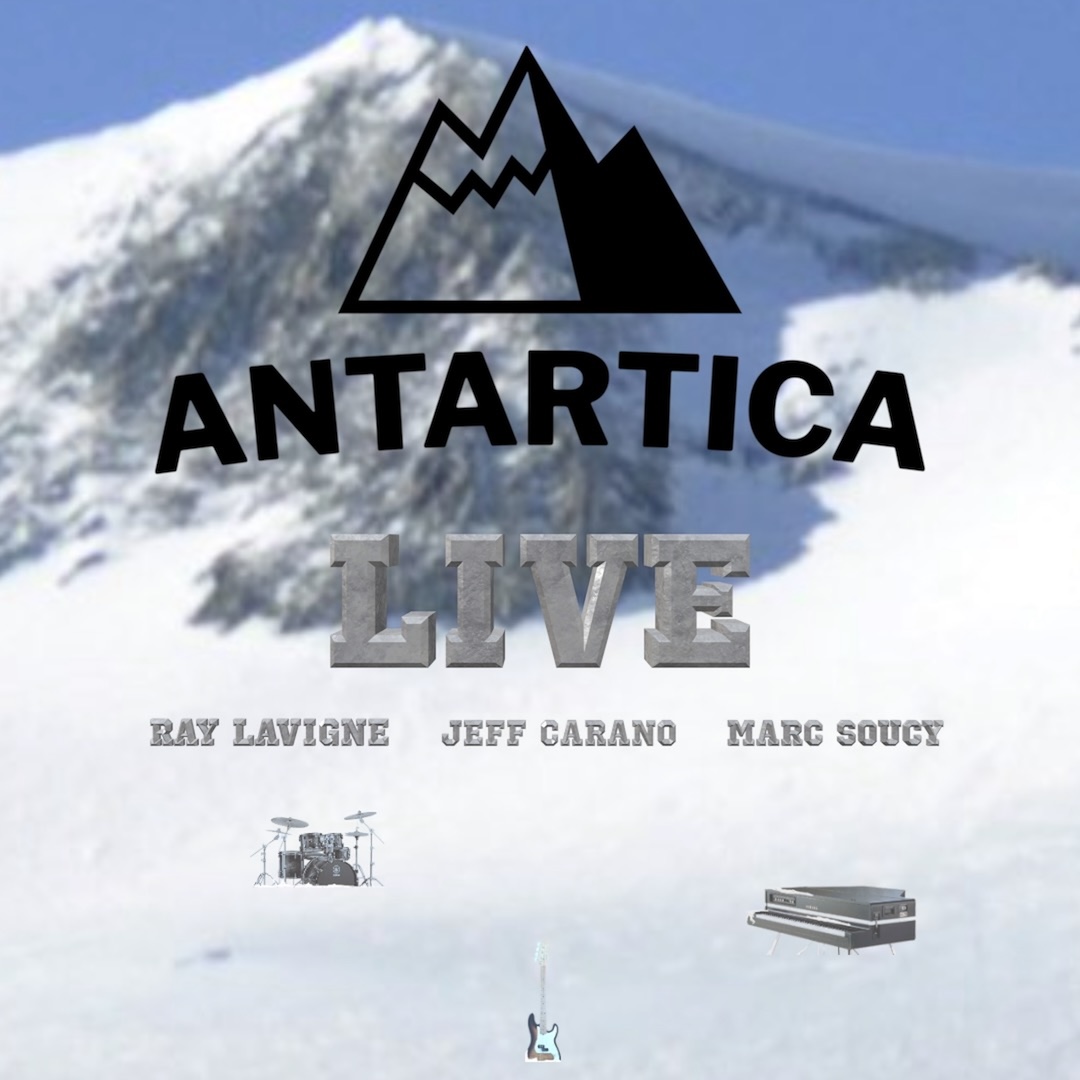
Soucy's keyboard writing carries the unmistakable fingerprints of his heroes — Zappa's mischief, Gentle Giant's contrapuntal knottiness, the widescreen ambition of Return to Forever, the theatrical muscle of Emerson, Lake & Palmer, and a nod toward U.K.'s Jobson and Wetton — yet he never simply borrows. He reassembles these influences into something with its own gravitational pull. Carano's bass work is a marvel of elasticity, sliding from melodic counterpoint to thunderous low-end propulsion without ever losing its footing, while Lavigne's drumming — supplemented on occasion by xylophone — provides both scaffolding and mischief in equal measure.
The album opens not with a whisper but a warning shot: "Mayhem In Antartica" sets the tone with an unruly, almost theatrical burst of energy before "Charlie Backwards" kicks the door in properly, all sharp edges and unified attack, the trio locking into a groove with the kind of telepathy that studio overdubbing tends to iron out of existence. "When I Take The Five" toys gleefully with metric games its title promises, while "No This Isn't Jazz Either" seems almost to wink at the listener, daring you to categorize music that refuses easy labels.
"The Out Cats" and "Accelerator" push the tempo and the technical demands skyward, the latter living up to its name with a relentless forward drive that never once feels mechanical. "Turn For The Worst" and "The City" slow the pulse just enough to let melody breathe before the record's undisputed centerpiece arrives: "Clem's Cakewalk," a tune that lurches through shifting odd meters with an almost vaudevillian glee, tossing memorable hooks into the listener's lap even as the rhythmic ground keeps shifting underfoot. Few bands manage to be this cerebral and this much fun simultaneously; fewer still make it look effortless.
"Broken Latin" closes out the record's harder-edged material with rhythmic sleight of hand, and "Actual Snow" brings the set to rest on a note that feels both conclusive and open-ended — a fitting way to close a record that was never really meant to close, only to be rediscovered.
What elevates this beyond mere nostalgia trip is the restoration itself. Soucy has clearly approached the tapes as a conservator rather than a producer, scrubbing away decades of tape hiss and age-related grime while resisting any temptation to sand down the performances into something glossier and less alive. The dynamics breathe, the interplay crackles, and the three musicians sound like they're in the room with you rather than trapped behind a wall of nostalgic reverb.
Listening now, decades after the fact, one can't help but marvel at how much of Soucy's mature compositional voice — the cinematic sweep, the rhythmic invention, the melodic generosity — was already fully formed in these performances. Antartica Live isn't a footnote to his later Original Instrumental Works; it's the first chapter, written in real time, unrehearsed for posterity but preserved for it anyway.
Rarely does a "lost" recording arrive with this much vitality intact. Antartica Live doesn't ask for indulgence as a historical curiosity — it demands attention on its own considerable merits, and earns every minute of it.