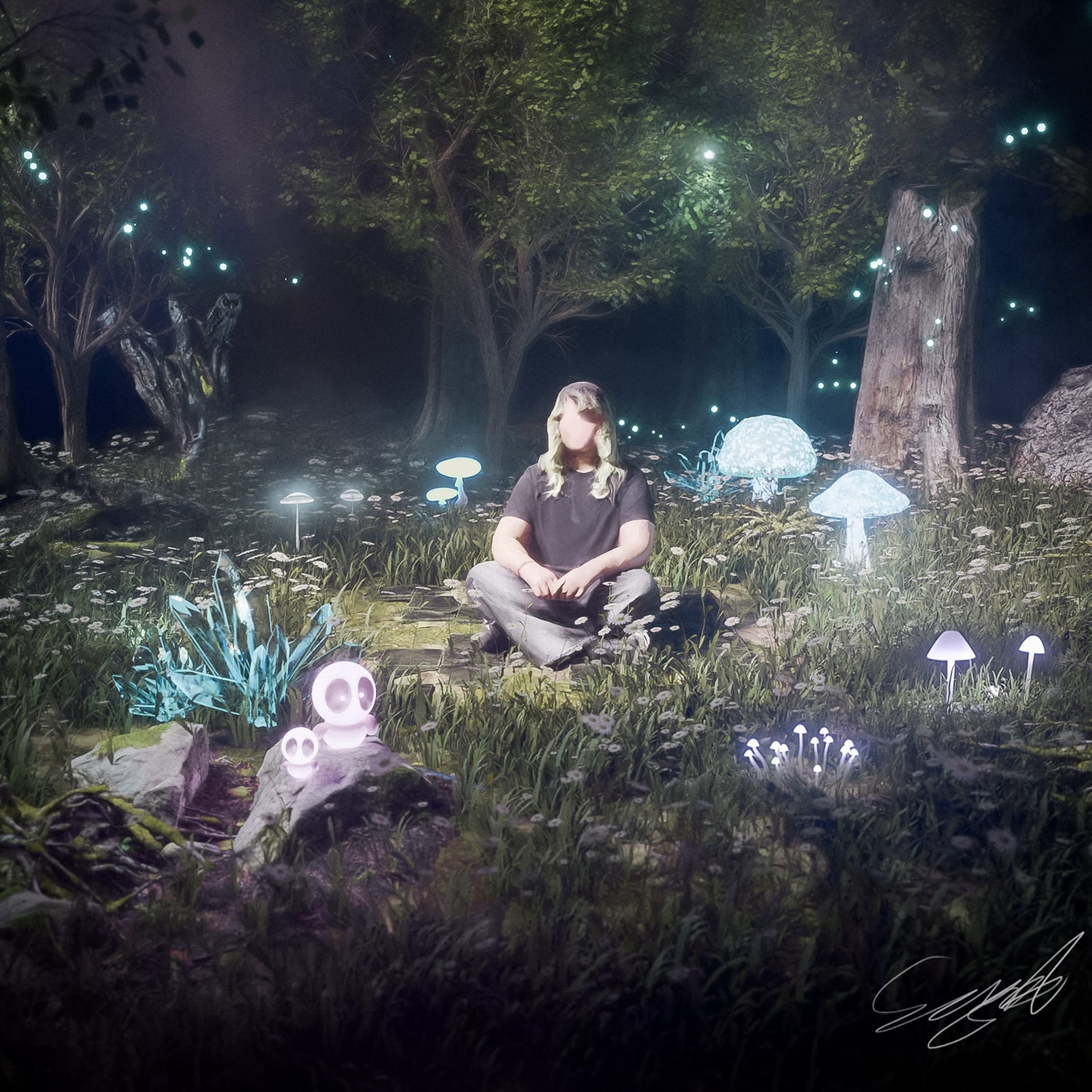
The premise is deceptively simple: the mind as a hiding place, a garden that blooms when the world outside has grown unbearable. It's a well-worn metaphor in the wrong hands, the kind of thing that curdles into greeting-card sentiment before the second verse. Zoé-Loes avoids that trap almost entirely by refusing to prettify the retreat inward. This isn't escapism as comfort; it's escapism as survival, and the record's atmosphere — thick, nocturnal, faintly haunted — makes sure you feel the cost of it.
Credit here belongs as much to the production as to the voice at its centre. Lehr's arrangement does something clever with scale: it keeps threatening to swell into full cinematic bombast, drums stacking like weather fronts, low end pressing against the ribs, and then it pulls back at exactly the moment you brace for the drop. That owl call threaded through the second verse is a small, strange masterstroke — the kind of detail a lesser production would have sanded off, and the kind that lingers precisely because it was left rough at the edges. It reminds you, briefly, that gardens are wild places before they're safe ones.
Zoé-Loes's vocal is the record's real instrument of persuasion. She sings like she's confiding rather than performing, letting the melody bend and fray at the edges instead of hitting every note with showroom precision. When the chorus finally opens up, it doesn't detonate so much as bloom — unhurried, inevitable, the tension of the verses resolving into something that sounds like relief and grief at once. That's a difficult trick to pull off, and she makes it sound almost casual.
What's most impressive, listening back, is the restraint. Dark-pop as a genre has a well-documented weakness for piling on atmosphere until the emotional core suffocates underneath it — all fog machine, no heartbeat. "Sanctuary" resists that temptation. Every texture, from the brooding low synths to the cavernous drums, is in service of the song's central idea rather than a substitute for one. This is songwriting first, production dressing second, and the hierarchy shows.
Already finding traction with tastemakers and international audiences alike, "Sanctuary" plays like a statement of intent from a songwriter who understands that the most affecting confessions are the quiet ones. Zoé-Loes has built herself a hiding place worth visiting more than once.