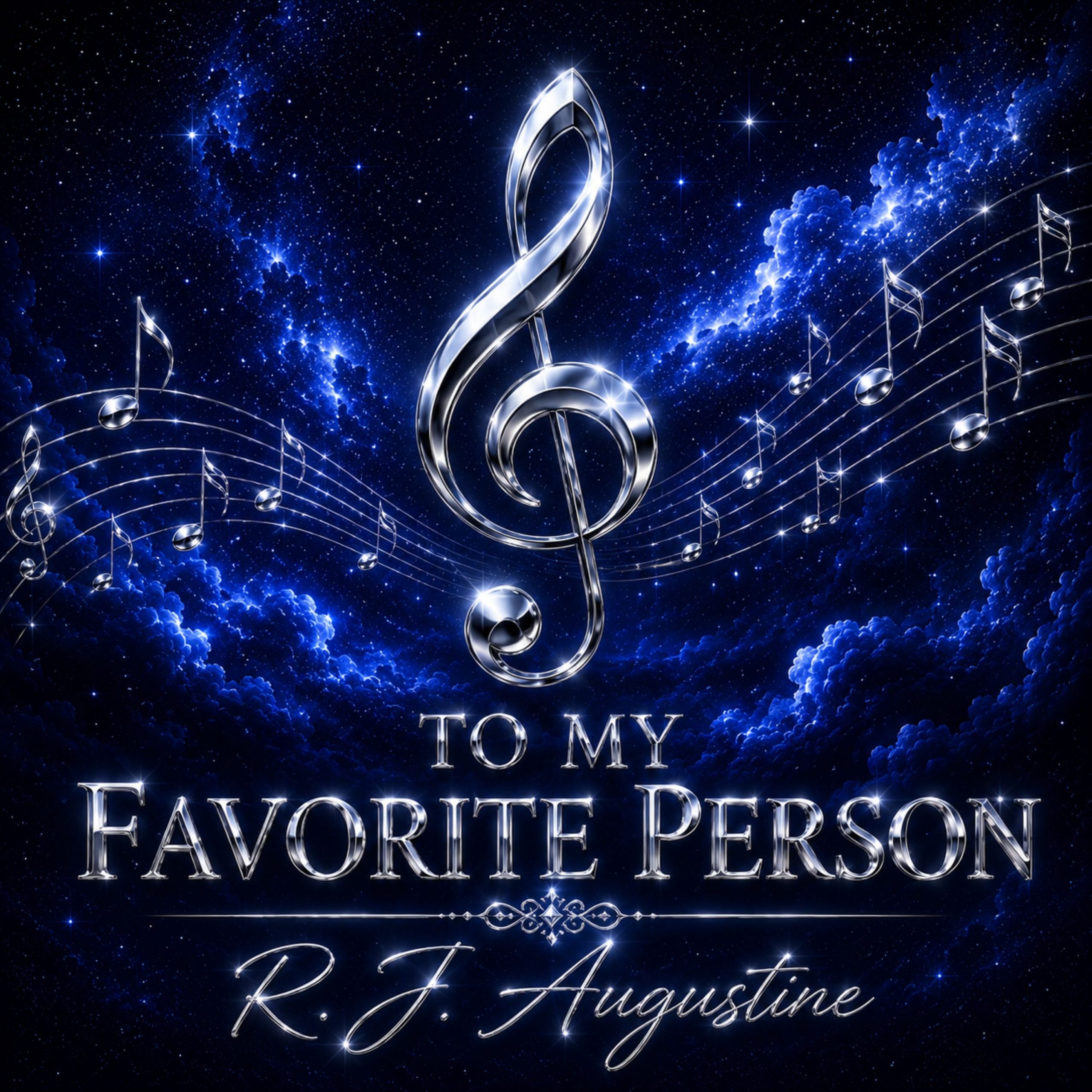
The pleasure of the record lies in its refusal to settle on a single emotional register, and the sequencing makes that range legible. It opens on the giddy, glassy-eyed rush of "Magic" and "More Amor," tracks that sound genuinely besotted rather than performatively smooth, before sliding through the cocky strut of "Just Do It" and "What's The Move" into devotional territory with "Good Morning Beautiful" and the title cut itself. By the time "Head Games" and "Invisible" arrive, the tone has curdled into something wearier — paranoia, distance, the particular loneliness of being in a relationship that's already ending. It's an old trick — Marvin Gaye knew it, D'Angelo refined it — but Augustine handles the arc with a lightness of touch that keeps the album from tipping into melodrama.
Vocally, he favours intimacy over showmanship. There are no histrionic runs designed to win a talent-show round of applause; instead he leans into a conversational falsetto, breath audible, phrasing loose enough that lines land like overheard thoughts rather than rehearsed declarations. "Beautiful Thief" and "This Dude" both lean into that conversational pull, almost narrated rather than sung, while "I Can't Find My Keys" finds room for the kind of domestic, slightly absurd detail that most R&B records are too self-serious to include — and the album is better for it.
What separates this from the glut of bedroom-R&B records currently flooding streaming platforms is specificity. The back stretch — "Thanks And Apologies," "The Distance," "No Fairytale Ending," closing on the wry resignation of "Bubble Boy" — refuses the genre's usual instinct to manufacture a tidy resolution. Augustine writes like someone naming names, even when he isn't; the details feel lived-in rather than generic, and that granularity is what makes the album's more vulnerable moments land instead of sliding past as background mood music.
Twenty tracks across five quarters of an hour is a lot to ask of any listener's attention span, and a tighter edit might have sharpened the impact further. But the ambition is admirable rather than indulgent: Augustine clearly wanted a complete portrait of a relationship rather than a tidy EP highlight reel, and mostly he earns that scope, particularly in a back half where the emotional stakes only land because you've sat through the earlier highs to get there.
For an independent release, the polish is striking — nothing here sounds like a demo dressed up for streaming, and the songwriting carries the confidence of someone who trusts his own voice rather than chasing a trend. Augustine isn't reinventing R&B's vocabulary; he's speaking it fluently, with sincerity that never curdles into sentimentality. *To My Favorite Person* announces a songwriter capable of real emotional precision, and on this evidence, whatever Rich Willis makes next under this name is worth paying attention to.