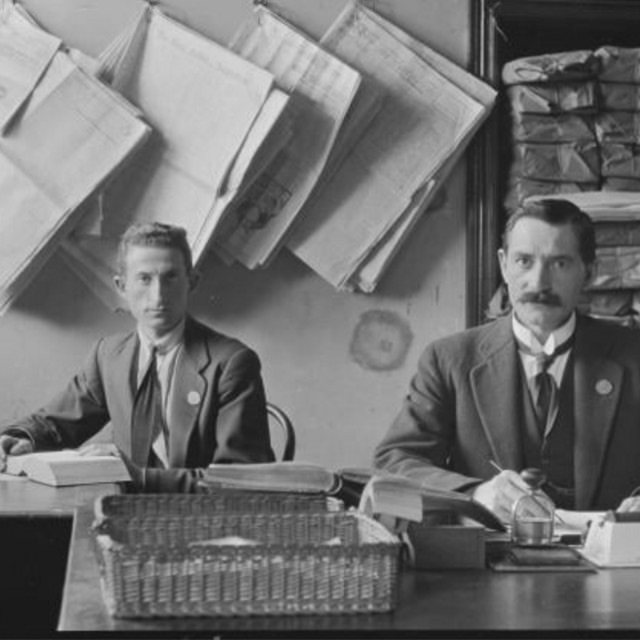
"Eyes of Izzy" is, on its surface, a curio. A track recorded a decade ago as part of a university project, coaxed into existence by collaborator Paul Curtis and then allowed to quietly gather dust while life — turbulent, unrelenting life — carried on around it. That it has finally been released feels less like a promotional decision and more like an inevitability, the way certain things only become speakable once enough time has passed.
The subject is Izzy Orlof, the pioneering photographer credited with introducing the camera to Western Australia — a figure ripe with symbolic possibility. Photography, after all, is the art of capturing the irretrievable moment, of fixing light before it vanishes. For a songwriter whose entire practice rests on preserving raw experience in lyric form, choosing Orlof as a subject feels almost preordained. Moule has always written autobiography. Here, for the first time, he writes biography — and yet, as he freely acknowledges, his own turbulence seeped so thoroughly into the writing that the boundaries between subject and author dissolved entirely.
This is the record's quiet genius. Orlof settled in Fremantle. Moule found his only monthly solace in Fremantle, stepping off the plane from the mines with one precious night before the demands of single fatherhood resumed. The city becomes simultaneously historical backdrop and personal sanctuary, a place where the nineteenth century and the twenty-first century collapse into each other across a single geography. When Moule sings about Izzy seeing Western Australia through a lens for the first time, one suspects he is equally singing about himself — a man from Birmingham trying to see an unfamiliar continent clearly, trying to make sense of what the light out here means.
Curtis's production, captured in a Fremantle home studio with the first take ultimately deemed definitive, carries the rough, immediate quality of something caught rather than constructed. No polish obscures the vulnerability at the song's centre. Paul Kelly — Moule's avowed influence — built an entire career on exactly this principle: that emotional truth and production sheen are frequently enemies. "Eyes of Izzy" plants itself firmly in that tradition of Australian storytelling where the landscape is never merely backdrop but active participant, shaping the emotional register of everything sung within it.
Moule writes with the self-awareness of someone who has read his own life carefully, who understands that his best material arrives not from comfort but from precariousness. The fact that this song emerged during what he describes as one of his most traumatic periods — displaced, unsupported, homesick — gives it a particular gravity. Songs written from genuine extremity tend to outlast songs written from contentment, and "Eyes of Izzy" has already proven its durability simply by surviving ten years in a drawer without losing its power.
The single represents something genuinely rare in contemporary independent music: a document made without commercial calculation, released without obvious strategic timing, carrying nothing except the weight of its own honesty. Moule is not chasing trends. He is chasing the same thing Izzy Orlof chased — the perfect exposure, the moment when the light falls exactly right and reveals something worth keeping.
Whether this record finds the audience it deserves will depend, as ever, on the arbitrary machinery of attention. But "Eyes of Izzy" deserves to be heard by anyone who still believes that a song can carry real history, real geography, and real human cost within its three or four minutes — and deliver all of it without a single wasted word.