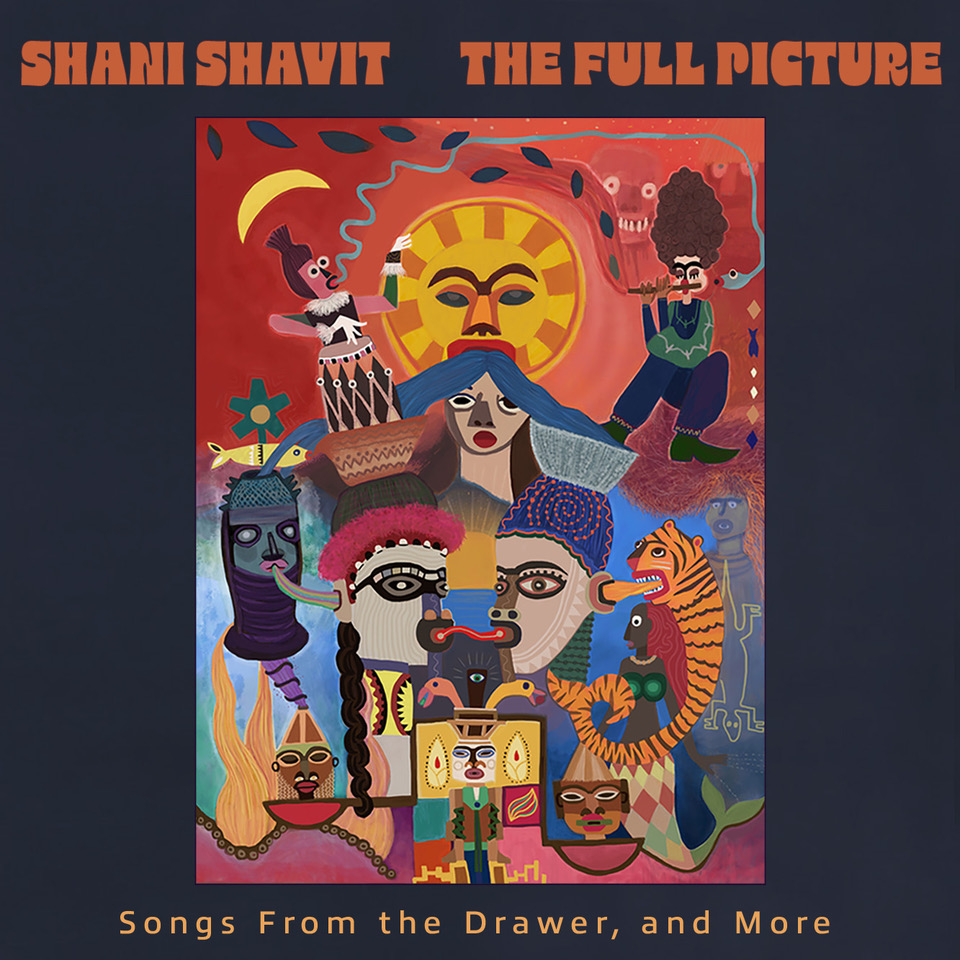
The conceit is deceptively simple: ten songs pulled from twenty years of private writing, nursed through a pandemic, and finally committed to tape in the controlled intimacy of a home studio. Lesser artists would have produced a cabinet of curiosities. Shavit produces a coherent world — 37 minutes and 56 seconds that feel both effortlessly personal and rigorously considered.
The album opens with *Sun Will Shine*, the one track co-produced with Jango, the veteran Israeli bassist who first encouraged the project after stumbling across Shavit singing on social media. It is a statement of intent — warm, direct, rootsy — and an astute piece of sequencing. The listener is welcomed before being challenged. What follows is considerably more complex.
*Son de la Luna* is the obvious centrepiece, and justifiably so. Written and arranged over years but transformed in the recording process by vocalist Tula Ben-Ari, a piano solo from Shai Bachar that belongs on a considerably more expensive record, and percussion from Chen Meir that arrives late and redefines everything before it — the track demonstrates what distinguished collaboration actually looks like. Not the mere addition of famous names to a credits list, but the genuine alchemy of musicians who push each other toward versions of songs they could not have reached alone. It is the kind of track that makes you stop whatever you are doing.
*Shade of You* and *Just Another Love Song* represent the album's more inward English-language register — the latter having sat on Shavit's hard drive for four years as nothing but guitar and voice before she recognised it needed only piano and a handful of backing vocals. Pianist Adi Renert obliged, and the restraint is everything. There is a lesson here about the editorial confidence that two decades in the industry quietly teaches.
The Hebrew tracks — *שמיים כמו חולצה* (Skies Like a Shirt), *בשר ודם* (Flesh and Blood, featuring Sagiv Cohen), *רואה ואינה נראית* (Seen and Unseen), and *בלי תנאי* (Unconditionally) — form the emotional spine of the record. This is where Shavit's roots in Israeli musical tradition surface most plainly, and where the Afro-Latin rhythmic vocabulary she absorbed in childhood does its most interesting work, pushing against melodic structures that might otherwise resolve too comfortably. *בשר ודם* in particular crackles with a restless energy, Cohen's contribution sharpening the arrangement into something unexpectedly urgent.
*רואה ואינה נראית* — the track the press materials identify as RVN — lands with quiet devastation. Recorded in the dead hours of the night in Shavit's own space, it addresses sexual harassment with a directness that the protected intimacy of home recording clearly made possible. It is powerful precisely because it does not perform its power. No orchestral swells, no calculated catharsis. Just a voice and the weight of what it is saying, which is more than enough.
*Loving Man* arrives as a kind of necessary exhale before the closing stretch — generous where much of the album has been guarded, and all the more affecting for the contrast.
The album closes with *From the River to the Lake*, written after a visit to New Orleans during which Shavit was, by her own account, profoundly sad. The refrain — *I know the time, I know the space, Everything is falling into place* — arrives not as resolution but as hard-won acceptance, which is considerably more interesting. Albums that end in tidy emotional bows tend to be forgotten quickly. This one ends in the peculiar peace of someone who has survived something and knows it.
Twenty-seven musicians contributed to *The Full Picture*, yet the record never feels crowded. This is Shavit's great editorial achievement: knowing when to let the bass do the emotional work, when to step aside for a piano, when to hold the space herself. The result is an album of genuine range — heartbreak, desire, cultural memory, political fury compressed into personal narrative — that wears its ambition lightly enough to feel intimate throughout.
Music albums are frequently described as promises. The Full Picture feels more like a settlement of debts — two decades of songs finally given the homes they deserved, by someone who has learned, through long service to other people's music, exactly what makes a song endure.