Hoffmann has never been interested in comfort. From the earliest work under the Nobility of Salt banner through to *Blacksmith's Fire* and beyond, he has consistently positioned himself as a chronicler of damage — social, personal, political — rendered in a musical language that refuses easy genre classification. Fans of Nick Cave, And Also the Trees, and Tindersticks will find much to recognise here in terms of tonal kinship, but Hoffmann's voice — literally and compositionally — belongs to no-one but himself. That emotional baritone, carrying the weight of a man who has read too much history and cannot look away, sits at the album's centre like a load-bearing column around which everything else is carefully arranged.
And what an arrangement it is. The instrumentation on *The Tree of Knowledge* is frankly extraordinary: classical guitar fingerpicking of filigree delicacy, a mandolin-like ornamentation that gives certain passages an almost Eastern European folk quality, and concertina lines that appear and disappear like figures glimpsed through fog. Beneath these, piano and a singing saw — deployed as a kind of disembodied soprano — provide a ghostly melodic framework, while Ennio Morricone-ish twang guitars lend the whole enterprise a cinematic sweep that evokes lonely highway drives in films that have yet to be made. The jazz drumming, deeply resonating bass, and classical string arrangements complete a palette that feels simultaneously intimate and panoramic. This is music as landscape.
The lyrical content is where Saline Grace will test the mettle of casual listeners, and it is where the album earns its title. *Lethal Anaconda* — one of the more audacious pieces here — takes the form of a political fable, examining what the press release carefully describes as "scheduled population exchange under a dictatorship covered up as democracy." Whether one reads this as historical allegory or contemporary commentary, the fable form lends it a cold, classical power. Equally striking is *Raven Berta*, the biography of a German rubble woman who ends her days impoverished and mocked in the streets of postwar Berlin — an act of historical witness that lesser songwriters would have patronised into sentimentality. Hoffmann does not. He simply watches, and lets the horror accumulate.
The centrepiece, however, may well be *Individual Case*, described as the album's sharpest exercise in social criticism: a song about a legal system's total failure in the face of the rape and murder of a child, and the parents who take justice into their own hands. To write about this territory without exploitation, sensationalism, or easy catharsis is a remarkable achievement. That Hoffmann manages it within a pop-adjacent song structure — however darkly textured — speaks to a maturity of craft that is genuinely rare.
The single *Rooms to Let* provides something approaching a breather: a tale of metropolitan loneliness that, in the tradition of the best English-language songwriting about cities, makes the density of population feel like an amplifier for solitude rather than its antidote. Meanwhile, the title track, *Bloody Tears*, *Weeping Wounds*, and *The Descent* pursue the interior journey — a man quarrelling with the stages of his own existence, the private battles that never make the newspaper fables but are no less consuming for it.
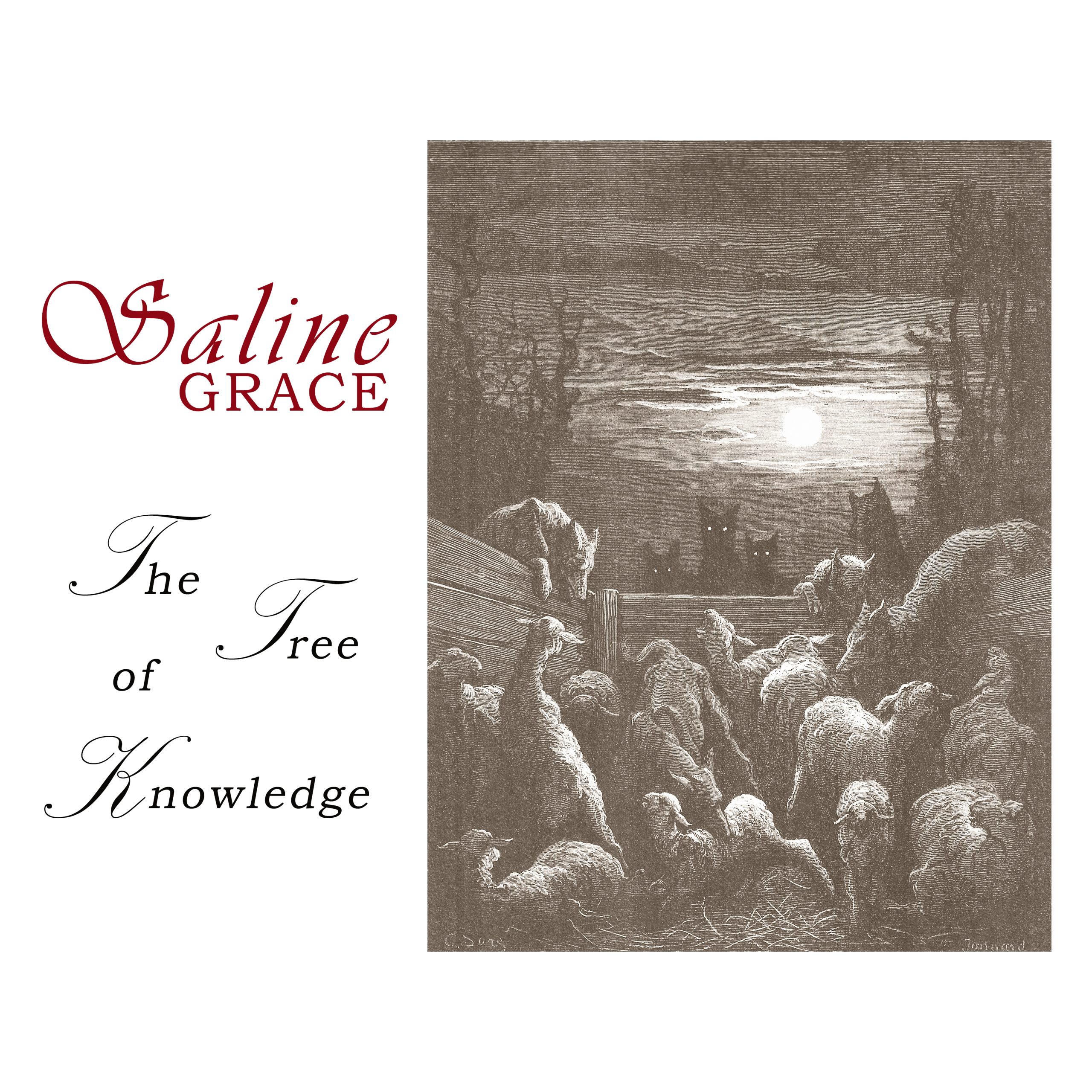
Hoffmann has described his goal as creating "pictorial synaesthesias raising nightly panoramas." This is either an artist who thinks in images so naturally that his prose tips into the visionary, or a man who simply knows precisely what he is doing. Either way, the result justifies the ambition. *The Tree of Knowledge* is a work of austere beauty and genuine moral seriousness — a reminder that independent music, made with care and without the pressure of a quarterly streaming report, can still be capable of saying something that matters. Four albums of fine work, and this — his fifth — may be his most accomplished.