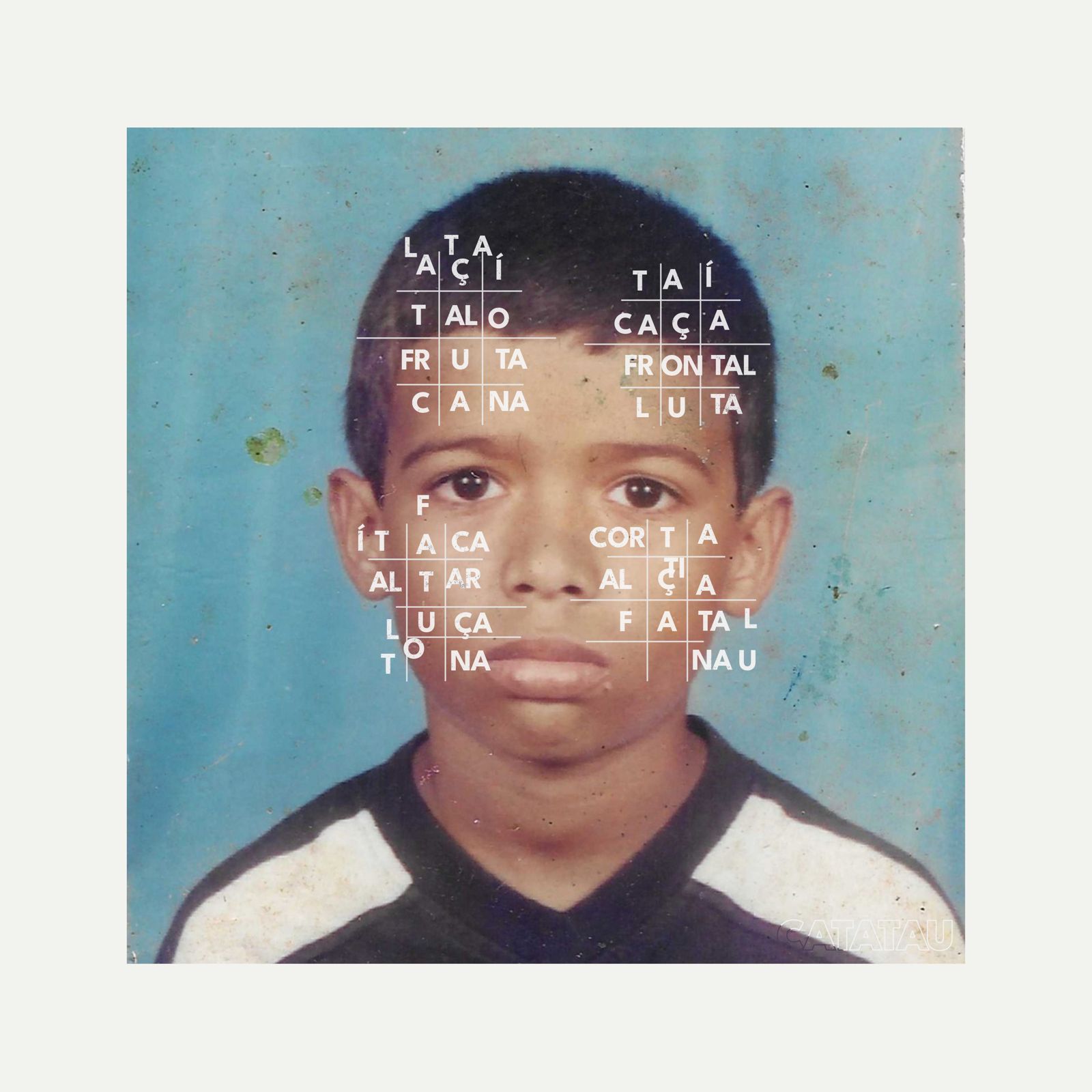
The record was co-produced with Paulo Novaes, and the collaboration has clearly loosened something. Where *Tarde no Walkiria* (2023) found França reckoning with identity and colour in more personal, inward terms, CATATAU turns that hard-won self-knowledge outward and lets it collide with the world. Football failures, childhood memory, the daily grinding indignity of wage labour, the strange guerrilla joy of the samba circle — these are not decorative themes. They are the actual texture of the argument França is making, which is this: that Brazilian popular life, for all the violence done to it by colonialism and capital, carries within it an irreducible artistic intelligence that no work schedule, no algorithm, no policy of neglect can finally extinguish.
The cast assembled here suggests a genuine community rather than a session. Vocalists and composers Tori, Marina Nemesio, Zé Ibarra and Davi Fonseca are not merely guests lending glamour; they are interlocutors, voices that complicate and extend França's own. The rhythm section alone — Domenico Lancellotti and Thomas Harres splitting drum duties, four bassists including Frederico Heliodoro and Nyron Higor bringing their different weights and temperatures — gives the album a physical density that rewards repeated listening. Leandro Floresta's flute appears at precisely the moments when you least expect softness, and those are the moments that stay with you longest.
França has spoken of wanting the album's central substance to be the word itself — language as construction site, as the place where discourse is built and dismantled. You hear this in the way the lyrics move, not in smooth narrative arcs but in sudden cuts, the kind of leaps that feel less like transitions and more like the way actual thought works when it is genuinely agitated. The oscillation between noise and near-silence is not a production trick; it is the formal expression of a very specific predicament — having everything to say and finding, periodically, that language itself collapses under the weight.
The album's political register is worn with admirable lightness. The debates around Brazil's proposed 5x2 work schedule reform hover in the background without ever tipping the songs into polemic. França is too smart a songwriter to write slogans. Instead, he makes the case for art as a category of necessity, not luxury — and he does it by making music that feels necessary. The intertextual range is impressive, drawing on cinema and literature in ways that never feel like cultural name-dropping but like the natural habitat of someone who reads, watches, listens, and takes it all seriously.
França's great gift has always been finding beauty precisely where it is hardest to see — in the overlooked citizen of a historically neglected region, in the ordinary Silva whose star does not shine. CATATAU does not promise that the star will be lit. It simply insists, with patience and passion and quite a lot of skill, that it is there.