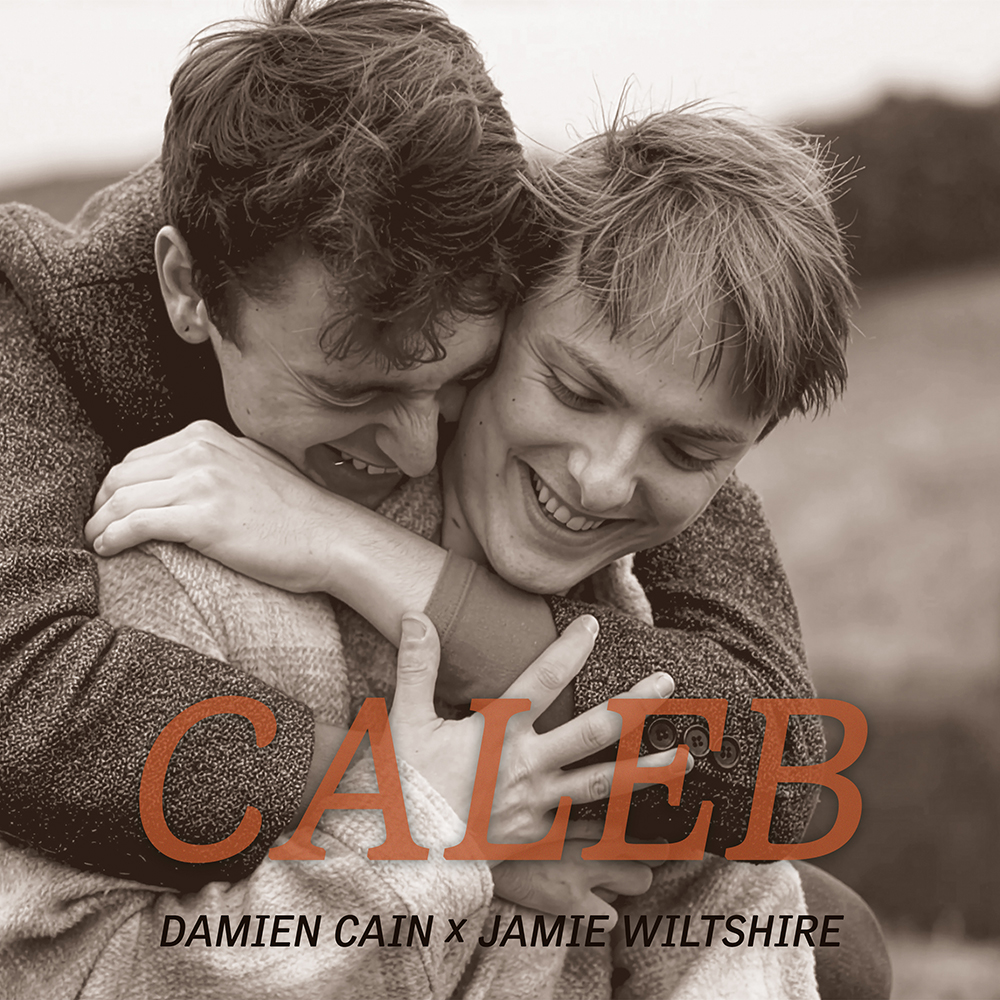
The arrangement is deceptively simple — piano, keyboards, bass and drums, with electric guitar used not as a statement but as a texture, something glimpsed at the edges of the room. It is the kind of musical architecture that demands absolute confidence in the song itself, and "Caleb" has it. The track refuses to stand still in the manner of its genre peers. Where lesser ballads offer stasis — a cathedral of sustained notes and trembling dynamics — this one moves. It walks forward with what one can only describe as quiet determination, the emotional equivalent of packing a bag slowly, knowing you must leave, and not yet being ready to open the door.
Cain's voice has the weathered authority of a man who has been through several musical lifetimes — from his gothic European underground days with Celtic Crypt, through the cult success of the CAIN project and its IMPALA Diamond Award-winning "Age of Darkness," through collaborations with Sir Christopher Lee and Wayne Hussey of The Mission. That accumulation is present in every phrase he delivers here. He does not oversell the emotion; he inhabits it. Lyrically, the song circles around memory, absence and the peculiar weight of relationships that have slipped permanently into the past tense, even while they still live vividly within us. It is a universal feeling, rendered with disarming specificity.
What elevates the track further is the duet element. Jamie Wiltshire, a UK vocalist who Cain originally approached for backing vocals alone, ultimately became a genuine co-voice — a second perspective rather than an embellishment. The pair have, to this day, never met in person, yet their remote collaboration produces something that sounds strikingly intimate: two voices circling the same emotional space from different angles, different generations, different tonal worlds. The result is less a traditional duet and something closer to shared testimony. It is one of those happy accidents that no amount of planning could have produced.
Released ahead of Pride Month, the song carries a quietly queer sensibility — but never as manifesto or announcement. This is its considerable sophistication. The song simply presents a relationship and its residue, refusing to label or explain. LGBTQ+ narratives remain scarce in mainstream rock and pop presented with this degree of restraint; "Caleb" opens a door without pushing anyone through it.
The music video matches the song's emotional register with admirable discipline. Shot in black and white as a single continuous take, it follows two young men through open landscapes, letting gesture and proximity carry the full narrative weight. No cuts, no explicit storyline — just presence and its impending withdrawal. The filmmaking trusts the audience completely, which is rarer than it ought to be.
Cain's 2025 album "Standarte" charted in both the American and German Alternative Charts, reaching number four in the US listings. "Caleb" sits apart from that record — quieter, more exposed, less armoured — but it is unmistakably the work of the same restless intelligence. The melodic clarity here draws comparisons to Bryan Adams at his most unsentimental, while the raw emotional directness aligns with the school of Lewis Capaldi — yet Cain belongs to neither camp. He remains, as he has across thirty-odd years, entirely his own proposition.
This is a song that does not ask for your attention. It simply waits, with admirable patience, until you give it. And when you do, it does not let go easily.