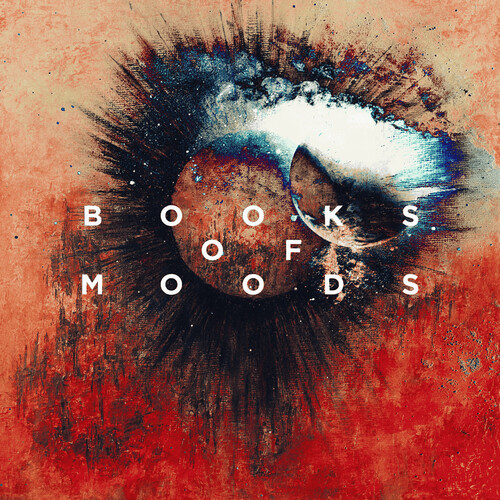
The Paris-based singer-songwriter, multi-instrumentalist and self-confessed cinephile has spent three years constructing this debut, and the patience shows — not as laboured perfectionism, but as the unhurried confidence of someone who knows exactly the film he wants to make. Because *Dreams* is, fundamentally, a film without pictures. Or rather, a film that plays behind the eyes.
It opens with **Space, Pt. 1**, a vast, weightless drift of sound that functions less as an introduction than as a depressurisation chamber — the musical equivalent of stepping through an airlock before the gravity of feeling sets in. Sailer understands instinctively what his cited touchstones (Bowie in his Berlin amplitude, the Velvet Underground's gorgeous haze, Arcade Fire's stadium-sized tenderness) all understood: that atmosphere is not decoration, it is architecture.
**Slow Day** and **Gaia** occupy the album's more contemplative chambers, tracks built from stillness rather than silence — there is a distinction, and Sailer navigates it with a maturity that belies his status as a debut artist. Meanwhile, **Dreams** and **Travel** address love with the directness of someone who has learned that sentiment need not be coy to avoid sentimentality. These are songs that reach for the universal by committing entirely to the specific.
The record's emotional temperature rises and falls with deliberate intention. **Holidays** carries the particular melancholy of summer's final days — that bittersweet awareness that warmth is finite — while **Fashion Romance** injects a welcome jolt of extroversion, proving that Sailer's introspective instincts can be turned outward without losing their intelligence. The NME generation's beloved Britpop emotional playbook is present here, refracted through a distinctly Parisian sensibility that renders it fresh rather than derivative.
**Sunday Mood** and **Happiness** occupy the record's quieter interior with the ease of old photographs — images so familiar you've forgotten they were once taken by a stranger. And then, at the very end, something unexpected and rather beautiful occurs: **Amoureux**, the album's sole French-language track, arrives like a secret finally told. It is the moment the record sheds its last layer of cosmopolitan remove and speaks, simply and without mediation, in its mother tongue. The dream, it turns out, was always Parisian.
What distinguishes *Dreams* from the considerable heap of bedroom-pop and indie art-rock that floods the independent landscape is Sailer's total authorship. He writes, performs, records, produces, and directs his own visual accompaniments — a creative sovereignty that would risk insularity were it not executed with such genuine communicative warmth. This is not an artist disappearing into his own mythology; it is one carefully building the conditions under which a listener might disappear into their own.
The press-kit boasts over 100,000 Spotify streams and international playlist placements, and one can see — or rather, hear — exactly why. But the numbers feel beside the point. *Dreams* is not a viral proposition; it is a slow seduction, the kind that rewards revisitation and punishes distraction. It asks you to sit still with it, and in return it offers you the rare sensation of a record that seems to know things about you that you haven't told anyone.
Not everything announces itself immediately. Space, Pt. 2's reprise rewards repeated listening before it fully opens, and there are moments where the album's commitment to atmosphere flirts with passivity. But these are the mild reservations of someone who has spent quality time with the record — which is, ultimately, the finest compliment one can offer a debut.
Hugo Sailer has made an album that sounds like remembering something that might never have happened. Which, if you think about it, is precisely what the best music has always done.
*Books of Moods · Dreams · Void City Records*