"O Father, O Mother" arrives as the band's most nakedly autobiographical work yet, and you feel that intimacy from the very first note. The track opens with a long instrumental passage — piano, deep bass, pizzicato violin — and it demands something of you immediately. It refuses to rush. It will not be skipped. The piano sounds broken, slightly detuned, flanged and soaked in reverb until it dissolves into something closer to atmosphere than instrument. It is the sound of 3 a.m. reckoning, of standing in a kitchen wondering where you went.
Ton van Dijk's falsetto enters gradually, layered upon itself until it resembles a small, aching choir of one man's competing selves. The voice is the instrument most obviously indebted to Bon Iver — that cold, luminous layering Justin Vernon perfected on *For Emma* — but Van Dijk turns it toward different ends. Where Vernon often retreats into abstraction, Van Dijk stays ruthlessly personal. *There is a man taking care / There is a guy losing himself / There is a boy maturing / Becoming a father, nothing else.* The verses have the stripped quality of a diary entry found years later, startling in their directness.
What makes the production genuinely remarkable is what is absent. The acoustic guitar — Tonneau's folk-rooted backbone across previous releases — was vetoed by bandmates, and that veto may be the best creative decision this band has ever made. Without it, the music breathes differently. Alies van der Hoeven's violin was recorded in a more resonant space, drawing out harsher overtones, and the effect is striking: the instrument sounds rawer, colder, more like weather than accompaniment. Jan van der Hoeven's five-string bass anchors everything with a low-end gravity that recalls Hans Zimmer at his most cinematic — weight without bombast.
The bridges escalate in a manner that suggests Stromae having a quiet crisis rather than a public one — the repetition of *dragging on and working on* building from murmur to near-desperation with a restraint that, paradoxically, makes it devastating. And the ending, where Van Dijk's voice is filtered and tuned into an E minor 9 chord — a modern, electronic flourish dropped into what might otherwise be considered chamber folk — is the kind of unexpected left turn that separates artists who are developing from those who are arriving.
The biographical circumstances behind the song are now well known: Van Dijk began writing it as a prayer at the piano, only to discover upon playback that his young daughter had been singing alongside him the entire time, in the same key, unnoticed. It is a detail almost too cinematic to be true, and yet it captures everything the song is about — the way parenting happens in the periphery of your own attention, the way your children exist fully and vividly in rooms you are already too tired to properly inhabit.
That the song was written while Van Dijk was hurtling toward burnout, and that he only recognised this in retrospect, gives *O Father, O Mother* an additional layer of melancholy significance. It is a song that knew things its author didn't. The best ones always do.
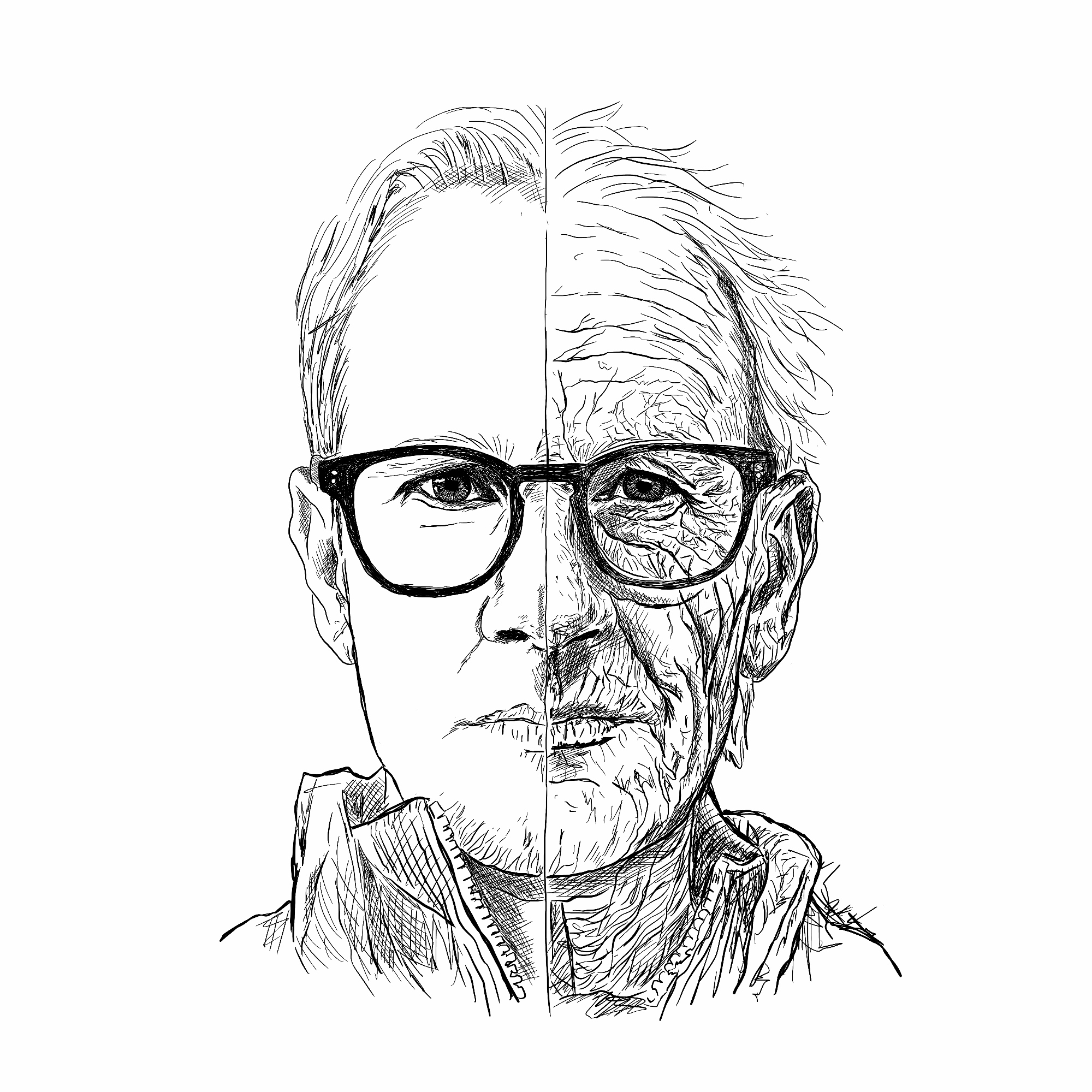
Marianne Zeldenrust's split-portrait cover art — one half of the face as it is now, the other aged — is the visual correlative of everything the music attempts: the confrontation with time, with inheritance, with the faces we will one day see in our own children. It is a striking image. The song it accompanies is more striking still.
British music has a proud tradition of championing artists who make small, serious, human music with absolute commitment — artists for whom craft and honesty are the same thing. Tonneau, operating quietly and independently out of Amsterdam, belongs in that conversation. *O Father, O Mother* is not a song that will shake stadiums. It will, however, find the people who need it, and for those people, it will feel like being understood.
That is rarer, and more valuable, than almost anything else music can do.