It opens with "Cursed," and if you're not paying attention, you might mistake that opening Black Sabbath-worthy riff for something you've heard before. But the song pivots almost immediately into something stranger and more personal — layered harmonies over chord progressions that feel genuinely unsettled, the kind of music that makes the hairs on your arms stand up without quite being able to explain why. Guitarist Emilia Hjelm and bassist Einar Lägermo share the verses like two people finishing each other's sentences, before the whole band heaves into the chorus together. It's a declaration of intent, and it lands.
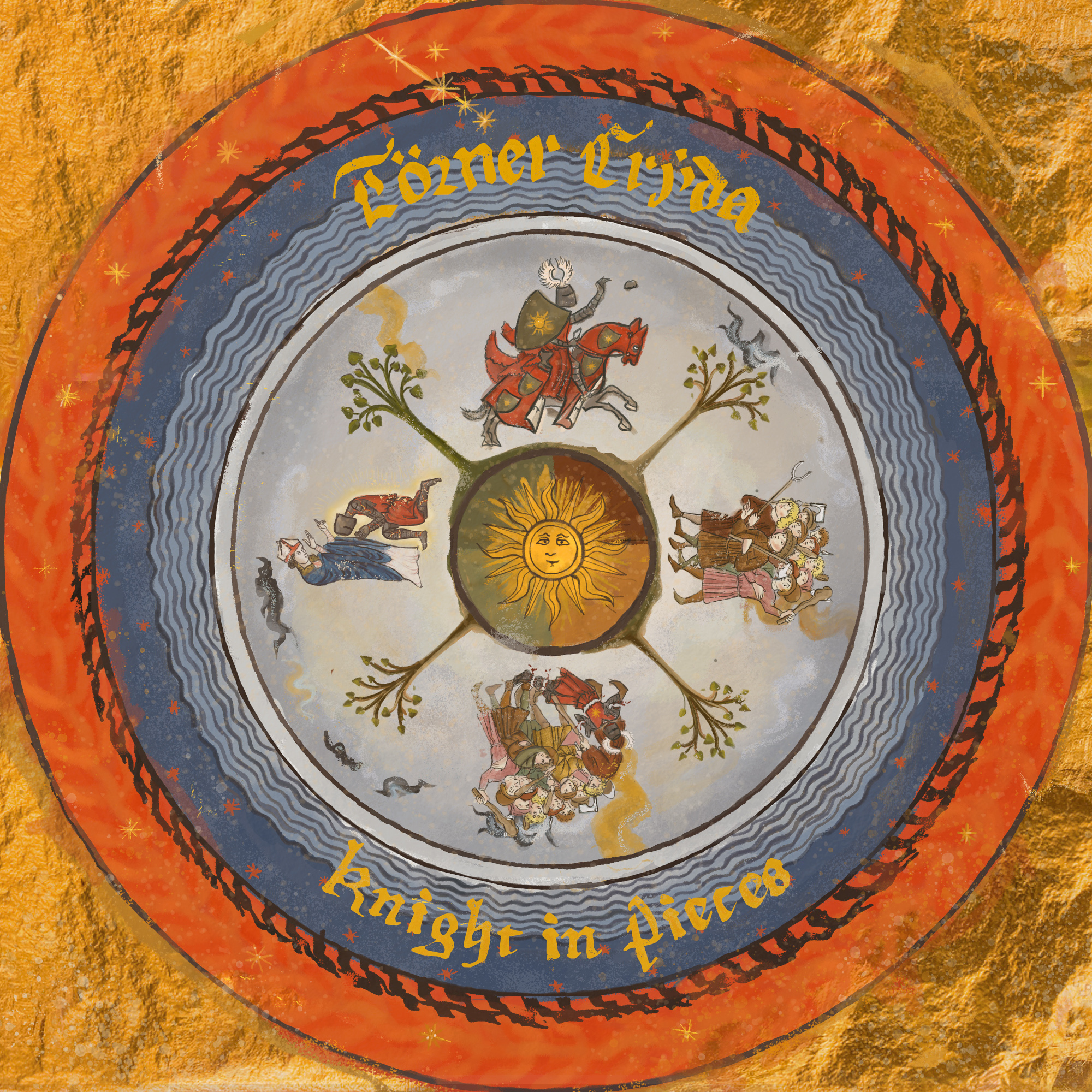
The title track follows, blues-rooted and Zeppelin-inflected, a song that takes as its lyrical subject the band's own medieval namesake — a 13th-century knight of violent fate from Västergötland — while cheerfully admitting that artistic freedom has been placed firmly above historical fidelity. This is exactly the right priority. Rock and roll has never owed history anything.
Axel Lönngren proves himself the album's most restless contributor. "Magic Mercury Trip" splices grunge with glam rock over a text inspired by Burroughs' *Naked Lunch*, and somehow this shouldn't work and absolutely does. By "Chipped Tooth" — his second single, a pumping eighth-note-driven machine about the pain and absurdity of trying to express yourself through songwriting — he's found a voice that's genuinely his own. The vocals are raw in the best sense: lived-in, not manufactured.
The Swedish-language tracks deserve particular attention, not least because they represent the album's most emotionally exposed moments. Emilia's "En dag följde vi vinden" draws on Fleetwood Mac and Jefferson Airplane to explore her relationship with her younger selves — a subject that could curdle into sentimentality in less assured hands, but here feels quietly devastating. "Om natten," pianist Elin Abrahamsson's contribution, goes further still: a piece steeped in folk music and the Swedish ballad tradition, darkened by drama and elevated by a hired string quartet arranged with real sophistication by Lägermo and producer Ian Whiteford.
That string quartet returns for "Inget särskilt," Einar's furious acoustic folk-rock tribute to ordinary love and the rejection of hustle culture, played at a tempo that borders on deranged. His vocals here — described generously as "almost desperately high screaming" in the band's own press materials, a rare moment of self-aware honesty in contemporary music PR — are magnificent precisely because they commit completely.
"Lucky Bastard" offers necessary breathing space: indie-acoustic, Neil Young-indebted, built on vocal harmonies and atmosphere rather than force, with the electric guitar conspicuous by its near-total absence until a finale that earns its explosive release. And then comes "Iseult" — eight minutes of progressive rock ambition loosely anchored to the legend of Tristan and Iseult, building from quiet to genuinely crushing, an outro that does precisely what good progressive rock should do: make you feel briefly that the world is larger than you remembered.
What holds all of this together — the genre-hopping, the multilingual songwriting, the different personalities pulling in different directions — is a collective generosity of spirit that's rarer than it should be. Every arranger leaves room for the others. Every vocalist remembers they're part of something larger. Even the drummer, Johan Holmberg, who the press release notes was excluded from both songwriting credits and lead vocal duties ("as is tradition"), plays with evident commitment to the whole.
*Knight in Pieces* is the kind of record that makes you want to watch what comes next very closely indeed. It announces five distinctive musical voices and, more impressively, the wisdom to know that none of them is more important than the band.
The 70s are back, apparently. At least these five have brought something worth saying.