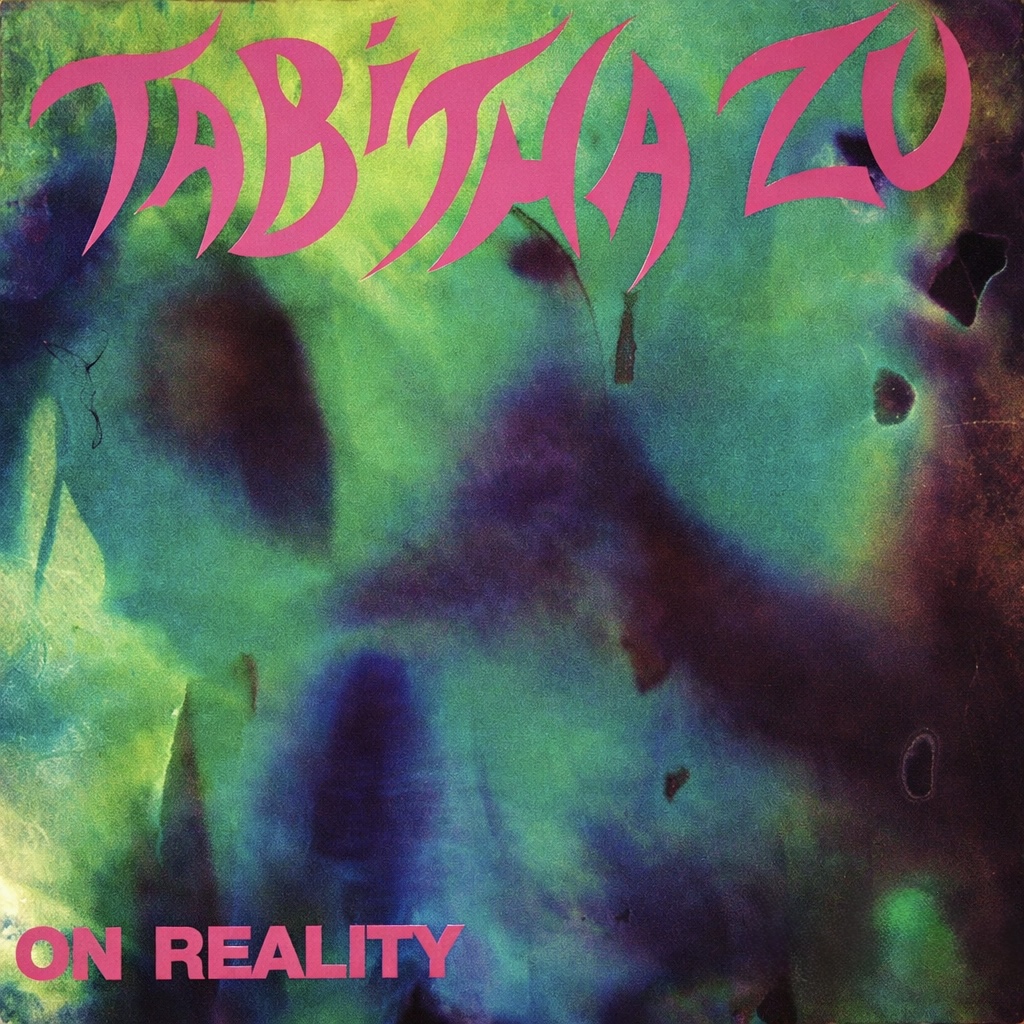
Cast your mind back, if you can, to October 1992. Suede were on the cusp of breaking everything open. Pulp were still a cult secret. Elastica didn't yet exist. The UK alternative scene was a feverish, ramshackle coalition of squatted venues and Radio 1 late-night sessions, and somewhere in the middle of all this glorious noise stood Tabitha Zu, fronted by the ferociously gifted Melanie Garside. They'd played Reading that summer on a bill that included Nirvana, Public Enemy, and Nick Cave — company which tells you everything about both their ambition and the gorgeous promiscuity of the moment. They had toured relentlessly, over 150 shows in a single year, building a reputation as a live act that could peel paint from walls and simultaneously break your heart.
"On Reality" is, simply, that band captured. From its first bars — drums arriving like a door kicked open — the track announces itself as something that will not be negotiated with. Hamilton's drumming is physical, almost confrontational, the kind of rhythm section playing that makes your sternum ache. Stevenson's bass locks in with a sullen, rolling authority. And over it all, Garside. God, Garside.
Her vocal is the thing that lifts this from archival curiosity to genuine revelation. She moves between registers with an alarming instinctiveness — tender and then devastating, murmured and then howled — and the lyrics she's written give her everything she needs. "Crush flowers on my ceiling / crushed flowers on my floor / well you know what, honey, darling, babe, / I don't need you anymore." The address is intimate and furious at once, the cadences of a woman talking herself free of something. The repeated endearments — honey, darling, babe — are deployed with a precision Garside shares with the very best lyricists: they sound like love until you hear the contempt inside them.
The chorus achieves something that most songwriters spend entire careers failing to reach. "You don't know anything at all / you roll reality into a tiny ball" is not merely a hook — it is a philosophical position, a theory of emotional cowardice dressed up as pop. To "roll reality into a tiny ball" is one of the more arresting images the early nineties produced, and the fact that it appeared on a 12-inch that sold fewer copies than a provincial pamphlet remains one of the period's genuine injustices.
The music video, primitive by contemporary standards and all the more compelling for it, captures the band in the way all great live documentation does: not performing for a camera, but simply doing what they would do regardless of whether anyone was filming. Garside in particular commands the frame not through vanity but through the sheer magnetic weight of someone who is absolutely, unshakeably present. It is the look of someone who has something to say and has decided that nothing — not convention, not the male gaze, not the industry's tidy expectations — will stop her saying it.
What lingers, after the song has finished and the echo has faded, is the sense of a band operating at the precise intersection of fragility and violence — not choosing between them, but insisting, correctly, that the two things are the same. The walls "tumblin down," the artwork "sliding down my face," the final command to "go dig yourself in a hole" — none of this is prettified. It is the sound of someone refusing, loudly and with considerable musical intelligence, to pretend that everything is fine.
Eira Records' decision to give this its proper digital release in 2026 is, in the truest sense, an act of historical repair. "On Reality" deserved better than the obscurity in which it spent three decades. Now, belatedly, it can take its place. Play it loud. Play it to someone who thinks 1992 was only about flannel shirts and American grudge. Play it and then explain, calmly, that Melanie Garside already knew everything they needed to know.
*Released: 17 April 2026. Digital via all major platforms.*